The Stones People Reach For: A Practitioner's Guide to Healing Crystals
From amethyst in meditation malas to black tourmaline as a protective talisman, this guide covers seven stones practitioners actually reach for, and how to work with them.
Pick up a piece of amethyst and it doesn't do anything. Neither does black tourmaline, or moonstone, or carnelian. That's not the point. The point is what you do with it.
The idea of carrying stones as companions to intention is old. Tibetan traders knotted Dzi beads into their robes. Egyptian priests inlaid carnelian into burial amulets. Ayurvedic practitioners used gemstones in formal ritual systems stretching back centuries. None of these traditions claimed the stones worked on their own. They worked because the person carrying them kept returning their attention to a purpose.
This article takes that tradition seriously. You'll find seven stones practitioners genuinely reach for, what those stones are associated with across different cultures, and how to build a simple, sustainable practice around them.
What 'Healing Crystals' Actually Means
The phrase gets used loosely online. It's worth being specific. When practitioners talk about crystals for healing, they're not describing medicine. Stones don't treat illness or replace the work of a therapist or doctor.
What stones offer is something more modest and, arguably, more sustainable: a physical anchor for attention. You carry an intention in your pocket. You touch a bead during a difficult moment. You build a small ritual around an object, and that ritual becomes a reliable return point in your day.
Tibetan Dzi beads, carnelian amulets, and European folk talismans all operated on this logic. The stone is a companion to practice, not a shortcut past it.
Seven Stones Practitioners Reach For Most
Amethyst
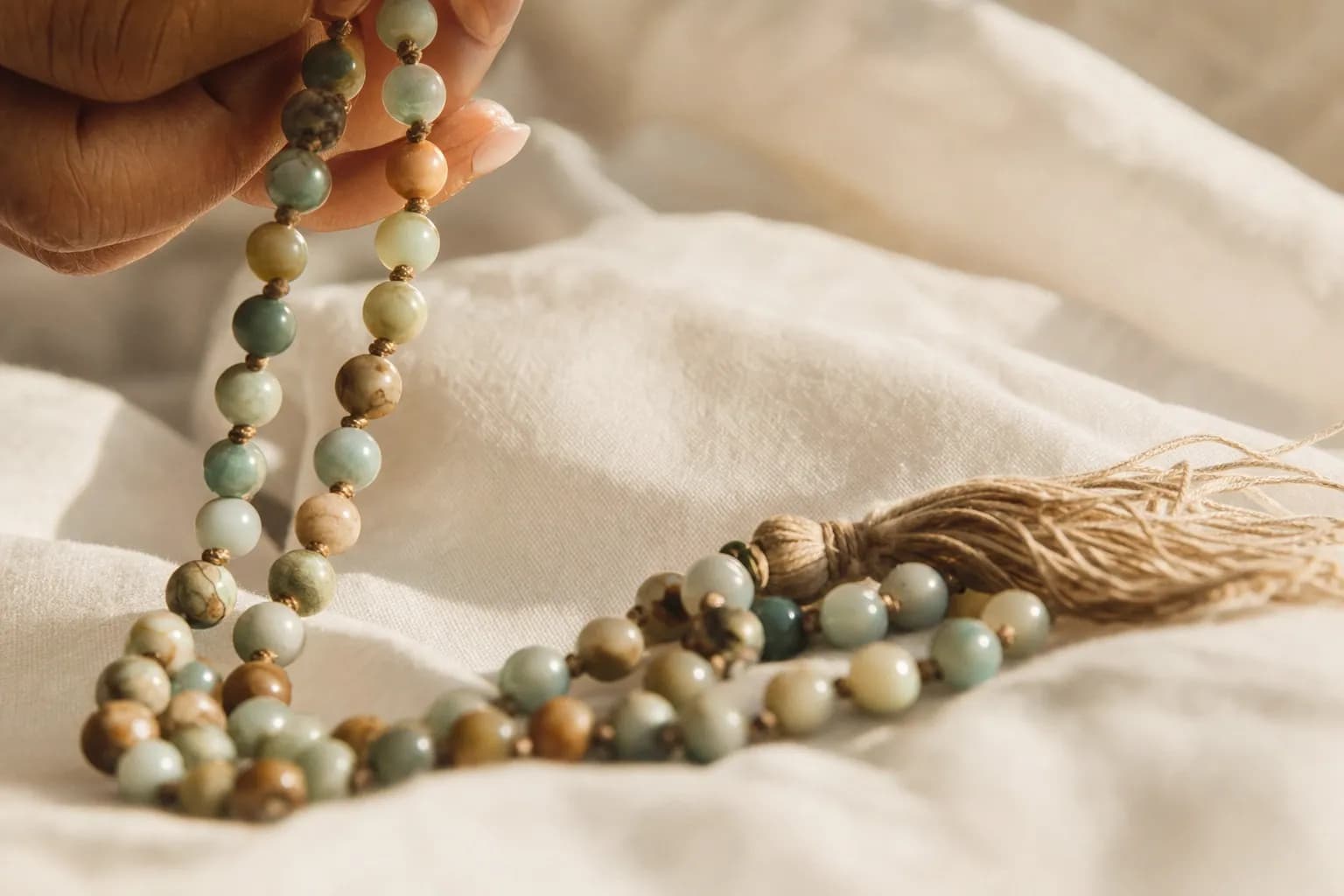
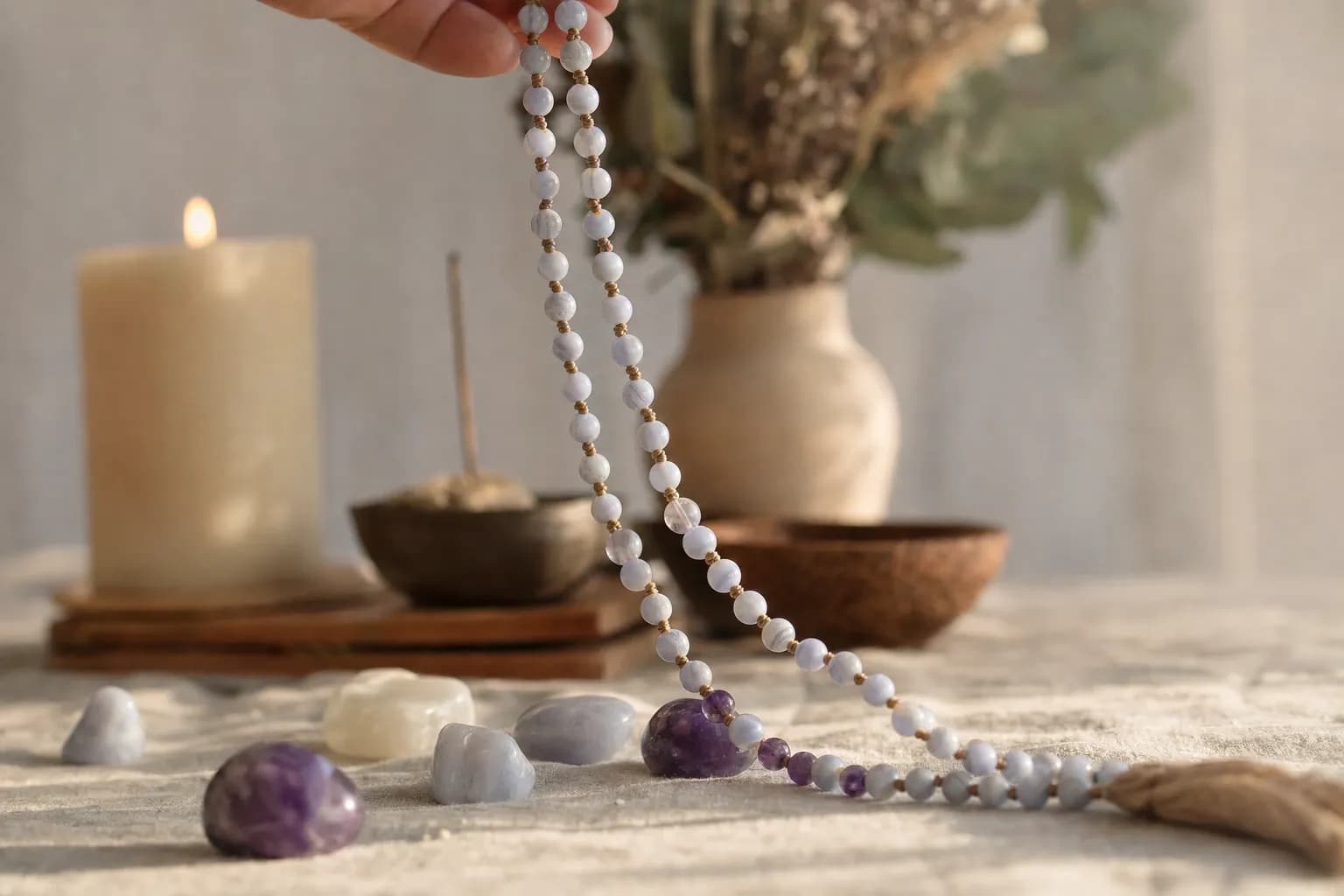
Amethyst is one of the most common stones in meditation malas, the 108-bead strings used in japa practice (a form of breath-counting meditation where you hold each bead for one full breath, moving through all 108). The violet quartz is associated across contemplative traditions with calm attention and mental steadiness. If your intention involves quieting mental noise, it's a natural starting point.
Black Tourmaline
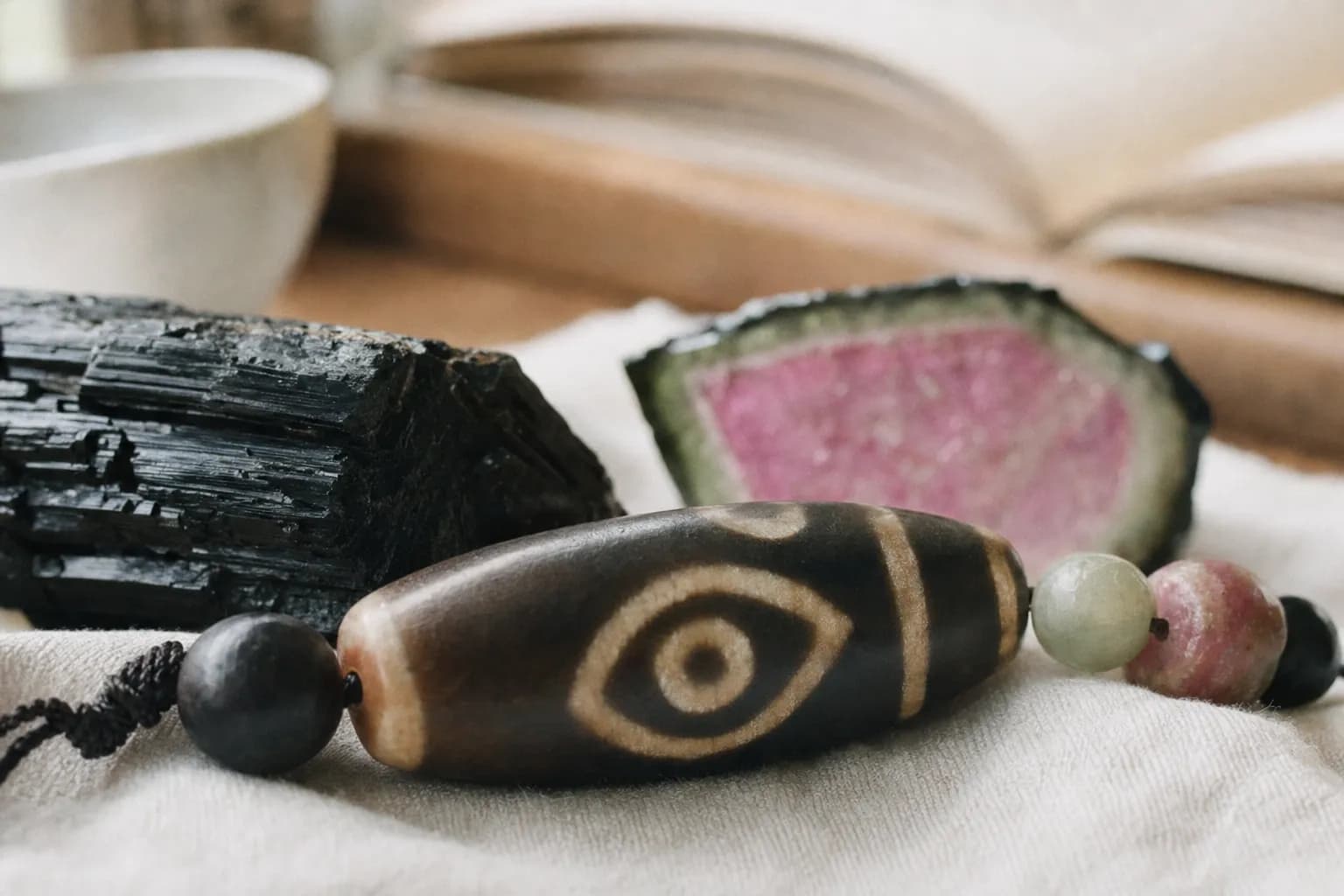
In both Tibetan protective talisman traditions and Western folk practice, black tourmaline is worn as a grounding stone. Practitioners reach for it when they want a sense of boundary and stability. It's a common choice for people working with intentions around protection or emotional grounding. Wear it at the wrist or carry it in a pocket on days that feel unsettled.
Moonstone
Moonstone is associated with emotional rhythm and intuition in traditions ranging from South Asian to Celtic. Its adularescence (the internal glow that shifts as the stone moves) has made it a natural symbol of reflection and change. Many practitioners who are working through transitions keep moonstone close. It also has a specific cleansing ritual: leave it on a windowsill on the full moon overnight, when the light is at its strongest.
Carnelian
Ancient Egyptian priests used carnelian in amulets representing vitality and forward movement. Tibetan craftspeople incorporated it into prayer beads and protective jewelry. Today, people working with intentions around motivation and creative energy often gravitate toward it. Hold it in your writing hand before beginning work, or wear it at the wrist throughout the day.
Rose Quartz
Rose quartz is consistently associated with self-compassion and relational intentions across traditions. Practitioners focused on softening their internal dialogue, or on intentions around connection and care, reach for it often. It's a gentle stone to begin with if you're new to working with gemstones intentionally.
Labradorite
Labradorite is a stone many practitioners associate with clarity and inner reflection, particularly during periods of change. Its iridescent surface (called labradorescence) shifts in different light, which has made it a longtime symbol of seeing from multiple angles. It appears frequently in the kits of people navigating a significant life decision.
Tiger Eye
Tiger eye is a grounding stone associated with focus and confidence in several traditions. People working with abundance or professional clarity intentions tend to choose it. It's a warm, tactile stone and wears well as a bracelet, where you can feel it against your wrist during the day as a quiet reminder of your intention.
How to Choose the Right Stone for Your Intention
Start with your intention, not the stone. What are you actually working on right now? Protection. Emotional steadiness. Clarity. Energy. Abundance. Name it before you browse.
Once you have a clear intention, you can map stones to it. If you're working on steadiness, look at black tourmaline or tiger eye. If you're in a period of emotional processing, rose quartz, amethyst, and moonstone all have long associations with that territory. If you want energy and motivation, carnelian has centuries of use behind it.
At Ardor Rituals, the atelier uses Pythagorean numerology alongside your stated intention to narrow the selection further. Your date of birth produces a core number; that number points to a set of stones with complementary meanings. It's a named, transparent method, and it keeps the choice rooted in something specific about you rather than a generic recommendation. If you'd like to try it, you can compose your own custom talisman bracelet through the atelier.
And if you keep returning to a particular stone without knowing why, that instinct is worth following. Practitioners describe that pull often. It's not mystical; you may simply be responding to color, texture, or weight in a way that resonates with what you need.
Working With Your Stones: Actual Practice
There are three basic ways to keep a stone in your field of attention: wear it, hold it, or place it.
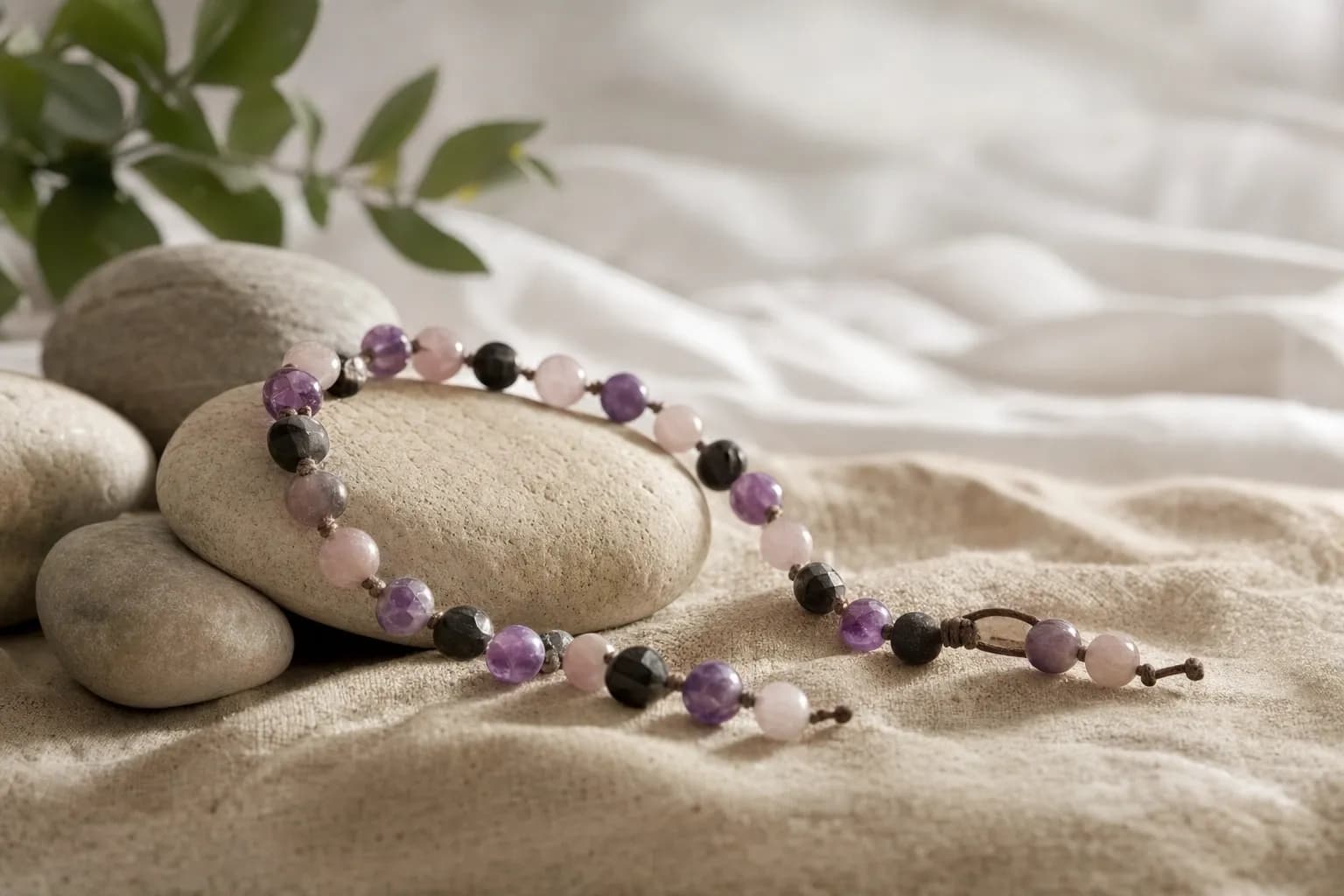
Wearing a bracelet at the wrist works well because you'll notice it throughout the day. Holding a stone during breathwork or before a difficult conversation gives you a more active point of contact. Placing a stone on your desk or nightstand keeps it visible without requiring you to wear it.
For a more structured practice, japa meditation with a mala is worth learning. Hold the first bead between your thumb and forefinger. Take one full breath, then move to the next bead. Continue through all 108 beads. The repetition and the physical movement give your nervous system something consistent to follow. How practitioners build intentional mala collections covers the range of ways people adapt this practice to modern life.
Before first wear, take a moment to set your intention with the stone. Hold it in both hands, close your eyes, and take three slow breaths. Say your intention aloud or silently. This isn't metaphysical ceremony; it's a focused moment of attention that anchors a purpose to an object you'll carry. Repeat it each time you cleanse the stone.
Cleansing and Care: What Actually Works
Salt water dulls a polished agate in weeks. Moonlight doesn't. If you're going to use only one cleansing method, use moonlight: place your stones on a windowsill or outside on the night of a full moon and bring them in by morning. It's safe for every stone type and requires nothing else.
Smoke cleansing with sage, cedar, or palo santo is the next most versatile method. Pass the stone slowly through the smoke for thirty seconds or so. This practice appears across traditions from the Americas to Central Asia, and it works without water or salt.
Tibetan singing bowls offer a third option rooted directly in the tradition that produced many of the world's most significant talisman practices. Place your stones near the bowl, strike it, and let the sustained tone wash over them. The vibration is the point. For deeper context on where Tibetan stone traditions come from, the journal article on the sacred patterns and lineage of Tibetan Dzi beads is worth reading.
A few specific warnings:
- Salt water damages carnelian, malachite, and selenite. The porosity of these stones means the salt works into the surface and degrades it.
- Prolonged direct sunlight fades amethyst. A few minutes of morning light won't hurt it, but a windowsill in full afternoon sun over weeks will bleach the violet color noticeably.
- Storage matters more than most guides admit. A cloth pouch or wooden box keeps stones from scratching each other. Harder stones like tiger eye will mark softer ones if they're loose together in a drawer.
Keeping your stones clean is a practical act as much as a ritual one. The care you give them keeps the physical object beautiful, which keeps your attention returning to it.
Frequently Asked Questions
Which crystal is best for emotional healing?
Practitioners most often reach for rose quartz, amethyst, and moonstone when working with emotional intentions. Rose quartz is associated with self-compassion across multiple traditions. Amethyst is commonly used in meditation to support calm attention. Moonstone is linked to emotional rhythm and reflection. All three pair well with intentional breathwork or mala practice.
How do you activate or set an intention with a crystal?
Hold the stone in both hands, close your eyes, and take three slow breaths. State your intention clearly, aloud or silently. This is less a metaphysical act and more a focused moment of attention: you're anchoring a purpose to an object you'll carry. Repeat this each time you cleanse the stone.
How do you cleanse healing crystals?
Moonlight is the most universally safe method: place stones on a windowsill overnight during a full moon. Smoke from sage, cedar, or palo santo works for all stone types. Avoid salt water for polished or porous stones like carnelian, malachite, or selenite. It causes surface damage within weeks and is not worth the risk.
Can you wear multiple healing crystals together?
Yes. Many practitioners layer stones intentionally, a grounding stone like black tourmaline alongside an energising one like carnelian, for instance. The key is that each stone has a clear role in your intention. A bracelet composed from stones selected around a single purpose tends to feel more coherent than a random mix.
What is the difference between a crystal and a gemstone?
In common use the terms overlap considerably. Technically, a crystal has a regular internal lattice structure: quartz is a crystal; amber is not. Gemstone refers to any mineral or organic material valued for beauty or rarity. In talisman practice, both are used. What matters is the tradition of meaning attached to the stone and the quality of the piece itself.
How long does it take to notice the effects of wearing a crystal?
This depends entirely on how you work with the stone. A crystal worn absentmindedly may go unnoticed for months. One worn with a clear intention, touched during a moment of stress, or used during a daily breathing practice, can become a useful anchor for attention within days. The practice matters as much as the stone itself.