Best Mala Beads for Meditation: A Practitioner's Guide to Choosing Yours
A mala is a counting tool, a tactile anchor, and a daily companion to practice. Here's how to choose one that actually fits the way you sit.
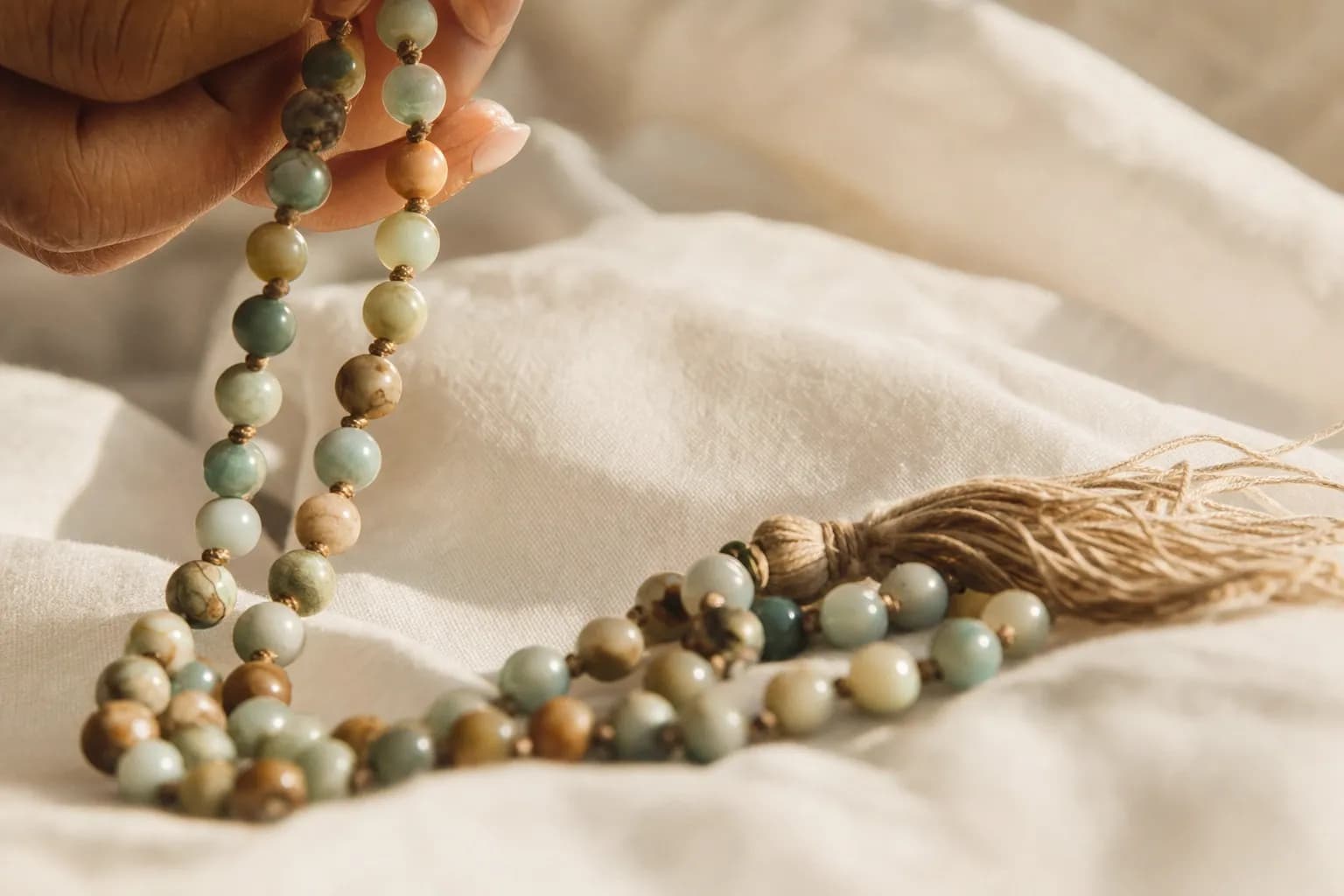
Most people picking up a mala for the first time are drawn by how it looks. But after a few weeks of daily practice, you stop noticing the color and start noticing the weight, the texture under your fingertip, and whether the spacing lets you count without thinking. Those details matter. This guide covers the materials, stones, and construction qualities that experienced practitioners actually pay attention to when choosing the best mala beads for meditation.
What You're Actually Choosing When You Choose a Mala
A mala is a string of 108 beads used in japa meditation, a practice of repeating a mantra or affirmation one bead at a time. Japa comes from Sanskrit and refers simply to the act of repetition: one breath, one word, one bead. The structure keeps your attention from drifting without requiring you to track a count consciously.
The number 108 appears across Hindu and Buddhist traditions, held as significant in both cosmology and practice. Some lineages point to the 108 Upanishads; others to the 108 names of the divine. You don't need to subscribe to any specific interpretation. What the number gives you, practically, is a round of consistent length that takes roughly ten to fifteen minutes at a calm breath pace.
Beyond count, material shapes the quality of your attention in concrete ways. A heavier gemstone mala registers more clearly under the fingertip than a lighter wooden one. A mala with rough-textured rudraksha seeds creates a different tactile rhythm than polished rose quartz. Neither is superior. They cultivate different qualities of presence.
The three main material categories practitioners choose between are gemstone, wood (sandalwood and rosewood being the most common), and rudraksha seed. Each has a distinct tradition behind it and a distinct feel in the hand.
The Main Materials and What Practitioners Say About Them
Gemstone Malas
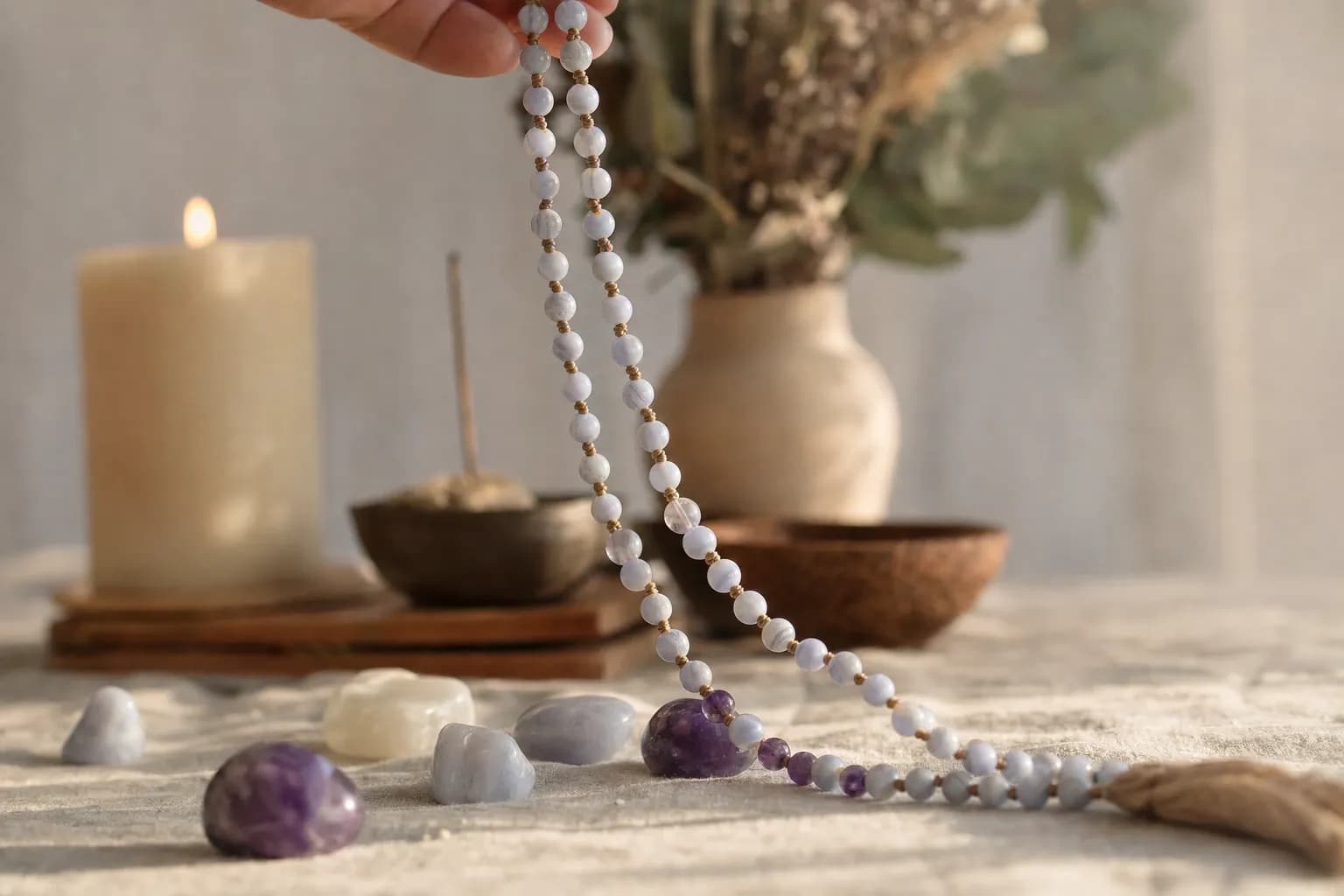
A gemstone mala is heavier and cooler to the touch than wood. That weight can help anchor a restless or tired hand during a long sit. Stone selection maps directly to intention: amethyst for a sense of stillness and inward quiet, carnelian for warmth and presence, moonstone for softer, more receptive states. More on specific stones in the next section.
Polished gemstone beads also carry the advantage of variety. No two strands of labradorite or tiger eye are identical, which makes each mala genuinely singular. If you're drawn to compose a gemstone mala selected for your date of birth and intention, Pythagorean numerology and your stated practice goal guide the stone combination chosen for you.
Wooden Malas
Sandalwood has been used in meditation practice across South and Southeast Asia for centuries. It's lighter than stone, which makes it easier for very long sits. The scent, faint but present, can itself become a cue that practice is beginning. Rosewood is similarly traditional, slightly denser, with a rich reddish grain.
Wooden malas suit practitioners who find heavier beads distracting, or who use their mala as a wrist bracelet between sessions. Wood is forgiving. It absorbs some of the oils from your hands over time, developing a patina that feels personal.
Rudraksha Malas
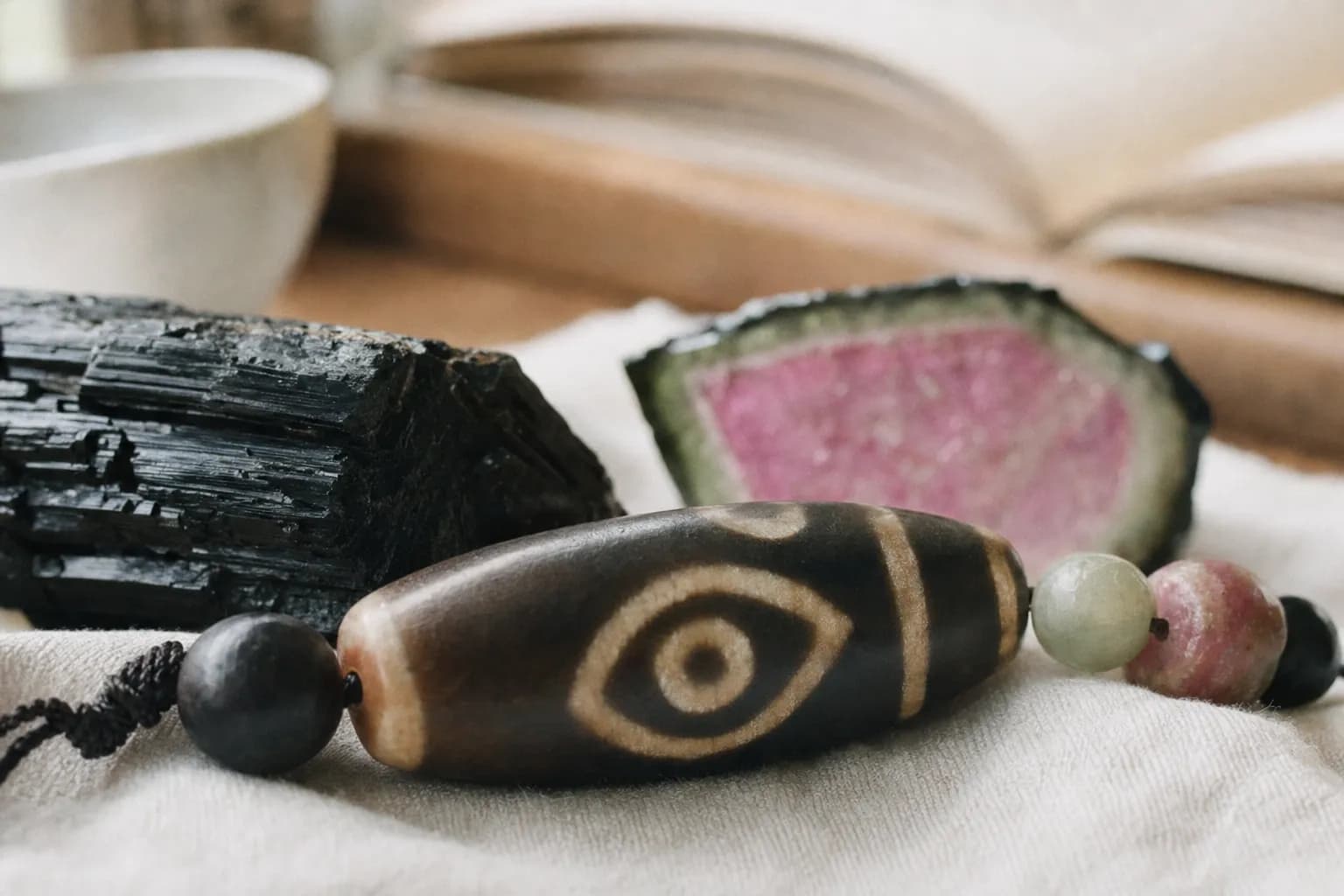
Rudraksha beads are seeds from the Elaeocarpus ganitrus tree, native to parts of the Himalayas and Indonesia. They're central to Shaivite Hindu practice and among the oldest recorded mala materials. Each bead has natural facets called mukhis (faces), and different mukhi counts carry distinct traditional associations, from one-mukhi, considered extremely rare and auspicious, to the more common five-mukhi used for general meditation practice.
Rudraksha has a rough, organic texture that many practitioners find grounding. The beads are lighter than gemstone but more substantial than sandalwood. If you're curious about how material choice intersects with how you actually use a mala in practice, how to build a mala bead practice that sticks walks through the mechanics in full.
Choosing Stones for Your Practice: A Practical Stone Roundup
For a 108 bead mala made from gemstones, stone selection isn't decorative. Practitioners choose based on the quality of attention they want to bring to their sits. Here's how the most commonly used stones are understood within tradition and practice:
- Amethyst. Associated with quiet and inward focus in many traditions. Often chosen for evening sits or practices oriented toward stillness rather than activation.
- Black tourmaline. Practitioners who feel scattered before sitting frequently reach for black tourmaline. In various protection-oriented traditions, it's understood as a grounding presence. (For more on stones used for grounding and protection, see The Best Crystals for Protection: What Practitioners Actually Reach For.)
- Tiger eye. Steadiness and mental clarity are the qualities most associated with this stone. Popular for morning practice, when the mind hasn't fully settled from sleep.
- Moonstone. Softer, more intuitive energy. Often chosen for yin or receptive practices, or for practitioners whose intention involves following intuition rather than sharpening focus.
- Carnelian. Warmth and presence. When practice has started to feel mechanical or cold, carnelian is the stone many practitioners reach for to bring themselves back into the body.
No single stone is the best gemstone mala material for every practitioner. The most useful question isn't "which stone is best" but "what am I trying to cultivate in this practice, right now?"
At Ardor Rituals, the atelier composes personal gemstone bracelets and malas using your date of birth and stated intention as the foundation for stone selection. Pythagorean numerology (a system that reduces your birth date to a single digit number to identify core energetic themes) guides which stones are pulled together into your piece.
Construction Details That Actually Matter
Two malas can use the same stones and feel completely different to practice with, depending on how they're built. These are the details worth checking:
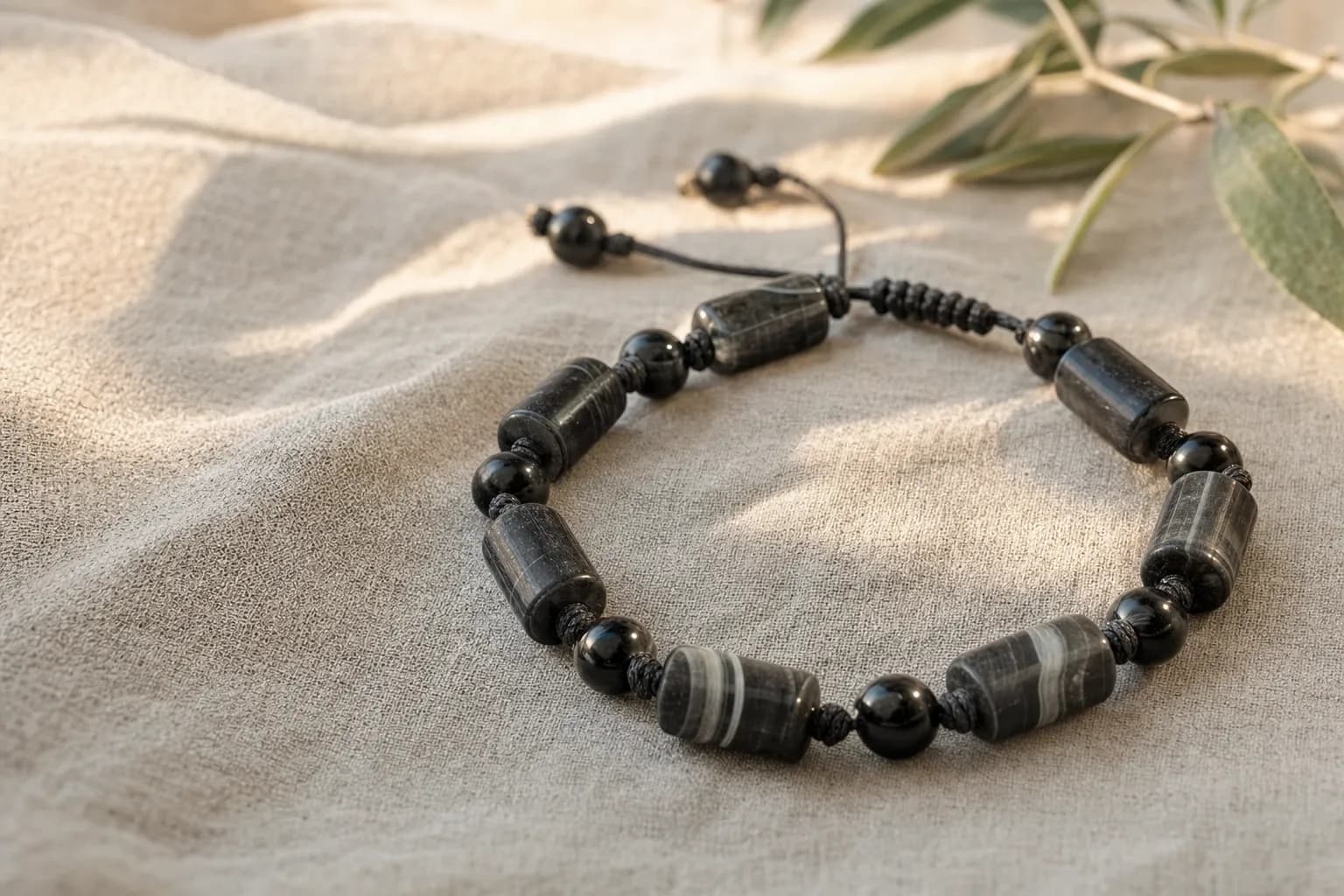
- Knotting between beads. A well-made mala has a knot between every bead, not just at intervals. This protects the stones if the thread ever breaks (they stay on the string rather than scattering), and creates even spacing so each bead registers clearly under your fingertip during counting.
- The guru bead. This is the single anchor bead at the base of the mala, usually larger and paired with a tassel or pendant. It marks the start and end of a full round. In japa practice, when your fingers reach this bead, you pause. You don't cross over it; you reverse direction and begin again. Crossing it is considered inauspicious in several traditions, and practically, it also helps you track completed rounds without losing count.
- Bead size. Six-millimeter beads feel delicate and work well on smaller hands. Eight-millimeter is the most common size for practice malas, balancing tactile presence with comfortable weight. Ten-millimeter beads are heavier and suit practitioners who find the extra weight helpful for anchoring attention.
- Thread material. Silk holds knots tightly and has a pleasant texture against the skin. It's the traditional choice. Nylon thread is more resistant to daily wear and sweat, making it the better option if you plan to wear the mala constantly rather than keeping it only for sitting practice.
- Bead finish. High-polish beads are smooth and slip quickly; matte or lightly tumbled finishes provide more resistance, slowing the count slightly, which some practitioners prefer.
Living With Your Mala: Care, Cleansing, and Daily Use
Salt water dulls a polished agate in weeks. Moonlight doesn't. Leaving your mala on a windowsill on the full moon night is the most universally safe cleansing method across stone types, with no risk to the finish or the thread. For a full approach to stone care, a practical guide to cleansing your stones and mala covers methods including smoke cleansing, breath, and moonlight in detail.
Amethyst and rose quartz are both vulnerable to prolonged direct sunlight. The color fades gradually and doesn't return. Keep those stones out of windowsills during the day.
On the question of wearing versus practicing: some practitioners keep one mala exclusively for sitting, treating it as a dedicated ritual object rather than daily jewelry. Others wear their mala constantly, as a wearable anchor for their intention. Both approaches work. If you wear yours daily, plan to cleanse it more frequently, especially after emotionally heavy periods.
A simple ritual for opening each session: hold the anchor bead between your thumb and middle finger, take one full breath, and state your intention silently before moving to the first bead. Hold each bead for one full breath as you work through the round. When your fingers return to the anchor, pause again before deciding whether to continue or close.
Frequently Asked Questions
How many beads should a mala have?
Traditional malas have 108 beads, a number held sacred across Hindu and Buddhist traditions. Some practitioners use a wrist mala of 27 beads, counted four times to reach 108. Both work for breath or mantra counting. What matters is consistency: the same count each session builds the ritual's rhythm over time.
Can I wear my mala beads every day or only during meditation?
Many practitioners wear their mala daily as a wearable reminder of their intention. Others keep one mala solely for sitting practice, treating it as a dedicated tool rather than jewelry. Neither approach is wrong. If you wear it constantly, expect to cleanse it more often, especially after emotionally heavy days.
What is the guru bead on a mala?
The guru bead is the single larger bead at the mala's anchor point, often paired with a tassel or pendant. It marks the beginning and end of a full round of 108. In japa practice, when your fingers reach it, you pause, set a new intention if continuing, and reverse direction rather than crossing over it.
Which gemstone mala is best for beginners?
Practitioners often suggest starting with a stone whose quality of attention resonates with your intention. Amethyst is commonly chosen for a sense of quiet focus. Tiger eye suits those who feel distracted during sits. The most useful mala for a beginner is one that feels good in the hand and actually gets used.
How do I cleanse my mala beads?
Moonlight is the most universally safe method: leave your mala on a windowsill on the night of a full moon. Avoid salt water on polished gemstones, as it can dull the surface over weeks. Direct sunlight can fade amethyst and rose quartz. Smoke cleansing with dried herbs is another traditional approach used by many practitioners.
Does the type of knot between beads matter?
Yes, practically and symbolically. Knots between every bead protect the stones if the thread breaks, keeping them from scattering. They also create even spacing, so each bead registers clearly under your fingertip during counting. Silk thread holds tight knots and has a pleasant texture; nylon is more resistant to daily wear and sweat.