Tourmaline: What Practitioners Know About This Stone and Why the Color Matters
Tourmaline isn't one stone. It's a whole family, and the color changes everything. Here's what each variety carries in practice and how to use it with intention.
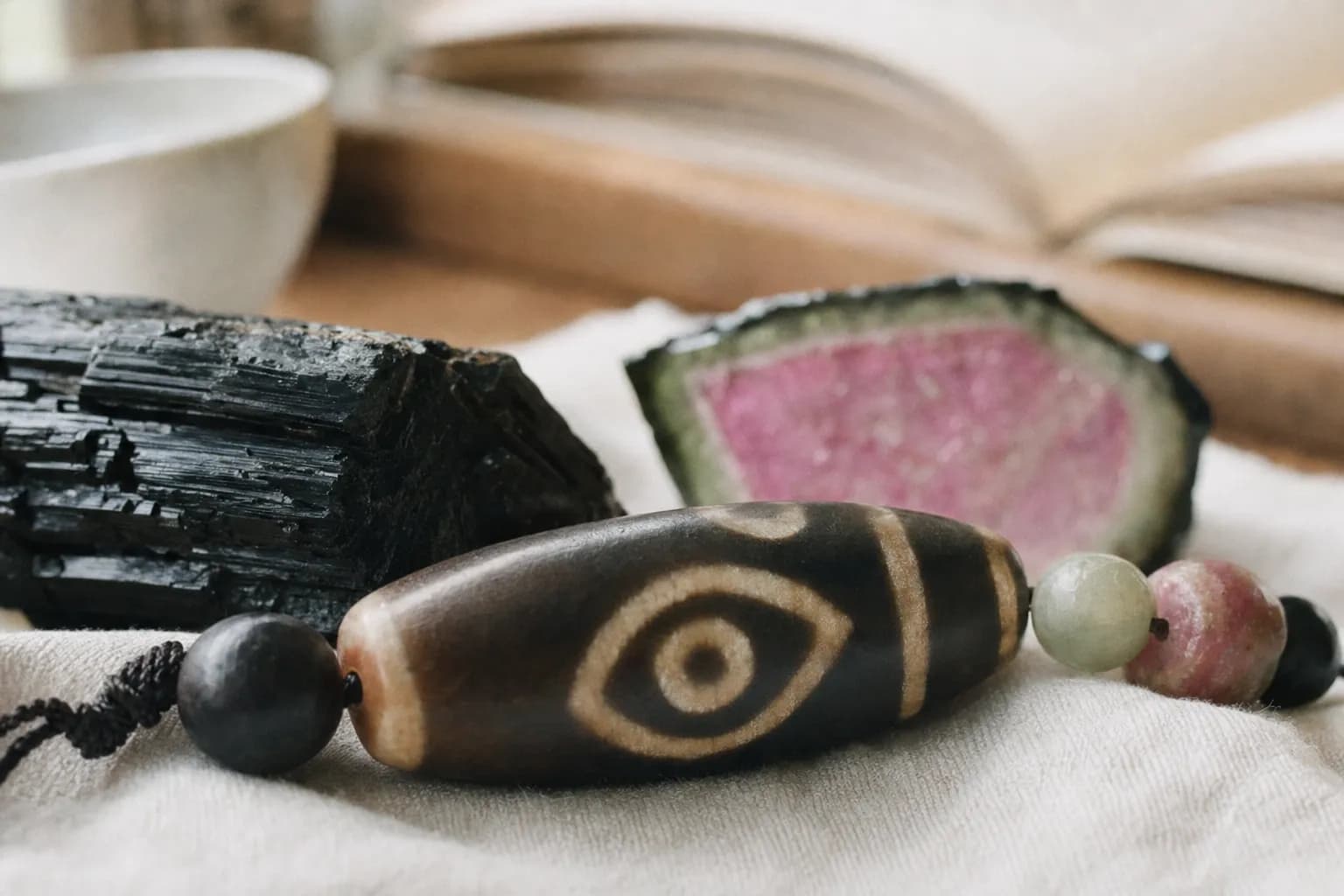
Tourmaline turns up in more colors than almost any other mineral on earth. Black, deep red, seafoam green, a pink-and-green slice that looks painted. Most people encounter one variety and assume that's the whole story. It isn't.
The color determines the tradition, the associations, and how practitioners actually reach for this stone. Getting that right matters.
One Stone Family, Dozens of Faces
Tourmaline is a boron silicate mineral that forms in a wide range of geological conditions, which is exactly why it appears in so many colors. The mineral group includes over thirty distinct species. Most gem-quality stones fall within a handful of those, and each has its own mineral name: schorl for black, rubellite for pink-red, verdelite for green, indicolite for blue.
One physical property worth knowing: tourmaline is piezoelectric. Under pressure, it generates a small electrical charge. This isn't mystical. It's measurable physics. But it's one reason the stone has attracted attention from practitioners and scientists alike for centuries.
Because the family is so large, synthetic and treated versions circulate widely. A black tourmaline that's unusually glossy and free of any inclusions may have been coated. Raw or lightly tumbled pieces with natural striations along the length of the crystal are typically what practitioners source for intentional use. Natural inclusions aren't flaws. They're the stone's actual structure.
What Each Color Carries: A Practitioner's Breakdown
Black Tourmaline (Schorl)
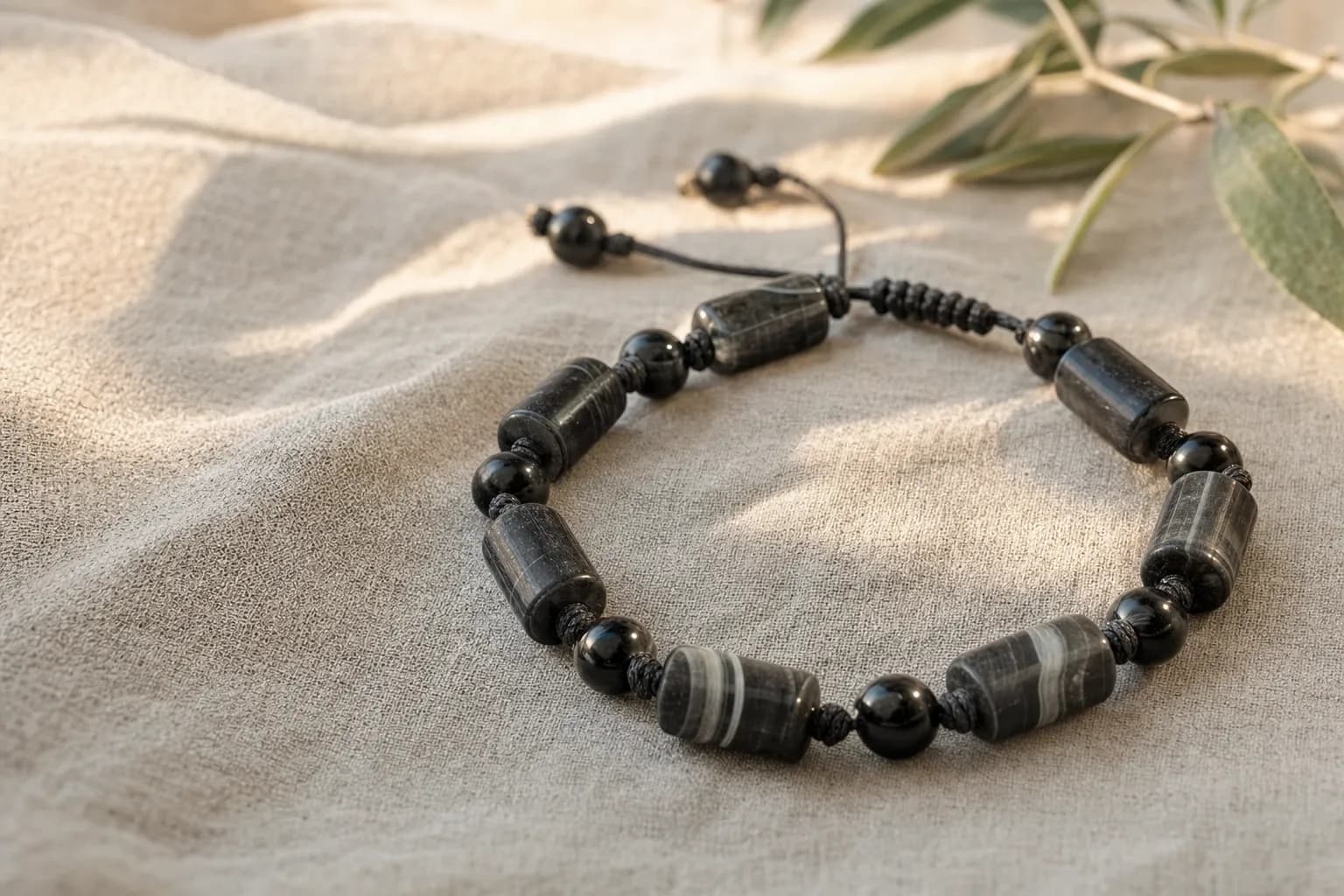
Black tourmaline is the most widely used variety in protection practice. Practitioners keep it near doorways, on desks, or worn on the body as a daily grounding anchor. The association with boundary and steadiness runs across multiple traditions.
If you're exploring stones practitioners reach for in protection practice, schorl appears consistently at the top of that list. Its opacity, weight, and deep black color make it feel different in the hand than almost any other stone.
Pink and Rubellite
Pink tourmaline and its deeper cousin, rubellite, are linked in many traditions with gentleness and self-compassion practice. The color range runs from pale blush to saturated raspberry. Rubellite specifically refers to stones with strong red saturation; pale pink is simply called pink tourmaline.
Practitioners reach for this variety when they want a reminder to soften rather than push through. Worn close to the chest as a pendant, or as a single bead on a mala strand, it works as a quiet cue during breath practice.
Green Tourmaline (Verdelite)
Verdelite ranges from pale mint to forest green, and its associations in Western crystal traditions center on renewal and heart-centered awareness. It's one of the few green stones that's also durable enough for regular wear, sitting at Mohs 7 to 7.5.
Some practitioners pair it with black tourmaline: grounding in one stone, openness in the other.
Watermelon Tourmaline
Watermelon tourmaline has a pink interior and a green outer layer, visible when the crystal is sliced into a cross-section. The two colors grow together in the same crystal structure. It's relatively rare and usually used as a single focal stone rather than a full strand.
Practitioners use it as a reminder of balance: the tenderness associated with pink held within the steadiness of green. You'll find it as a centerpiece bead more often than as a repeating element.
Blue Tourmaline (Indicolite)
Indicolite is the rarest of the common tourmaline varieties. Its color ranges from pale teal to deep inky blue. In contemporary practice, it's associated with calm expression and clarity of communication.
Because good indicolite commands higher prices, it appears less often in bracelet strands and more often as a single statement stone or pendant.
How Practitioners Actually Use Tourmaline
Wearing tourmaline on the wrist is the most common approach. In Ayurvedic tradition and much of Western crystal practice, the left wrist is considered the receiving side of the body, taking in energy from the environment. The right is considered projecting, sending intention outward. Wearing a protective stone like black tourmaline on your non-dominant wrist (usually the left) aligns with the receiving convention. Wearing it on the right wrist when you want to project steadiness outward is equally valid.
For breath practice, a single tourmaline bead can anchor a session. Hold the bead between thumb and forefinger. Take one full breath per bead, inhaling slowly, exhaling completely before moving to the next. For more on building this kind of practice, using mala beads in breath practice covers the mechanics in detail.
Beyond the body, black tourmaline is frequently placed at the four corners of a room or directly beside a workspace as a grounding stone. No particular ritual is required. Placement with a clear intention is the practice.
Pairing options worth knowing:
- Black tourmaline with rose quartz: protection alongside warmth
- Black tourmaline with moonstone: grounding alongside intuitive openness
- Watermelon tourmaline with clear quartz: balance held in clarity
- Pink tourmaline with amethyst: softness with a quiet, settled focus
- Green tourmaline with carnelian: renewal alongside motivated energy
Choosing Your Tourmaline: What to Look For
For tumbled or polished beads in a bracelet, look for consistent color saturation without cloudiness from surface treatments. A uniform, glassy finish on every surface of a raw crystal is a flag for coating. Natural tourmaline has a slight striated texture along its length.
Form matters for how you'll use it:
- Raw or rough: Powerful visual presence, better for placement than wear. Edges can catch and snag.
- Tumbled: The practical choice for bracelets and pocket stones. Smooth, durable, still retains the stone's natural structure beneath the surface.
- Faceted: Cuts the light beautifully in rubellite and indicolite. Higher cost; more suited to pendants than everyday bracelets.
At Ardor Rituals, stone selection for a custom talisman bracelet draws on both your date of birth (interpreted through Pythagorean numerology) and your stated intention. The result is a composition where tourmaline may appear as the primary stone, a supporting bead, or a pairing element alongside another gem that speaks to what you're working on.
Caring for Tourmaline: What Works and What Doesn't
Salt water dulls a polished agate in weeks. Tourmaline handles brief water contact better, but prolonged soaking is still a risk. Raw pieces with natural inclusions or small internal fractures can absorb moisture into those spaces over time, eventually weakening the surface. Smooth tumbled or polished stones tolerate a quick rinse.
Moonlight cleansing is safe for every tourmaline variety. Leave the stone on a windowsill or outside on the night of a full moon. No heat, no abrasion, no risk to the surface. Smoke from palo santo or sage is equally gentle and effective for clearing accumulated energy before resetting an intention.
For a full guide to methods, timing, and the reasoning behind each approach, how to cleanse the energy of your stones covers the practice in detail.
A few specifics to keep in mind:
- Avoid prolonged salt water for raw pieces or heavily included stones
- Keep away from hard knocks, particularly for faceted or raw varieties. The crystal structure can fracture along natural cleavage lines
- Store separately from harder stones like sapphire or diamond, which can scratch the surface
- Recharge with intention after cleansing: hold the stone for a moment, breathe, and bring the original purpose back to mind before wearing again
Frequently Asked Questions
What is black tourmaline used for in spiritual practice?
Practitioners reach for black tourmaline when they want a grounding anchor, particularly for protection intention. Many wear it daily on their wrist or place it near a doorway. In contemporary crystal work, it's one of the most consistently used protective stones for creating a sense of boundary and steadiness throughout the day.
What does the color of tourmaline mean?
Each tourmaline color carries different associations in practice. Black is linked to grounding and protection; pink to gentleness and self-compassion; green to renewal and heart-centered awareness; watermelon, with its pink-and-green layers, to balance. The mineral family is the same across all varieties, but practitioners treat each color as carrying its own quality of attention.
Can tourmaline be worn every day?
Yes. Black tourmaline and green tourmaline are durable enough for daily wear at Mohs 7 to 7.5. Avoid knocking raw or heavily included pieces against hard surfaces. A smooth tumbled or polished bead in a bracelet is the most practical form for everyday use, requiring only periodic cleansing to refresh the stone's surface and reset your intention.
How do you cleanse tourmaline?
Moonlight and smoke. Palo santo or sage. Are the gentlest and safest methods for all tourmaline varieties. Briefly rinsing smooth tumbled pieces in water is fine. Avoid prolonged salt-water soaking for raw stones with inclusions, as moisture can work into small cracks over time and eventually dull the surface.
What is watermelon tourmaline and what is it used for?
Watermelon tourmaline has a pink center and green outer layer grown within the same crystal. Practitioners use it as a reminder of balance: tenderness held within groundedness. It's relatively rare and most often used as a single focal stone rather than a full strand, making it well suited to a centerpiece bead or pendant.
How is tourmaline different from other protective stones?
Unlike obsidian, which many practitioners find intense, or hematite, which is heavy and cool to the touch, black tourmaline is considered approachable for daily wear. It pairs easily with softer stones like rose quartz or moonstone without the combination feeling energetically mismatched. Which makes it one of the most versatile grounding gemstones in practice.