The Stones Practitioners Reach for When Anxiety Takes Hold
Six calming stones, how to use them with breath and intention, and how to choose the one that matches how your anxiety actually feels.
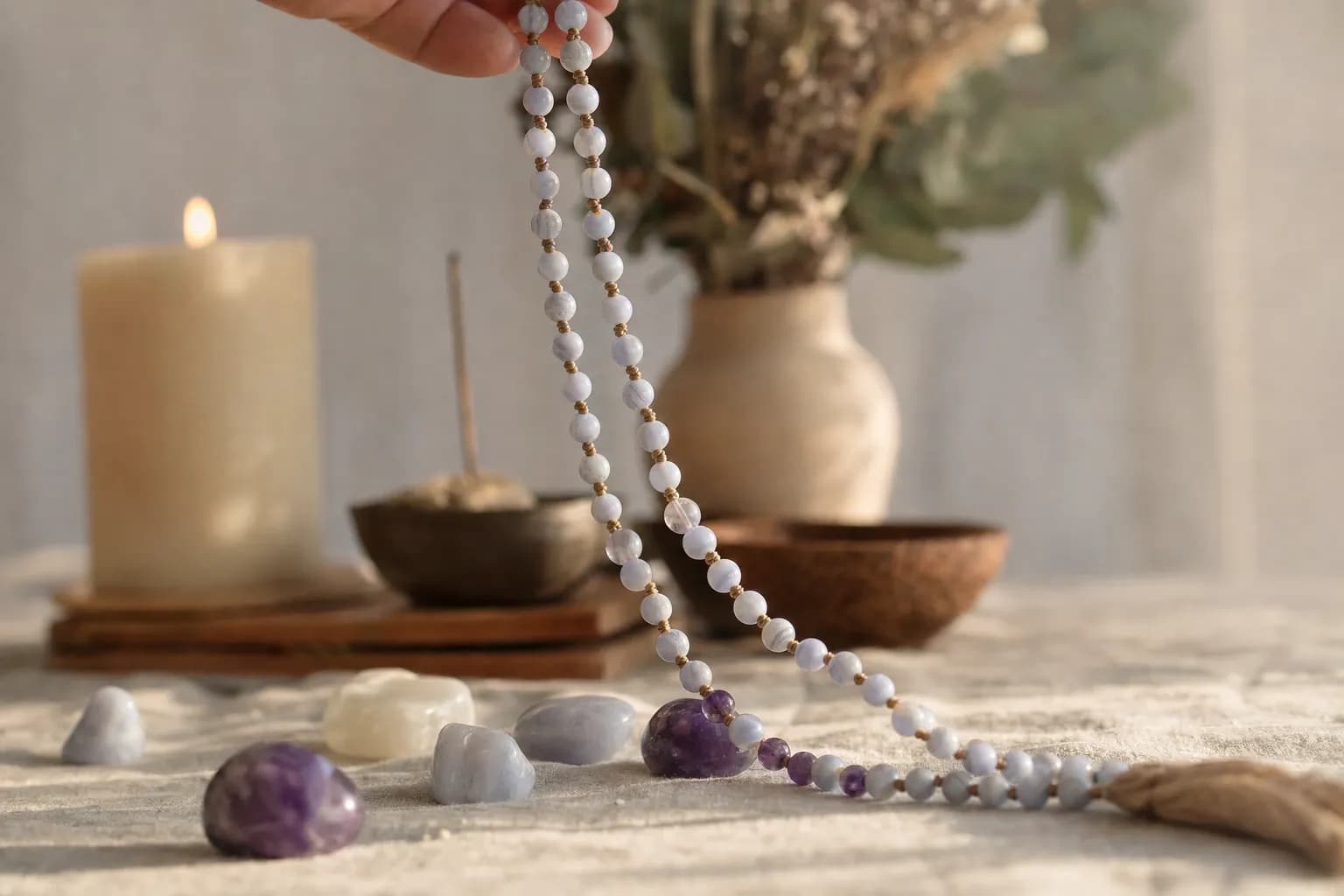
Some moments call for a stone in your hand. Not because it will fix anything, but because having something solid to hold while you breathe can shift your attention just enough to get back to yourself. That's the honest case for calming stones. They don't treat anxiety, and no responsible practitioner would say otherwise. What they can do is give the mind a tangible anchor during breathwork, grounding rituals, or a few counted breaths on a mala.
If you're here because anxiety is already running high right now, start with this: slow down your exhale, hold something in your palm, and keep reading at whatever pace suits you.
Why People Turn to Stones
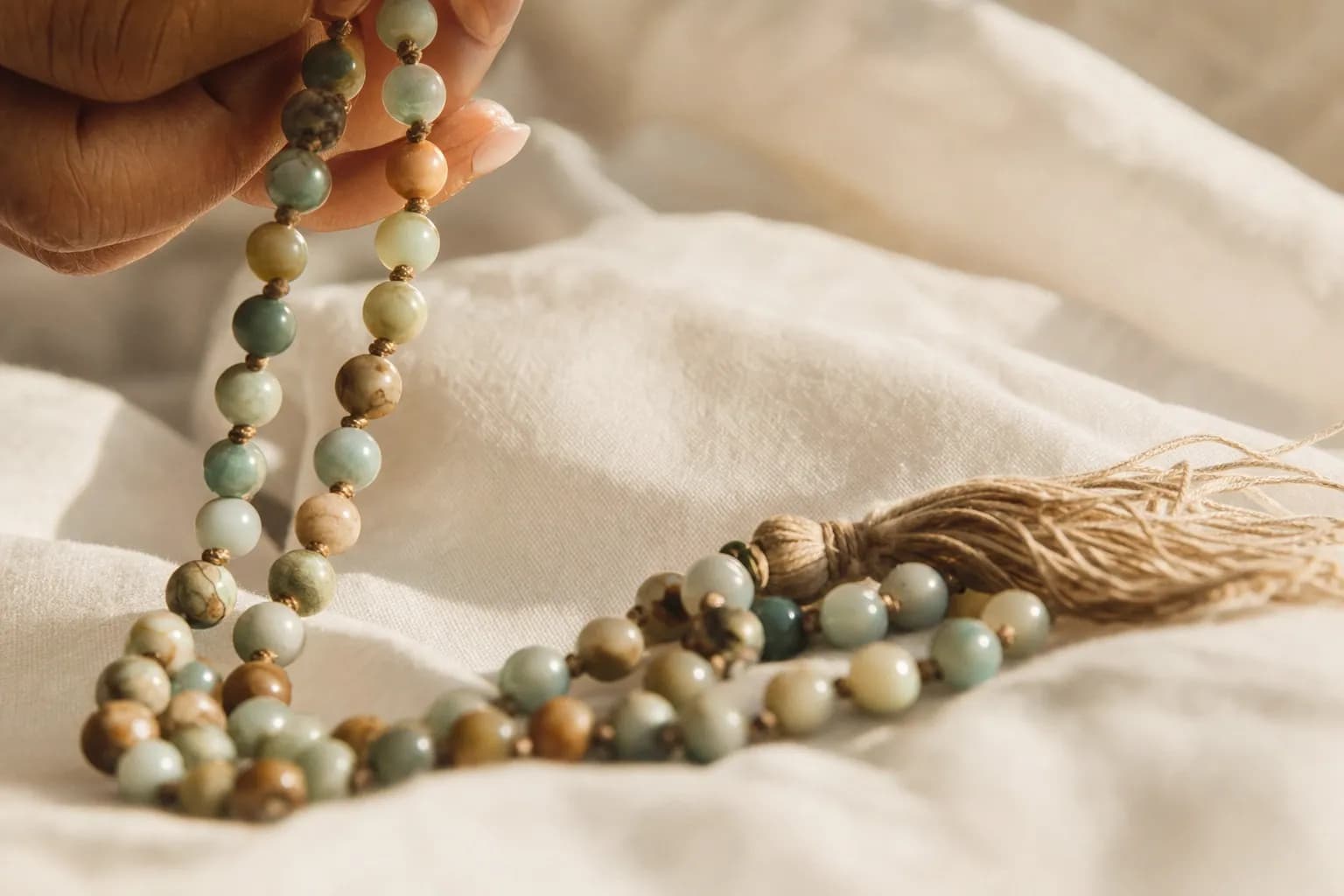
People have carried stones for steadiness across many traditions. Tibetan monks strung agate beads into 108-bead malas for japa meditation, counting one bead per breath cycle as a way to anchor the mind. Ayurvedic practice assigns different stones to different qualities of imbalance. Western crystal practice, more recent in its formal articulation, draws from both.
None of those traditions claim the stone does the work alone. The stone accompanies a practice. It's the tactile focus that keeps your attention from drifting during a grounding ritual. It's the physical reminder, worn on the wrist, to return to intention when your thoughts start to spiral.
If you're navigating clinical anxiety, panic disorder, or anything that significantly affects your daily life, please work with a qualified professional. Stones and professional support are not competing choices.
The Stones Practitioners Actually Choose
Amethyst
Amethyst is the first stone many people encounter for mental quieting, and it earns its reputation. Its colour runs from pale lavender to deep violet, depending on origin. In Western crystal practice, it's long been associated with calming mental restlessness and the particular difficulty of winding down at night. Many people keep a tumbled amethyst on a bedside table or slip one into a palm during an anxious moment.
Black Tourmaline
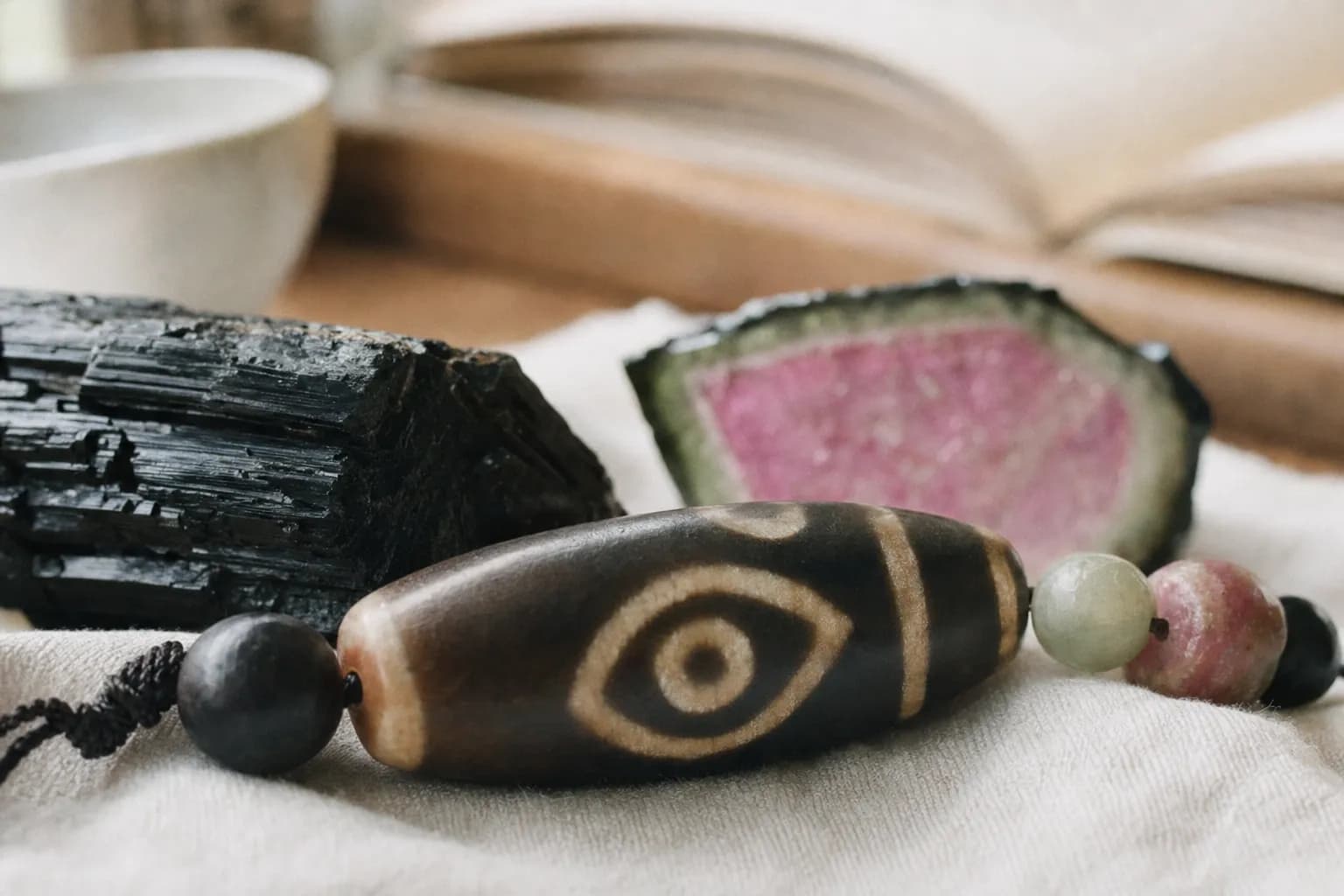
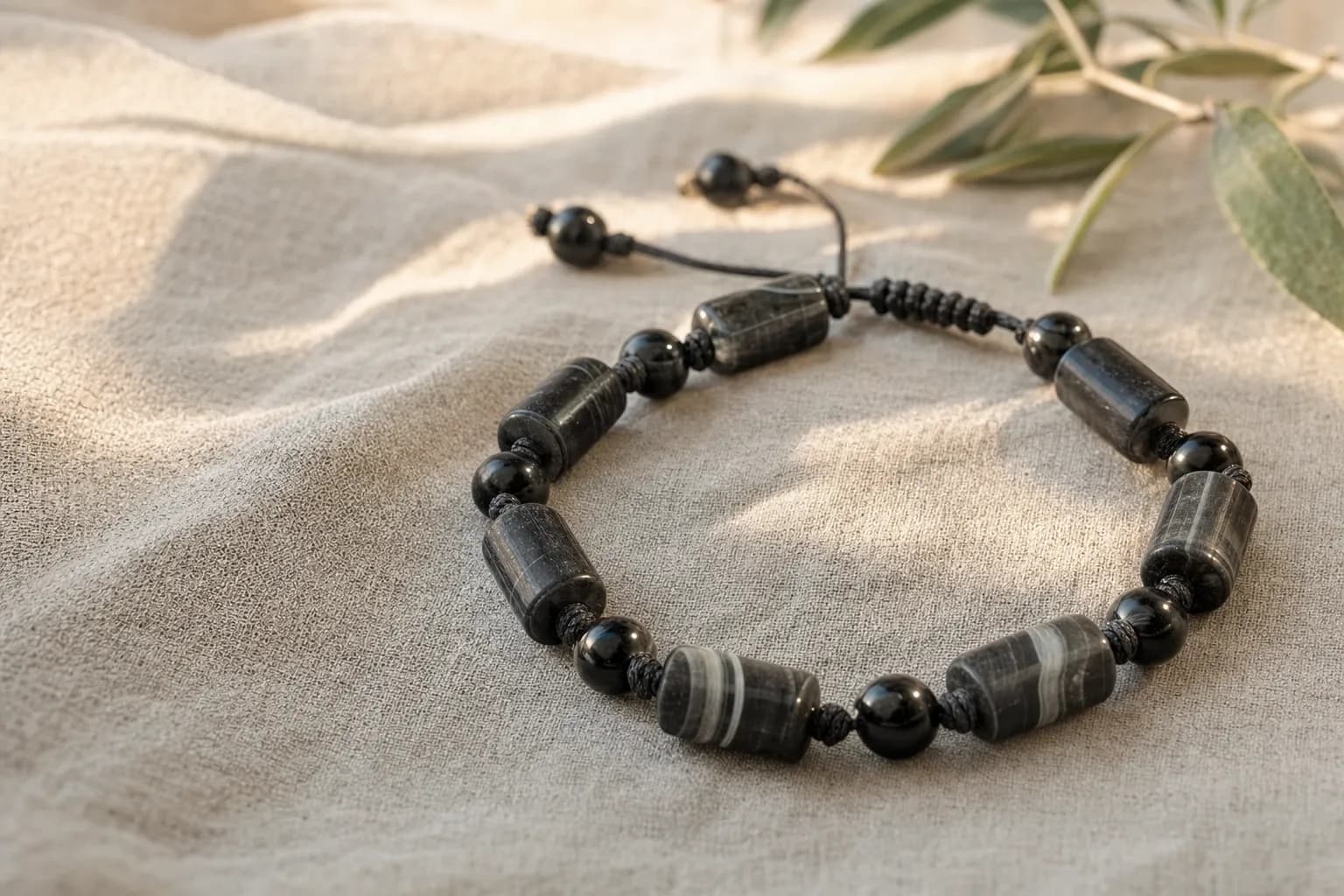
Black tourmaline is a dense, striated stone, often matte black with faint vertical lines running along its surface. Practitioners tend to choose it when anxiety has an outward quality: a sense of vulnerability, feeling porous to other people's energy, or simply unsafe in the world. It's one of the most commonly worn stones practitioners reach for when they feel ungrounded or unsafe. A small piece in a pocket or a bracelet on the left wrist are the most common ways people use it.
Lepidolite
Lepidolite has a distinctive shimmer from the mica content woven through its lavender and grey surface. In many crystal traditions, it's associated with softening overwhelm, particularly the kind that comes from too much input at once. It's a relatively soft stone, which matters for care. Hold it during slow breathing or place it on a desk as a visual anchor.
Blue Lace Agate
Blue lace agate is easy to identify: pale, banded blue and white, with a soft translucence. Practitioners often choose it specifically for mental chatter, that cycling loop of thoughts that won't settle. Its associations in Western practice centre on gentle quieting rather than energising, which makes it a natural companion for late-day wind-down rituals or journaling.
Moonstone
Moonstone carries a floating shimmer called adularescence, a blue-white glow that moves across the surface as light shifts. It's long been associated in many traditions with emotional steadiness through cycles of change. People who find their anxiety is tied to uncertainty or transition often gravitate toward it. Worn as a bracelet bead, it catches light in small reminders throughout the day.
Carnelian
Carnelian is a warm, translucent orange-red agate, and it belongs on this list for a specific kind of anxiety: the paralysis that comes with overwhelm or indecision. Where the other stones here tend toward quieting, carnelian is associated in Ayurvedic and Western practice with gentle forward momentum. Many people wear it as a reminder that action is available to them.
How to Actually Use Them
Passive wearing matters less than active use. A bracelet on your wrist does more when you pause to notice it. Here are the practices people find most grounding:
- Breath-counting on mala beads. A traditional mala has 108 beads, used in japa meditation (the Sanskrit word for repetitive, meditative recitation or counting). Hold each bead between thumb and forefinger for one full exhale, then move to the next. You can learn the full technique in our guide to counting breaths on mala beads.
- Holding a single tumbled stone. During a tense moment, press a smooth stone into your palm and focus on its temperature, weight, and texture. This isn't mystical; it's a deliberate redirect of sensory attention.
- Wearing a bracelet as a physical cue. When you notice the bracelet against your skin, use it as a prompt: take one slow breath before continuing whatever you were doing.
- Pairing stone use with a short grounding ritual. Even two minutes of deliberate breathing with a stone held in both hands shifts the quality of a difficult moment.
Choosing the Right Stone for You
Anxiety doesn't feel the same for everyone. Matching a stone to how yours actually presents makes more sense than choosing by popularity.
- Racing thoughts, mental chatter, difficulty sleeping: amethyst or blue lace agate, both associated with mental quieting.
- A sense of vulnerability or exposure: black tourmaline, chosen most often when anxiety feels like a boundary issue rather than an internal one.
- Overwhelm from too many inputs: lepidolite, carried or held during the moments when everything feels like too much.
- Paralysis and indecision: carnelian, worn as a reminder that motion is possible.
- Emotional uncertainty during change: moonstone, for the feeling that the ground keeps shifting.
At Ardor Rituals, a stone selection can go deeper than this kind of matching. The atelier uses Pythagorean numerology, drawn from your date of birth, alongside your stated intention to compose a personal talisman bracelet from individual stones chosen for you specifically. It's a different way of arriving at a combination, and one that many people find more resonant than choosing from a shelf.
Caring for Calming Stones
Stones used regularly benefit from periodic cleansing, which in traditional practice means clearing the accumulated energy of daily use and resetting the stone's association with your intention.
Salt water dulls a polished agate in weeks. Lepidolite is even softer and erodes with repeated salt water exposure. Moonlight doesn't damage any of the stones listed here, which makes it the most universally safe method. Leave stones on a windowsill or outdoors on the night of a full moon and bring them in the next morning.
Alternatives that work across all these stones:
- Sound bowl cleansing. The vibration of a Tibetan singing bowl, passed over or around the stones, is a widely used method.
- Smoke cleansing. Passing stones through the smoke of a dried herb bundle is common in many traditions.
- Moonlight. The safest and most accessible option, tied naturally to the lunar calendar.
After cleansing, hold the stone in both hands and spend a moment restating your intention. The practice of intention-setting isn't decoration. It's how you re-establish the stone's purpose in your daily ritual. For a more complete approach, a full cleansing ritual guide walks through the process step by step.
Frequently Asked Questions
Which crystal is best for anxiety?
Amethyst and blue lace agate are among the most widely chosen stones when anxiety runs high. Amethyst is associated in many traditions with mental quieting; blue lace agate is often reached for specifically when mental chatter is the main complaint. Neither replaces professional support, but both pair well with breathwork or mala meditation.
How do you use crystals for anxiety?
The most grounded approach is pairing a stone with a deliberate practice. Hold a tumbled piece of amethyst or lepidolite during slow, counted breathing. Some people count breaths on a 108-bead mala, holding each bead for one full exhale. Wearing a bracelet can also work as a physical cue to return to a calmer intention throughout the day.
Can crystals really help with anxiety?
Stones don't treat anxiety, and no responsible practitioner would suggest otherwise. What they can offer is a tangible focal point during breathwork or grounding practice. The ritual of choosing, holding, and intentionally using a stone adds a layer of mindfulness that many people find quietly steadying. For anything clinical, please work with a qualified professional.
What is the difference between black tourmaline and amethyst for anxiety?
Practitioners tend to reach for black tourmaline when anxiety has an external quality: a sense of vulnerability or feeling unsafe in the world. Amethyst is more often chosen for the internal kind. Racing thoughts, mental restlessness, difficulty winding down at night. Many people wear both, letting each serve a different moment in the day.
How do you cleanse crystals used for anxiety?
Moonlight is the safest and most universally applicable method; it won't damage any of the stones commonly used for calming practice. Avoid salt water with softer stones like lepidolite, as it erodes the surface over weeks. Sound bowls and smoke cleansing are solid alternatives and work for the full range of calming stones.
How often should I cleanse my anxiety crystals?
Most practitioners cleanse stones worn daily at least once a month. Many use the full moon as their natural rhythm, which ties stone care to an existing lunar cycle. If a stone has been through an especially intense period. High stress, conflict, or travel. It's worth cleansing sooner rather than waiting for the month to turn.