Dzi Beads: What the Patterns Mean and Why They Still Matter
Etched agate talismans worn across the Himalayas for centuries. Dzi beads carry patterns tied to protection, clarity, and spiritual merit. Here is what each motif means and how practitioners wear them today.
A Stone That Predates Its Own Explanation
Imagine a bead turning up in a Tibetan estate clearance. No maker's mark. No written record. Just dark agate, naturally banded, with ringed circular motifs etched across its surface in a pattern that's been recognised across the Himalayas for generations. Nobody can tell you exactly who made it or when. But everyone in the room knows what it is.
That scenario is not unusual. Dzi beads have been traded, inherited, and revered for centuries before written documentation caught up with them. You'll find examples in museum collections alongside antique religious objects, and you'll find comparable beads worn daily on wrists in Lhasa and Kathmandu right now. The origin debates remain genuinely open among scholars. What practitioners know is something more consistent: the patterns carry meaning, and that meaning has held across a very long time.
Where Dzi Beads Come From
The material and the making
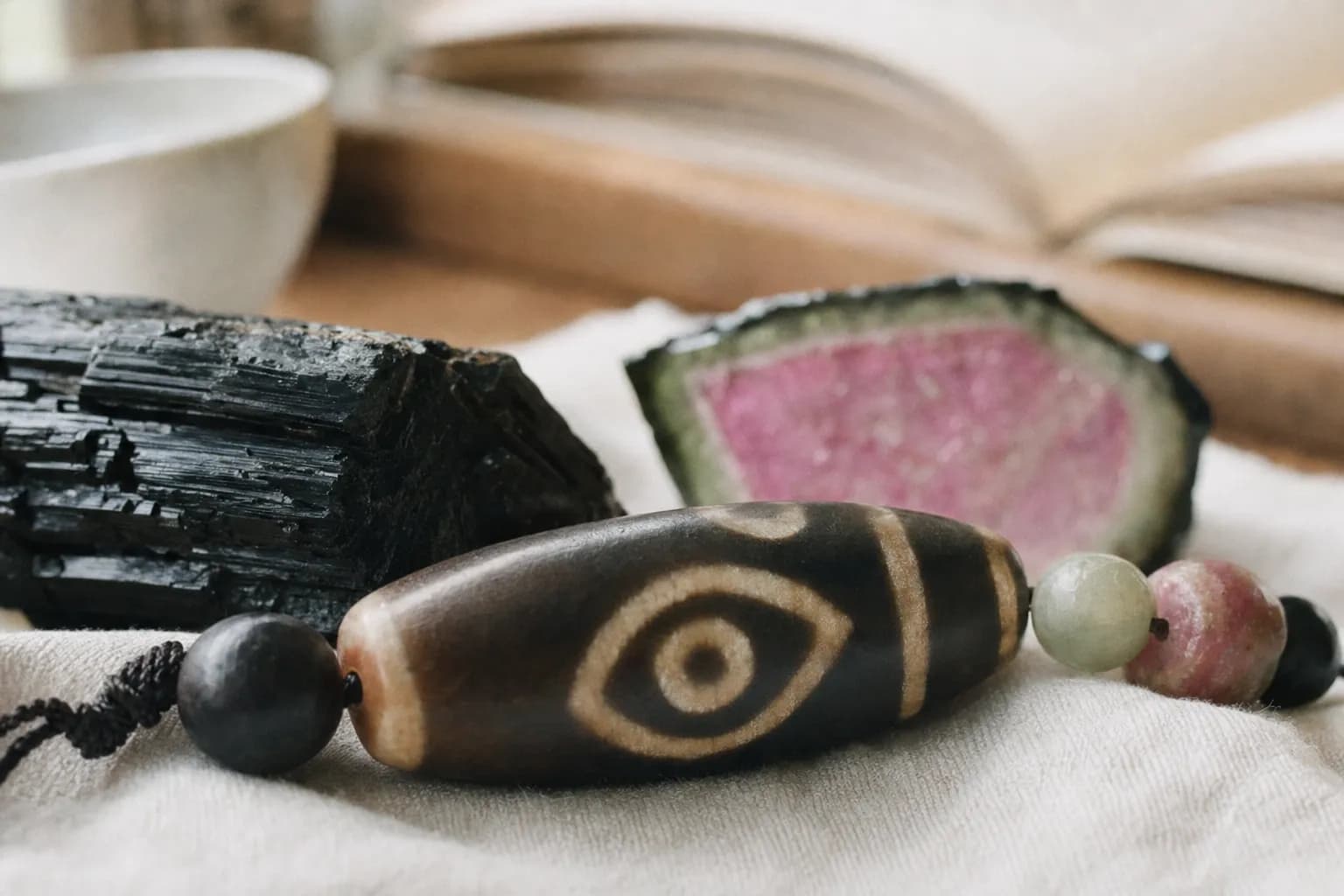
Dzi beads are etched agate. Agate is a banded form of chalcedony, a mineral prized for its durability and natural patterning. Ancient artisans worked the stone's surface using an etching process, applying alkaline solutions and heat to lighten specific areas, creating the characteristic eye motifs and linear designs against the darker base. The technique is precise. A single bead could take considerable time and skill to finish.
The natural banding of the agate often remains visible beneath the etching on older pieces. That layering of natural and worked pattern is part of what collectors and practitioners look for when assessing an authentic Dzi. Surface perfection is not the mark of age; character is.
How they entered Tibetan culture
Scholars have proposed several places of geographic origin: the Iranian plateau, the Indus Valley, the Tibetan plateau itself. What the record shows clearly is movement. Dzi beads travelled trade routes before becoming firmly identified with Tibetan Buddhist culture, where they were adopted as protective amulets and passed through families across generations. For a closer look at the origins of Tibetan Dzi patterns, including how specific motifs map onto Buddhist symbolism, that article goes considerably deeper.
One distinction worth understanding: antique Dzi beads, meaning pieces centuries old with documented provenance, are rare and treated as heirlooms. Contemporary Dzi, made in the same tradition using comparable materials and etching methods, are what most practitioners wear today. A reputable source will tell you which you're looking at rather than using the word "authentic" as a blanket claim.
Reading the Patterns: What Each Design Is Associated With
The nine-eyed Dzi
In Tibetan tradition, the nine-eyed Dzi is considered the most prized pattern. The "eyes" are the ringed circular motifs etched onto the bead surface, each one a deliberate mark rather than a decorative flourish. Nine of them together carry associations with merit accumulation, spiritual protection, and good fortune. Antique examples with nine eyes have been passed through families for generations as among the most valued pieces a household could hold.
The number nine holds significance in Tibetan Buddhist cosmology, which is part of why this particular count carries such weight in practice.
Other significant patterns
Dzi bead patterns each carry their own traditional associations. Here's what practitioners and Tibetan Buddhist tradition connect to the most common designs:
- One-eyed Dzi: associated with clarity of vision and concentration; often chosen by people seeking focus in meditation or decision-making
- Two-eyed Dzi: associated with harmony in relationships, balance between partners, and mutual understanding
- Three-eyed Dzi: connected to the Three Jewels of Buddhism (the Buddha, the Dharma or teachings, and the Sangha or community) and to the wealth of body, speech, and mind
- Lotus pattern Dzi: the lotus, which rises through water to bloom above the surface, is associated in Buddhist imagery with spiritual unfolding and purity of intention
- Tiger-stripe Dzi: linear striped patterns associated with strength and courage; chosen by practitioners working with themes of resilience
None of these associations function as promises. They are the accumulated meaning that a tradition attaches to a symbol, passed forward through use and belief rather than written contract.
How Dzi Beads Are Worn and Used in Practice
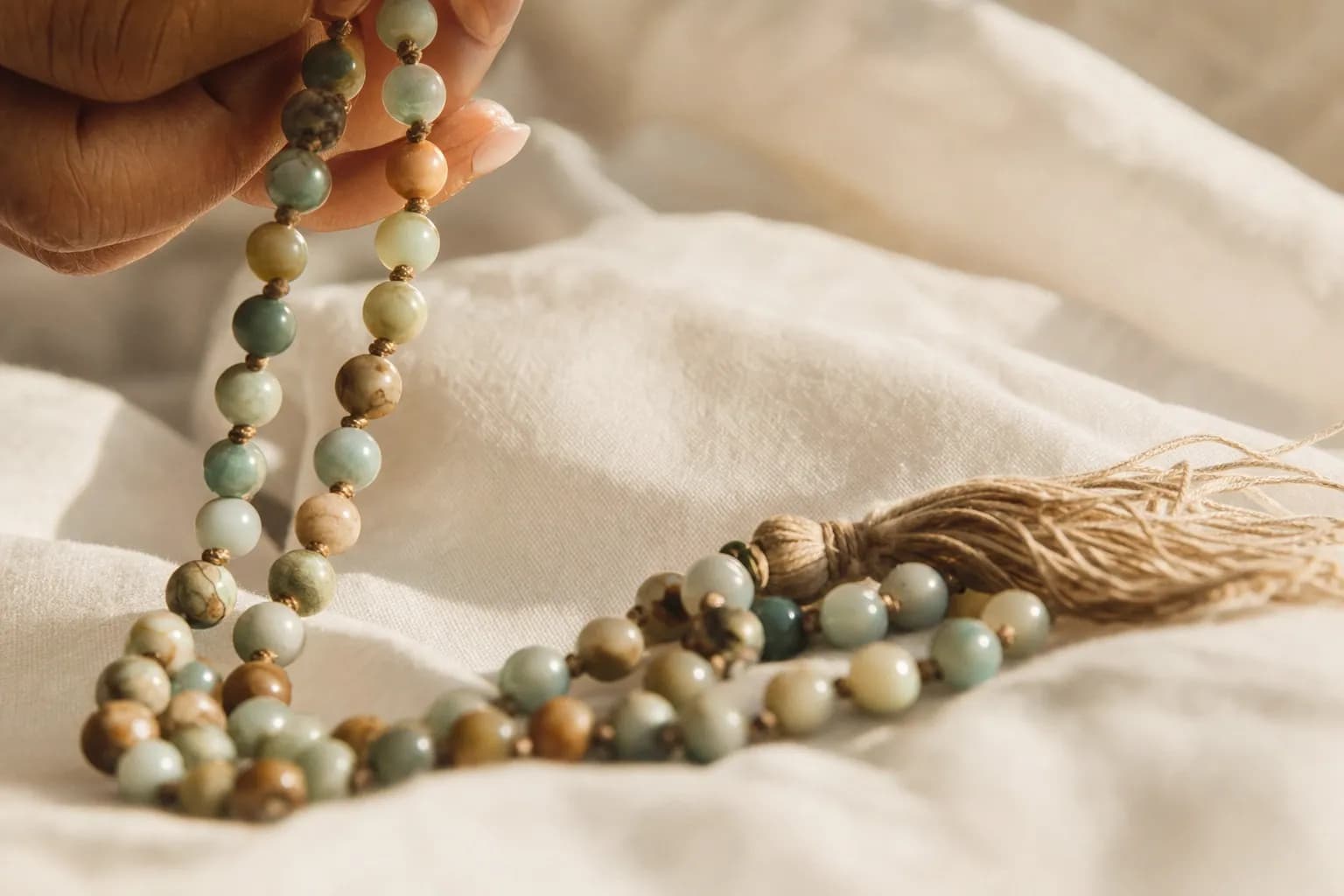
Dzi beads have traditionally been worn as necklace centerpieces, incorporated into wrist malas, or carried as pocket amulets. Each approach reflects a different relationship with the bead: displayed, worn close, or held.
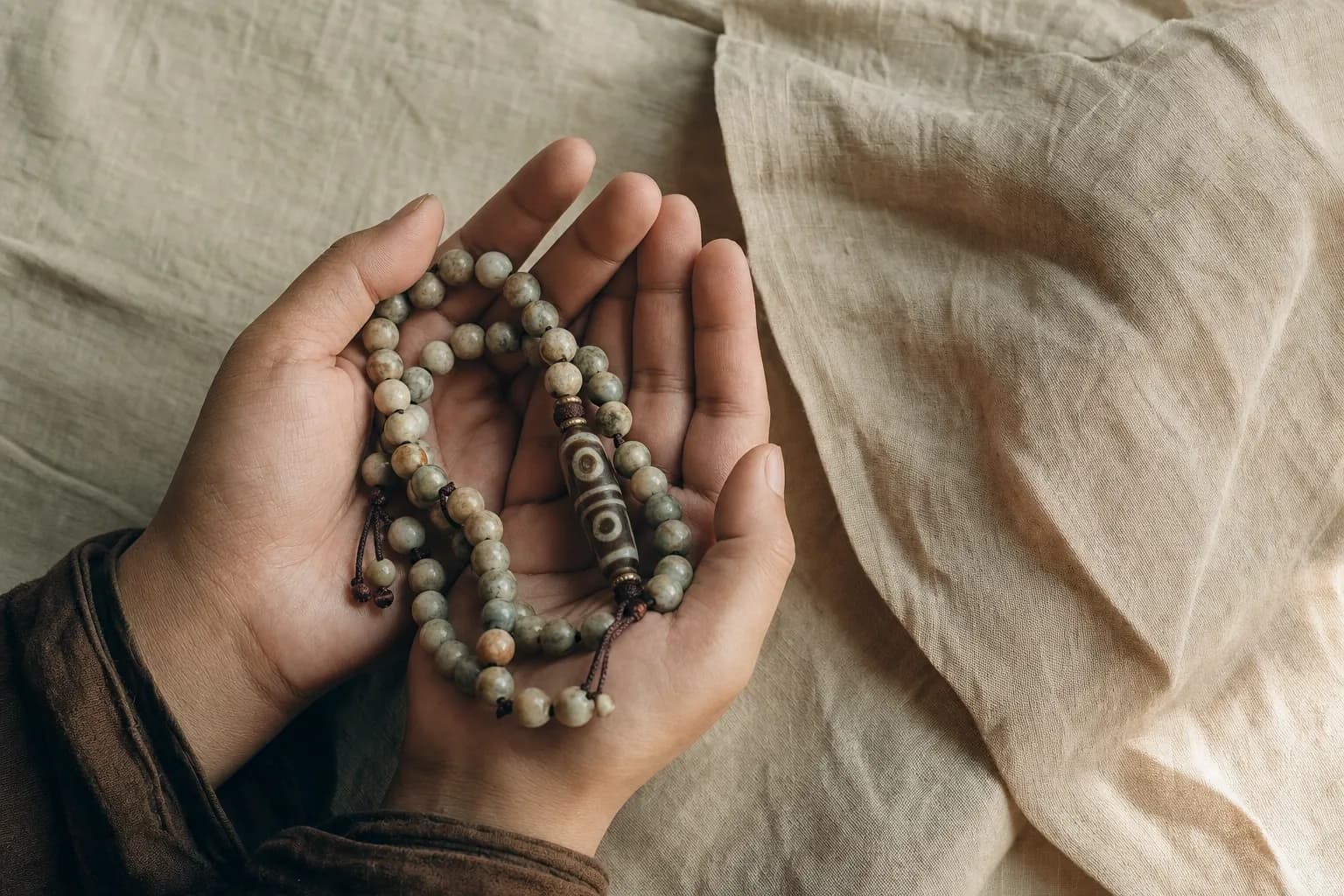
In mala practice, a mala is a 108-bead strand used for breath counting and mantra repetition, the Himalayan equivalent of a rosary. The Dzi often sits as the guru bead, the single larger bead at the strand's junction point where the practitioner pauses, reflects, and reverses direction rather than crossing over. Placing a Dzi there gives the bead a structural significance in the practice, not just a decorative one.
Before first wear, many practitioners take a moment to set an intention with the bead. Hold it in both palms. Breathe slowly. State, silently or aloud, what you're carrying it for. It's a small act, but it shifts the bead from an object into a practice.
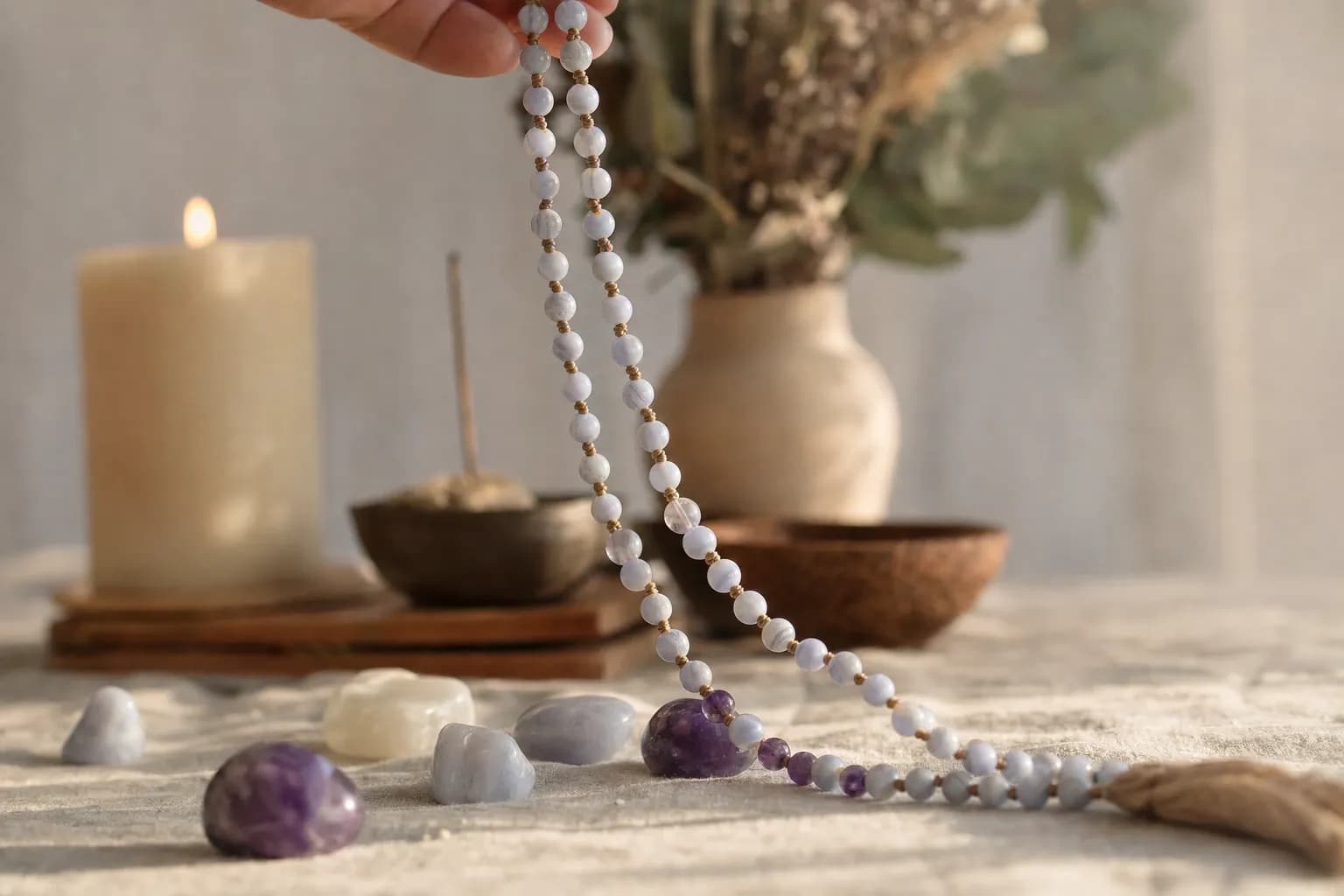
Pairing a Dzi with complementary gemstones sharpens that intention further. A protective amulet stone like black tourmaline alongside a Dzi creates what practitioners describe as a grounded anchor. Tiger eye paired with a Dzi draws on associations with courage and focus. Amethyst shifts the combination toward meditative clarity. To see which gemstones practitioners reach for in different contexts, that guide covers the most-used stones and what traditions connect them to.
At Ardor Rituals, the atelier composes Dzi centerpieces with gemstones selected through Pythagorean numerology and your stated intention. If you want to compose your own Dzi talisman bracelet, the process begins with your date of birth and what you're holding.
Caring for Your Dzi Bead
Etched agate is a durable material. But the etching itself is more delicate than the stone beneath it, and prolonged exposure to water or chemical contact can wear the surface over time. A few minutes rinsing is unlikely to cause damage. Salt water soaks are a different matter; the abrasive mineral content can degrade the etching gradually.
Traditional Tibetan practice uses smoke cleansing, particularly juniper or sandalwood incense, to clear and refresh a bead's energy. This is safe for agate and carries its own ritual dimension. Overnight moonlight cleansing is widely practised among stone workers and is gentle enough for the etched surface. These two methods cover most cleansing needs without risk.
Store your Dzi separately from harder stones. Diamonds and sapphires scratch agate. A small pouch or a lined compartment keeps the surface intact.
A care sequence worth following:
- Remove your Dzi before swimming, bathing, or using cleaning products
- Wipe it gently with a dry, soft cloth after wear
- Cleanse monthly with overnight moonlight or a pass through incense smoke
- Store in a soft pouch, away from harder gemstones
- Inspect the etching periodically; if the surface looks dull, reduce water contact
Frequently Asked Questions
What do Dzi beads mean?
Dzi beads are etched agate talismans from the Himalayan region, each worn for its symbolic pattern. In Tibetan tradition, the number and shape of eye motifs carry specific associations: nine eyes with fortune and protection, two eyes with relational harmony, one eye with clarity. They are worn as spiritual companions, not decorative items.
What is the most powerful Dzi bead?
In Tibetan tradition, the nine-eyed Dzi is considered the most prized. It is associated with merit, protection, and good fortune, and antique examples have been passed through families as heirlooms for generations. Powerful in this context means culturally revered and rich in symbolic meaning, not a measurable force.
How do I know if a Dzi bead is authentic?
Authentic antique Dzi beads show natural agate banding beneath the etched surface, small natural imperfections, and a patina that develops over decades of wear. Contemporary Dzi made in the same tradition are also widely used. A reputable source will distinguish between antique and traditionally crafted modern beads rather than making blanket authenticity claims.
Can anyone wear a Dzi bead, or is it only for Buddhists?
Dzi beads originated in Tibetan Buddhist culture but have been worn across the Himalayan region by people of different backgrounds for centuries. Many people outside the tradition wear them as meaningful talismans. Approaching them with awareness of their cultural roots and wearing them with a clear personal intention is generally considered a respectful practice.
How should I cleanse and care for a Dzi bead?
Etched agate is sturdy but sensitive to prolonged water exposure and harsh chemicals, which can damage the surface etching. Overnight moonlight cleansing and smoke cleansing with juniper or sandalwood incense are both traditional and safe. Avoid salt water soaks. Store your Dzi separately from harder gemstones to protect its finish.
What gemstones pair well with a Dzi bead?
Pairing depends on intention. A Dzi worn with tiger eye is associated with grounded confidence; with amethyst, the focus shifts toward meditative clarity. Black tourmaline alongside Dzi is chosen by practitioners seeking a protective anchor. At Ardor Rituals, Dzi centerpieces are composed with gemstones selected through numerology and personal intention.