Amethyst: What the Stone Means, Where the Tradition Comes From, and How to Wear It Well
Amethyst has appeared in Greek wine vessels, medieval bishop's rings, and Tibetan mala beads. Here's what practitioners actually do with it, and why.
A Stone That Has Never Really Gone Quiet
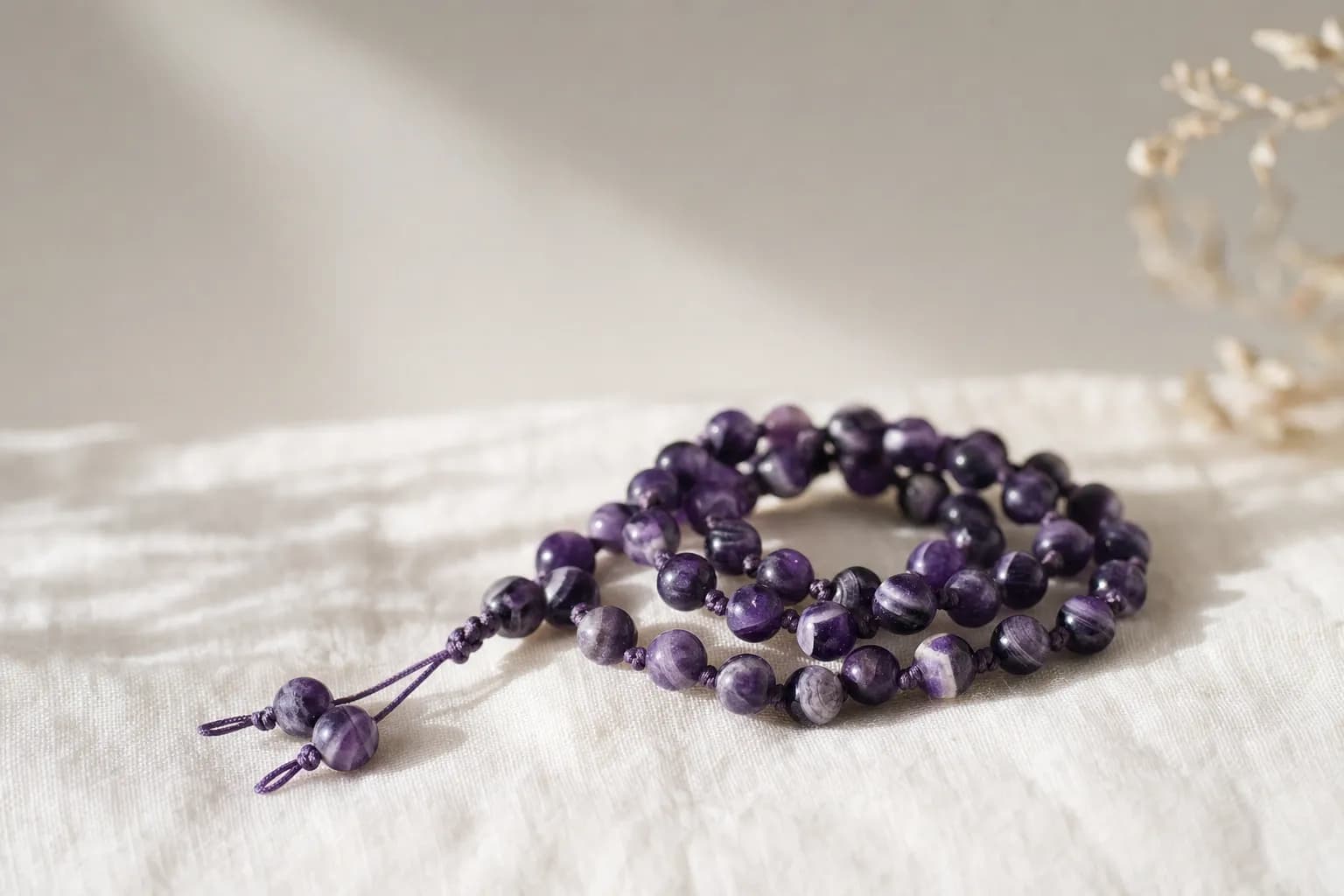
Hold a polished amethyst bead up to morning light and you'll see exactly why it has refused to disappear from human hands for millennia. The violet colour comes from iron impurities locked inside quartz crystal, deepened by natural irradiation over thousands of years underground. No two beads land at exactly the same shade.
This purple gemstone shows up across an unusual range of cultures: carved into Greek wine vessels, set into medieval bishop's rings, strung into Tibetan mala beads. That's not a trend. It's a long, slow presence. What follows is not a list of promises. It's an account of what practitioners have actually done with this stone, and why the details matter.
Where the Tradition Comes From
The Greek and Roman roots
The word amethyst comes directly from the Greek amethystos, meaning "not intoxicated." Greeks carved drinking cups from the stone and wore amethyst amulets in the belief that the stone guarded against excess. The Romans carried the tradition forward. Medieval European clergy later adopted it for a different kind of sobriety: amethyst appeared in episcopal rings and ecclesiastical jewellery as a symbol of spiritual clarity and composed authority.
Royal collections across Europe included amethyst prominently. Not because it was the rarest stone available, but because its associations fit. A stone linked to clear-headedness suited people who needed to be seen making careful decisions.
Amethyst in Buddhist and Tibetan practice
In Tibetan Buddhist practice, amethyst beads appear in the mala, a string of 108 beads used for japa (mantra repetition) and breath counting. The practitioner holds each bead between thumb and forefinger, completes one breath or one mantra repetition, then moves to the next. Over a full mala, that's 108 deliberate moments of attention.
Amethyst is associated in this context with the quality of mind suited to sustained practice: steady, unhurried, not easily pulled away. Different lineages assign their own meanings; no single tradition speaks for all. But the thread of calm attention appears across most of them.
What Practitioners Actually Associate With Amethyst
Practitioners tend to reach for amethyst when they want a sense of mental quiet rather than stimulation. It's a stone people wear on days when they need to step back before reacting, or when they're trying to hold a longer view of something difficult. That's an intention, not a medical claim.
As a focus anchor during how mala bead counting works in practice, amethyst gives the fingers something purposeful to return to. The repetitive contact with each bead settles scattered attention without demanding effort. It works because the body follows a rhythm even when the mind won't cooperate.
Some practitioners working within Pythagorean numerology associate amethyst with birth numbers 3 and 7, both linked to intuition and reflective thinking in that system. At Ardor Rituals, the atelier uses this numerological reading alongside your stated intention when composing a custom talisman composed around your intention. The result is a bracelet built for a specific person, not a general-purpose piece.
One common myth worth addressing: that amethyst must be "activated" through elaborate ceremony before it can be used. Most practitioners simply hold the stone, state their intention clearly in their own mind, and begin. The gesture matters more than the ritual complexity.
Choosing and Wearing Your Amethyst
Amethyst runs from pale lavender to deep Siberian violet. Darker stones are rarer and often more expensive, but they're not inherently more potent in practice. Choose the colour that you'll actually want to hold and look at every day.
The stone appears in several forms worth knowing:
- Tumbled beads strung into a mala bracelet, worn on the wrist for daily contact
- A single raw point, placed on a desk or altar as a visual anchor during work
- A carved palm stone, held during breathwork or seated practice
Wearing position carries its own tradition. Many stone-wearing lineages hold that the left wrist draws qualities inward, while the right wrist projects intention outward. Practitioners who want a sense of calm focus through their day often choose the left side for amethyst. Neither position is wrong; the choice reflects your intention.
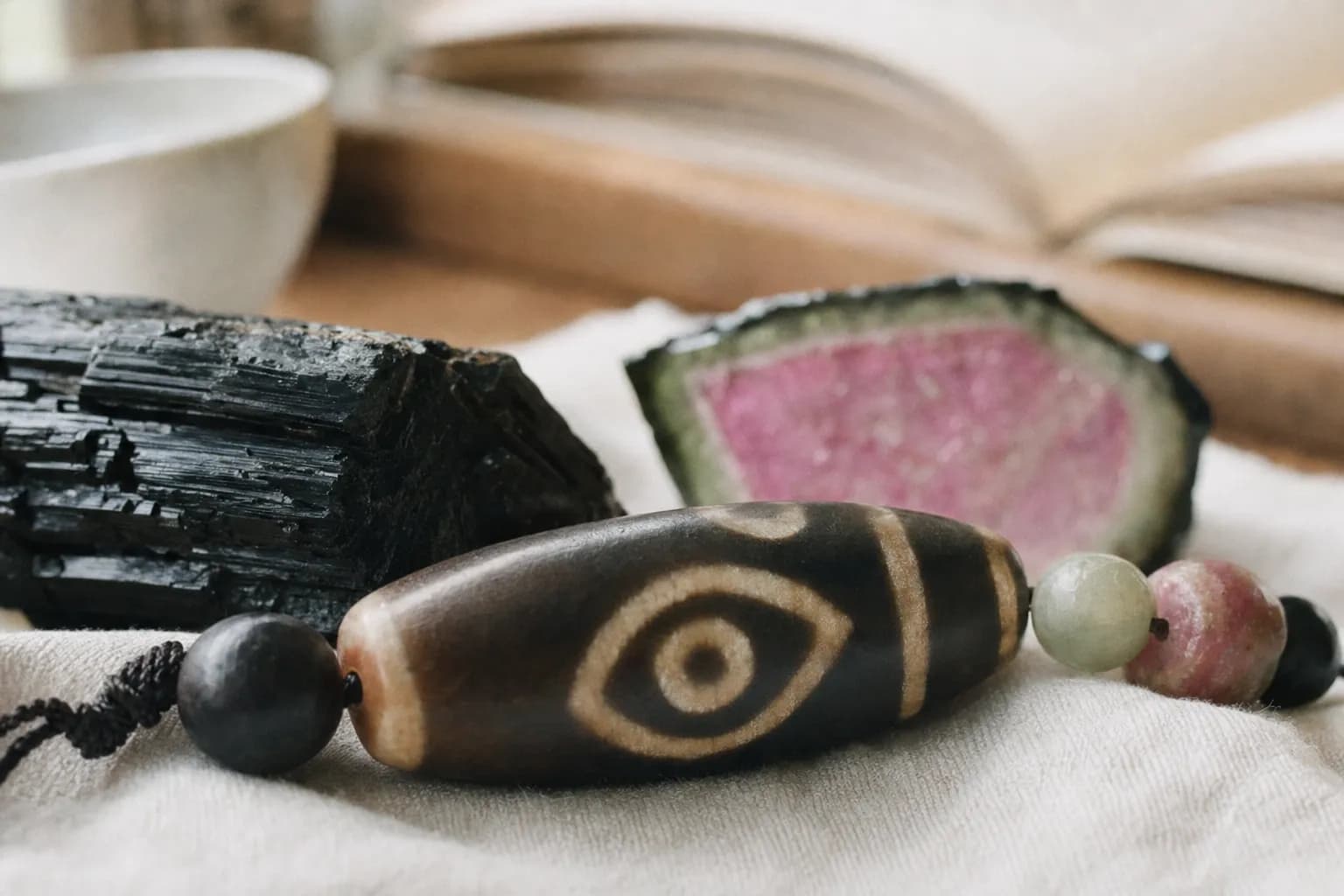
For combinations, amethyst and clear quartz layer well when the goal is mental clarity. Amethyst with black tourmaline suits practitioners who want grounding alongside a quieter quality of attention. See stones practitioners reach for when building a protective combination for a fuller look at how tourmaline and similar stones are used together.
Living With Amethyst: Daily Ritual and Care
A simple morning practice: before putting your amethyst bracelet on, hold it in both hands and breathe slowly. Move through three beads, one full breath per bead. That's it. Thirty seconds. It sets a quiet anchor before the day pulls you in different directions.
Amethyst stone properties include one practical vulnerability: the colour fades under prolonged direct sunlight. The iron impurities that create the violet tone are sensitive to UV exposure, and a bracelet left on a sunny windowsill for weeks will lose depth noticeably. Moonlight doesn't carry that risk. Leave your bracelet on a windowsill overnight on a full or new moon and it will cleanse without any colour loss.
Avoid prolonged salt water contact. It dulls the surface of polished beads over time. Smoke cleansing with cedar or palo santo is safe for amethyst and widely used among practitioners. For a complete sequence, including how to prepare your space and set intention through the process, the full cleansing ritual guide covers each method in detail.
When wearing amethyst daily, a soft cloth wipe after removing it keeps the surface clear. That's genuinely all the maintenance most bracelets need between full cleansing sessions.
Frequently Asked Questions
What is amethyst used for in spiritual practice?
Practitioners reach for amethyst when seeking a sense of mental stillness and focused attention. It appears in Tibetan malas for breath-counting and japa practice, is worn as a daily intention anchor, and across many traditions is associated with clarity of mind rather than stimulation or intensity.
Can amethyst fade in sunlight?
Yes. Amethyst's violet colour comes from iron impurities within quartz, and prolonged exposure to direct sunlight causes noticeable fading over weeks or months. Store your amethyst away from sunny windowsills and cleanse it by moonlight rather than leaving it in the sun to preserve the colour.
Which wrist should I wear amethyst on?
Many stone-wearing traditions hold that the left wrist draws in a stone's associated qualities, while the right projects outward. Practitioners who want to carry a sense of calm focus through their day often wear amethyst on the left wrist as a quiet reminder of that intention. Either choice is valid.
How do I cleanse an amethyst bracelet?
Moonlight is the most widely recommended method. Place your bracelet on a windowsill overnight on a full or new moon. Smoke cleansing with cedar or palo santo works well too. Avoid prolonged salt water contact, which dulls polished beads over time, and keep the stone away from strong direct sunlight.
Does amethyst pair well with other stones?
Practitioners often pair amethyst with clear quartz to layer a sense of mental clarity, or with black tourmaline when grounding alongside a calm, focused quality is the goal. The most coherent combinations come from a clear intention. A custom talisman bracelet built around your specific purpose brings more considered results than pairing stones at random.