The Stones Practitioners Reach for When Anxiety Takes Hold
When the nervous system runs loud, certain stones have served as anchors for attention across Tibetan, Vedic, and European folk traditions. Here's which ones practitioners reach for, and how to actually use them.
Why People Turn to Stones When Their Nervous System Is Loud
You know the feeling. Your thoughts are cycling, your chest is tight, and no amount of telling yourself to calm down is doing anything useful. It's in those moments that many people reach for something tangible: a cool piece of amethyst, a black tourmaline bead worn against the wrist, a smooth carnelian tumbled between the fingers during a difficult phone call.
Stones are not medicine. They don't interrupt a panic response or treat anxiety at its source. What they do is give the body somewhere to land. Used within a breath practice or worn as a daily reminder of intention, calming stones have companioned human stress for centuries across Tibetan, Vedic, and European folk lineages. Three distinct traditions, each with its own stone lore, all arriving at a similar insight: the physical world can anchor the scattered mind.
If you're managing anxiety with professional support, keep doing that. These stones belong alongside your practice, not instead of it.
Seven Stones Practitioners Consistently Reach For
Below is a brief entry for each stone, followed by a summary list for quick reference.
Amethyst
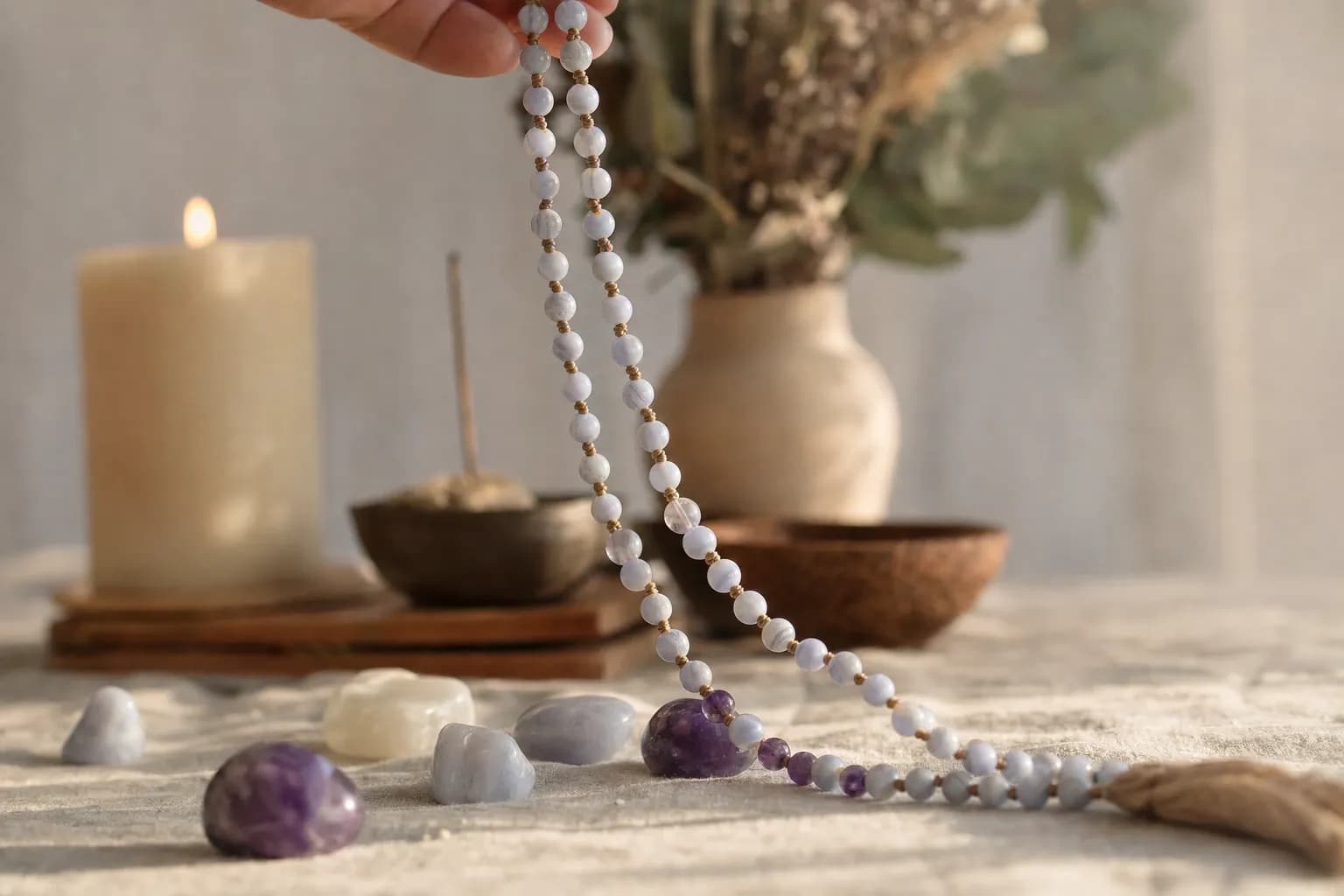
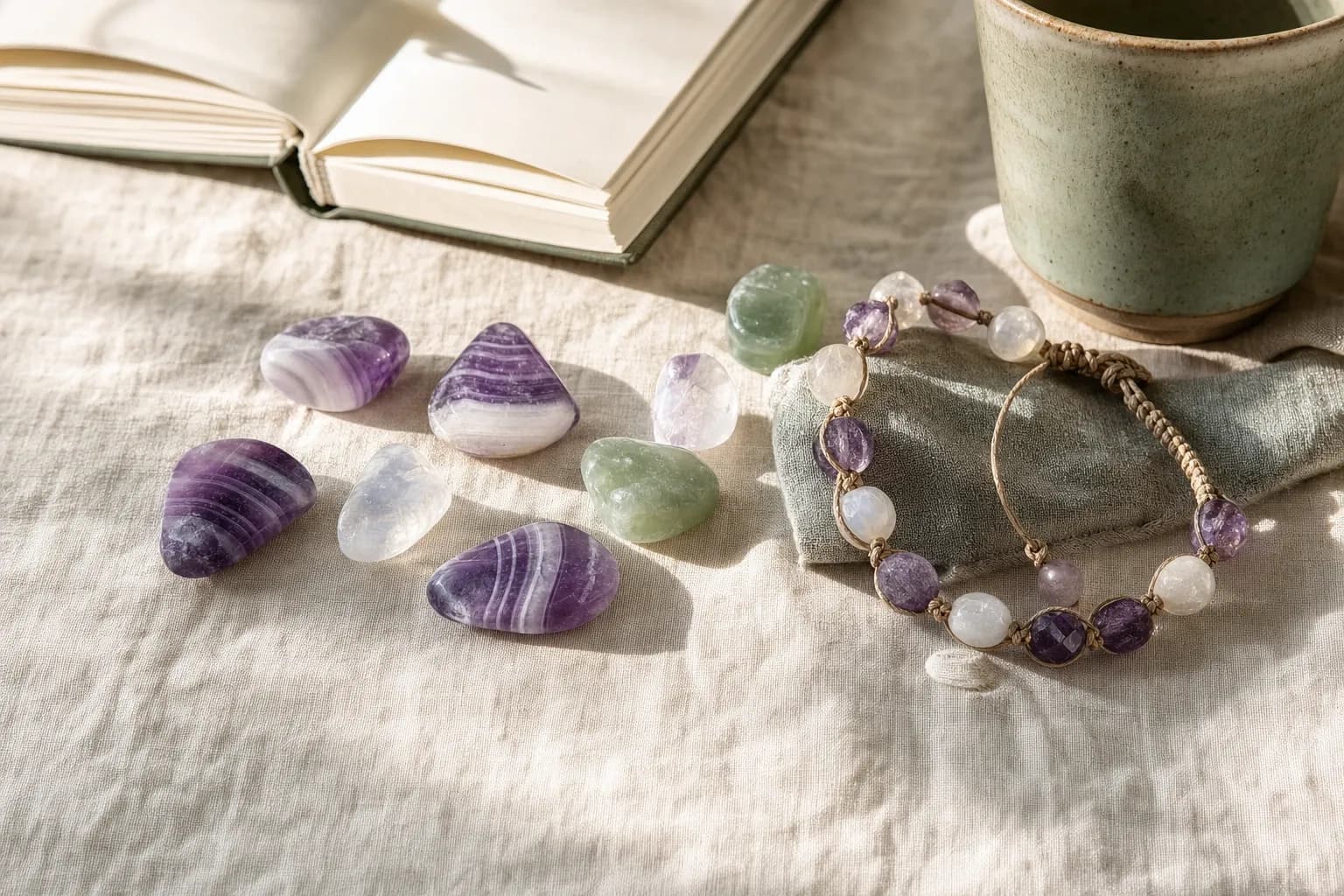
Amethyst is the stone that appears most consistently across grounding crystals traditions worldwide. In Vedic practice it's associated with quieting mental chatter; in European folk lineage it's long been placed under pillows or worn close to the head. Hold a tumbled piece against your sternum during slow exhales and notice where your attention settles.
Black Tourmaline
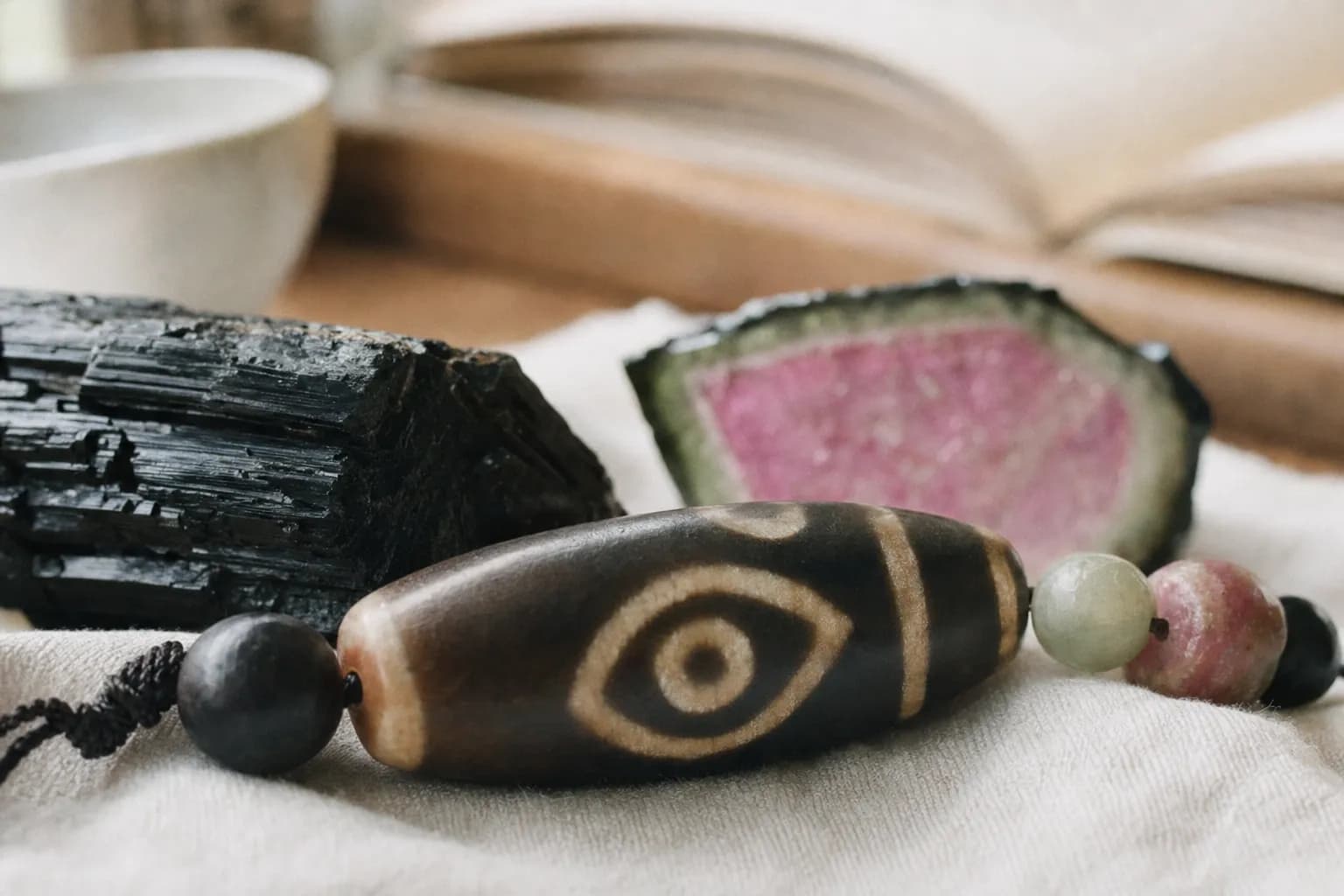
Practitioners reach for black tourmaline when they need a sense of boundary between themselves and a chaotic environment. In Tibetan tradition, dark protective gemstones were worn to keep one's own energy contained. Wear it on the left wrist, the receiving side in many folk traditions, as a quiet reminder that you get to decide what you let in.
Moonstone
Moonstone has been used in Vedic and South Asian jewelry practice for thousands of years, particularly for emotional steadiness during periods of change. It's a stone for stones for stress that builds gradually: the kind of low-grade, unrelenting pressure that wears you down across weeks rather than hours. Many people pair it with amethyst in a composed bracelet for layered intention.
Blue Lace Agate
This pale, banded stone carries one of the quieter reputations in crystal practice. European lapidary traditions associated banded agates with measured speech and calm deliberation. When anxiety shows up as jaw tension or racing words, blue lace agate is the stone practitioners tend to reach for. Hold it in your non-dominant hand during a conversation you're dreading.
Lepidolite
Lepidolite is a lithium-bearing mica with a soft, lavender sheen. It's worth knowing: lepidolite is not water-safe. Salt water and prolonged soaking will degrade its layered structure quickly. Use moonlight cleansing only. In contemporary crystal practice it's associated with a sense of lightness after periods of emotional weight.
Smoky Quartz
Smoky quartz is one of the most reliable grounding crystals in the practitioner's toolkit. Its color comes from natural irradiation of clear quartz; the result is a stone that feels dense and settled in the hand. In Scottish folk tradition it was set into Highland jewelry as a stabilizing talisman. Place it on your desk during work that demands sustained attention.
Carnelian
Carnelian is a different energy. Where amethyst quiets, carnelian steadies. In ancient Egyptian and Persian traditions it was worn by those who needed courage before difficult tasks. When anxiety shows up as paralysis rather than overwhelm, carnelian gives the hands something warm and purposeful to hold. Many people wear it as a reminder that forward motion is still possible.
Quick-reference list: traditional associations at a glance
- Amethyst. Quieting of mental noise; associated with Vedic and Western folk traditions
- Black tourmaline. A sense of energetic boundary; Tibetan protective lineage
- Moonstone. Emotional steadiness through sustained pressure; Vedic jewelry tradition
- Blue lace agate. Calm speech and deliberation; European lapidary tradition
- Lepidolite. Lightness after emotional weight; contemporary crystal practice
- Smoky quartz. Grounded, settled attention; Scottish Highland talisman tradition
- Carnelian. Courage and forward motion; Egyptian and Persian traditions
How to Actually Use a Calming Stone (Not Just Wear It)
Wearing a stone and using a stone are two different things. A bracelet on your wrist all day is a passive reminder. A stone held with conscious attention during a breath practice is an active one. Both matter. The combination is where crystal practice becomes genuinely useful.
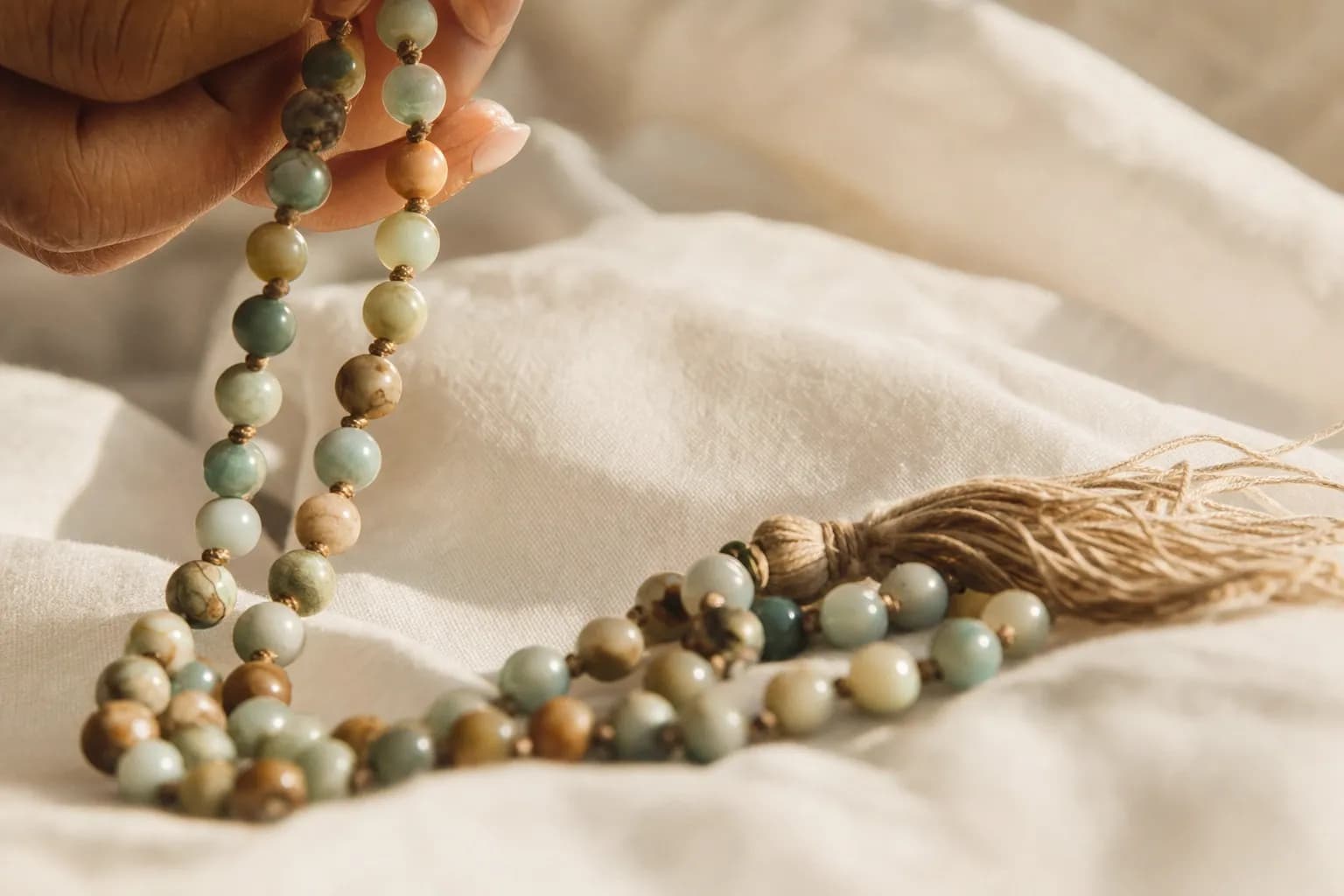
Japa meditation is the practice of moving through beads one by one, usually counting breaths or repeating a chosen phrase. A traditional mala has 108 beads, a number significant in both Hindu and Buddhist cosmology. You hold each bead between thumb and middle finger for one full breath, then move to the next. The physical count gives the restless mind a job, which is often exactly what anxious thinking needs.
You don't need a full 108-bead mala to start. A single tumbled stone in your coat pocket works as a tactile anchor. When you notice the familiar tightening, press the stone briefly between your fingers and take one slow breath before you respond to whatever triggered it. That pause is the practice.
A simple sequence for working with calming stones intentionally:
- Before first wear, hold the stone in both hands and state your intention aloud or silently. Be specific: "I'm wearing this as a reminder to pause before I react."
- In the morning, touch the bracelet or stone and take three slow breaths before you look at your phone.
- During a difficult moment, press the stone between your fingers and exhale fully before speaking or deciding.
- In the evening, remove the bracelet mindfully rather than leaving it on until it becomes invisible.
- Once a month, reset your intention at the new or full moon alongside a cleansing ritual.
Choosing a Stone That Fits Your Intention, Not Just Your Aesthetic
A stone that catches your eye in a photograph may not be the one your practice needs. Aesthetic pull matters, but it's one signal among several. Intention is the sharper filter.
One traditional lens for stone selection is Pythagorean numerology, a system that reduces your date of birth to a single-digit life path number, each associated with particular energetic qualities and, by extension, particular stones. It's not physics. It's a structured way of holding a question: what kind of support am I genuinely reaching for?
At Ardor Rituals, each custom talisman bracelet is composed individually around your date of birth and intention, drawing on this numerological framework alongside the practitioner's knowledge of stone character. The result is a bracelet with internal coherence rather than a collection of pretty beads.
If you want to explore stone meanings before committing to a composed piece, the practitioner's guide to healing crystals on this journal covers a wider range of stones and their traditional contexts in detail.
A single stone is a focused companion. A composed bracelet allows for layered intention: grounding and boundary-setting together, or clarity alongside emotional steadiness. Neither is more valid. The question is what your practice actually calls for right now.
Caring for Stones You Lean on Often
Salt water dulls a polished agate in weeks. Moonlight doesn't. This is not a minor distinction when you're working with stones daily.
The cleansing method matters, and it varies by stone:
- Moonlight cleansing works for all stone types. Leave stones on a windowsill overnight during the full or new moon. Both lunar phases are used; full moon for releasing, new moon for intention-setting.
- Smoke cleansing with dried herbs (sage, palo santo, cedar) is safe for all stones and useful between moon cycles.
- Water is safe for quartz varieties, agate, and carnelian. It's not safe for lepidolite, selenite, or malachite. When in doubt, skip the water.
- Salt should not touch polished stones directly. It scratches and dullens surfaces over time.
Stones you wear during stressful periods need cleansing more often than decorative pieces. A stone that's carried through daily anxiety, used in breath practice, worn through difficult conversations, accumulates the residue of that attention. Cleansing once a week is reasonable for a stone in active daily use.
Physical cleansing matters, but so does intention-resetting. After cleansing, hold the stone briefly and restate your purpose. The ritual of the reset is often as grounding as the cleansing itself.
Frequently Asked Questions
Which crystal is most commonly used for anxiety?
Amethyst is the stone practitioners reach for most consistently when seeking the best crystals for anxiety. In both Vedic and Western folk traditions it's associated with quieting mental noise. Many people wear it as a bracelet or hold a tumbled piece during breath work, using it as a tactile anchor when attention scatters.
Can I wear more than one calming stone at a time?
You can. A composed bracelet pairing black tourmaline with blue lace agate, for example, is common in intentional jewelry practice. The key is choosing stones with a coherent intention rather than layering indiscriminately. When stones are selected together with a clear purpose, the combination tends to feel more focused than a single stone alone.
How do I know if a stone is working for me?
Stones work as anchors for attention and reminders of intention, not as autonomous agents. If touching or holding a stone consistently brings your attention back to your breath or your chosen focus, it's doing its job. The measure is whether it supports your practice, not whether something changes by itself.
Should I hold the stone or wear it?
Both have value. Wearing a bracelet keeps the stone in contact and in view throughout the day, reinforcing intention passively. Holding a stone during breath practice or japa meditation makes the contact deliberate. Many practitioners do both: a bracelet for daily wear, a larger tumbled piece for seated practice.
Do crystals need to be cleansed before first use?
Most practitioners cleanse new stones before first wear, on the understanding that stones pass through many hands before reaching yours. Moonlight is the most widely recommended method because it's gentle on all stone types. A full night on a windowsill during the full moon is a common and practical starting point.