The Best Crystals for Protection: What Practitioners Actually Reach For
Black tourmaline, obsidian, labradorite: practitioners have reached for specific protective stones for centuries. Here's what each one offers and how to choose between them.
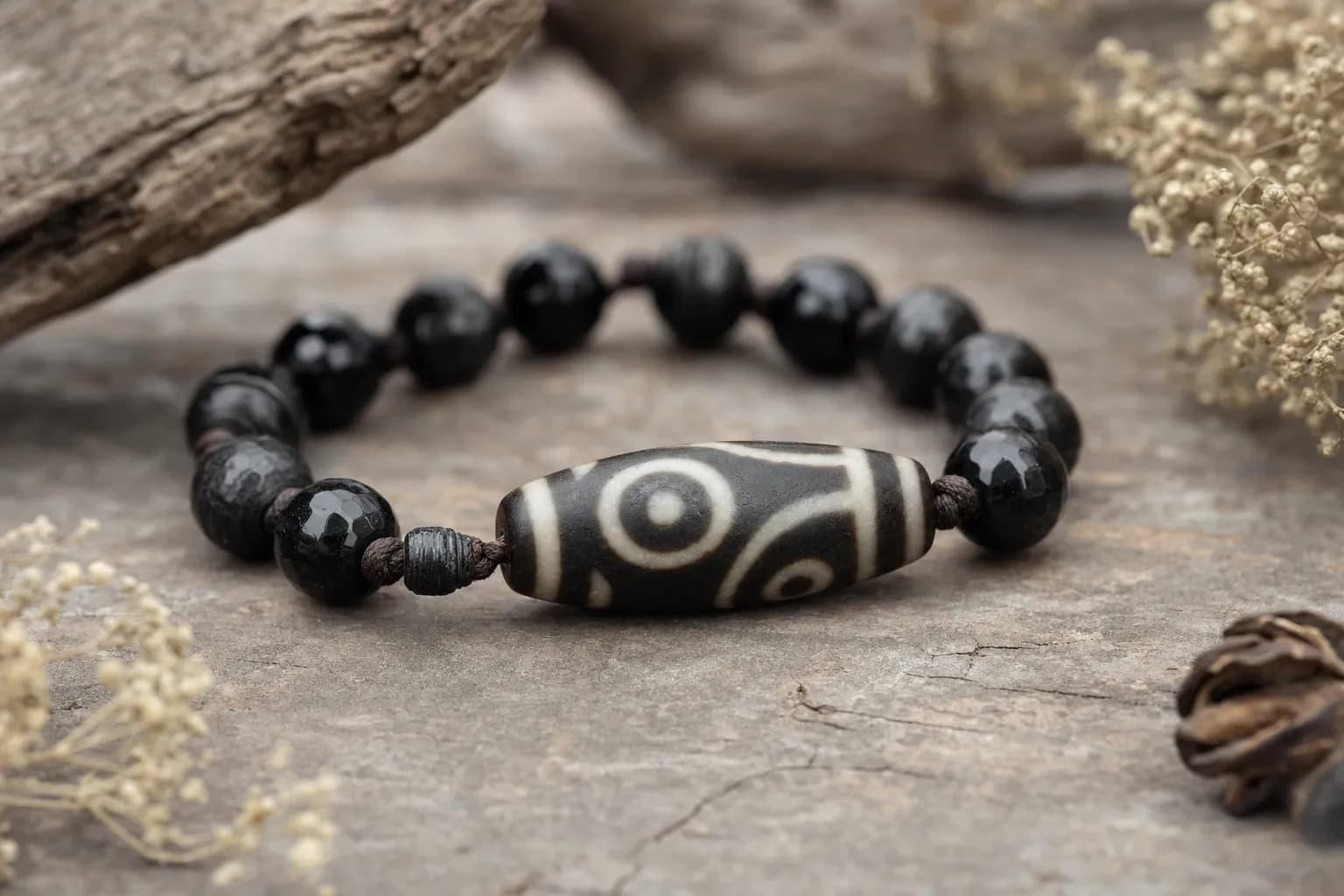
Some days leave a residue. A difficult meeting, a crowded commute, a conversation that took more than it gave. Many people find that wearing specific grounding gemstones gives them something to return to: a physical reminder of their own edges, and where other people's energy ends.
This isn't a new instinct. Protective talismans appear in Tibetan reliquary traditions, in Mediterranean amulet culture, and in the beadwork of countless Indigenous lineages. The forms differ. The impulse, across all of them, is recognizable.
Why Practitioners Reach for Protective Stones
Protective stones don't claim to build a wall. Practitioners use them as anchors for intention, something to hold or wear when they want to stay clear-headed in draining environments, steady during life transitions, or simply grounded in high-stimulus work.
Think of them as tools for focus, the same way a particular notebook or a cup of tea before a hard conversation can help you feel more like yourself. The stone doesn't do the work. You do. The stone holds the intention.
The tradition of carrying a stone for protection is genuinely old. In Tibetan practice, certain beads and stones were passed through family lineages specifically to offer a sense of shelter during difficult passages. In ancient Rome, soldiers wore amulets of black stone before campaigns. The specific stones vary by culture. The logic is consistent.
The Stones Most Commonly Chosen for Protection
Black Tourmaline
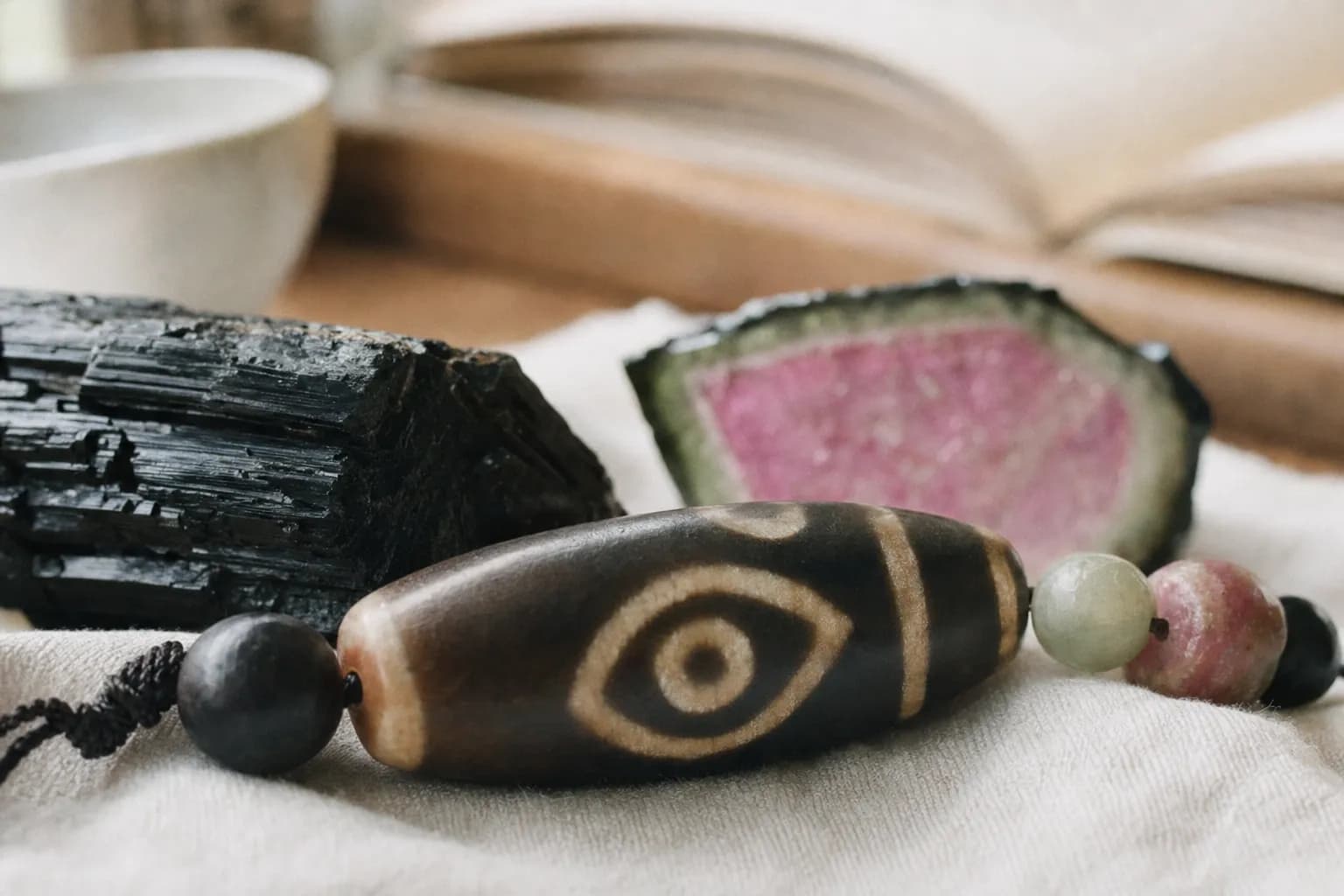
Black tourmaline, known mineralogically as schorl, is the stone practitioners reach for first when they need a clear boundary. It's opaque, deeply black, and often shows fine vertical striations along its surface. You'll recognize raw pieces by their columnar shape.
In Tibetan and European traditions alike, schorl tourmaline has a long history as a boundary stone. People who work in emotionally demanding environments, therapists, caregivers, those in open-plan offices, tend to keep a piece nearby. Black tourmaline protection is associated in practice with deflection: the sense of having a perimeter around your own energy.
For a protection bracelet, it's often strung with matte or polished beads that sit close to the skin. Many wearers say they reach for it most during travel.
Obsidian
Obsidian is volcanic glass, formed when lava cools faster than crystals can grow. It's glassy, almost mirror-like, and typically black with faint flashes of brown or iridescent sheen depending on the variety. Hold it to the light. It rewards looking.
Practitioners tend to describe obsidian differently from tourmaline. Where tourmaline is about shielding, obsidian is associated with truth-telling. It surfaces what's uncomfortable. People reach for it during grief, after betrayal, or when they sense they've been avoiding something. It's considered a crystal for negative energy in the sense that it's thought to bring it into the open rather than simply block it.
This makes obsidian a more demanding stone to work with. It's often recommended for practitioners with some experience of intentional stone work.
Labradorite
Labradorite is immediately recognizable by its flash. The base stone is dark grey, almost unremarkable. Then the light catches it and a spectrum of blue, gold, and green moves across the surface. That optical effect is called labradorescence.
In northern Indigenous traditions, labradorite was considered a stone of the aurora. Practitioners often reach for it when they feel overexposed or psychically porous, the sensation of absorbing too much from the people and spaces around them. It's associated with strengthening what some traditions call the auric field, or in plain terms, your sense of where you end and the world begins.
It works particularly well for people who are empathic by temperament.
Smoky Quartz
Smoky quartz ranges from pale grey-brown to an almost black translucency, like dark tea held up to a lamp. It's one of the best crystals for protection in the grounding category specifically. Where tourmaline creates a boundary and obsidian reveals, smoky quartz is associated with earthing: moving excess or anxious energy downward and out.
It's a common pairing with black tourmaline. Together, they cover both shielding and release. Practitioners who carry a lot of mental load, or who feel unsettled after difficult conversations, often describe smoky quartz as the stone that helps them land back in their body.
Black Onyx
Black onyx is smooth, uniform, and deeply matte in most polished forms. It's a microcrystalline quartz, which makes it dense and satisfying to hold. The weight of it is part of the appeal.
In Greco-Roman traditions, onyx was carved into protective amulets and signet rings. Practitioners today often choose it during periods of sustained stress or grief, times when durability and steadiness matter more than revelation. It's a stone people describe as quiet. It doesn't demand much. It simply holds.
Choosing the Right Stone for Your Situation
Not every protective stone suits every person or situation. A useful way to think about it: are you looking to ground, shield, or discern?
- Grounding (feeling scattered, unmoored, overwhelmed by sensation): smoky quartz, black onyx
- Shielding (draining environments, boundary-heavy work, travel): black tourmaline, labradorite
- Discernment (navigating deception, grief, or a period requiring radical honesty): obsidian
Many practitioners layer stones rather than choosing one. A bracelet composed of tourmaline and smoky quartz, for instance, covers both the boundary and the release. The combination is more considered than either stone alone.
At Ardor Rituals, the atelier uses your date of birth alongside your stated intention to compose a personal protection talisman from specific stones chosen for your situation. The Pythagorean numerology reading identifies a primary stone; your intention shapes what surrounds it. It's a different approach from choosing a single stone off a shelf.
How to Wear and Activate a Protection Bracelet
In many traditions, the left wrist is considered the receptive side of the body, the place where energy enters. Most protective and grounding gemstones are placed there. The right wrist, by contrast, is associated with projecting energy outward. This convention appears across South Asian, Tibetan, and Western metaphysical lineages, though it varies and no single version is universal. Wear the bracelet where it feels right to you.
Before first wear, set an intention. Here's a simple, practical way to do it:
- Hold the bracelet in both hands with your eyes closed.
- Take three slow breaths. Inhale for four counts, exhale for six.
- State your intention silently or aloud. Be specific. Not "I want protection" but "I want to feel grounded and clear in meetings this week."
- Slip the bracelet onto your left wrist with the intention still in mind.
- Touch one bead with your thumb and take one full breath before you go about your day.
If your bracelet includes a Tibetan Dzi bead as its centerpiece, that bead carries its own layered meaning. The Dzi is an agate bead, typically etched with eye patterns, that has been used in Tibetan tradition for over a thousand years as a protective talisman passed through lineages and worn close to the skin. You can read more about what the Dzi bead patterns mean and which eye counts carry which associations.
Caring for Protective Stones
Salt water dulls a polished agate in weeks. Moonlight doesn't.
Moonlight cleansing is the most universally safe method for protective stones. Set the bracelet on a windowsill on the night of a full moon. Leave it overnight where the light can reach it. You don't need to be precise about it. An indirect sill works nearly as well as a roof.
A few material notes worth knowing:
- Black tourmaline tolerates brief water rinses without damage, but avoid prolonged soaking.
- Obsidian is volcanic glass and handles water without issue, but sharp temperature changes can crack it.
- Smoky quartz can fade with extended exposure to direct sunlight; moonlight is the safer choice.
- Black onyx is dense and durable, though prolonged salt water will affect its surface finish over time.
Smoke from dried herbs or incense is another option for stones you'd rather not wet at all. Pass the bracelet slowly through the smoke several times with the intention to clear and reset.
For a full step-by-step cleansing practice, the atelier's practical guide to cleansing your stones covers each method in detail, including how to know when a stone needs attention.
Frequently Asked Questions
What is the most powerful crystal for protection?
Most practitioners reach for black tourmaline first. It has one of the longest recorded histories as a boundary stone across Tibetan and European traditions, and it's worn daily by people who work in high-stimulus or emotionally demanding environments. Obsidian runs a close second, particularly for those drawn to shadow work and honest self-reflection.
Can I wear multiple protective stones at once?
Yes, and many practitioners do. A common pairing is black tourmaline with smoky quartz: one for shielding, one for grounding. The key is choosing stones with a clear intention for each, rather than stacking indiscriminately. A composed talisman bracelet handles this by selecting specific stones suited to your situation and numerological profile.
Which wrist should I wear a protection bracelet on?
In many traditions, the left wrist is considered receptive and is preferred for stones meant to shield or absorb, including most protective stones. The right wrist is associated with projecting energy outward. That said, conventions vary across lineages, and personal comfort and resonance matter as much as any traditional rule.
How often should I cleanse protective crystals?
Practitioners who wear protective stones daily typically cleanse them once or twice a month. A full moon night is a natural rhythm many use: leave the stone on a windowsill overnight where moonlight can reach it. After an unusually heavy or draining period, cleansing sooner is common practice.
What is the difference between black tourmaline and obsidian for protection?
Black tourmaline is traditionally associated with deflecting and creating an energetic boundary. Obsidian is considered more confrontational in practitioner use: it surfaces what needs to be seen rather than simply blocking it. Those new to protective stones often start with tourmaline; obsidian tends to appeal to more experienced practitioners ready for deeper self-examination.