How to Cleanse the Energy of Your Stones: A Practical Ritual Guide
A practical guide to clearing accumulated energy from gemstone bracelets, malas, and Dzi talismans. Five methods, when to use them, and how to set intention after.
A mala worn through a difficult week feels different than a freshly cleansed one. Practitioners notice this. The beads seem heavier, somehow less alive. Whether you frame that as metaphor or as something more literal, the observation holds: stones worn close to the body during intense periods benefit from a regular energy cleansing ritual.
This guide covers why the practice matters, which methods are actually safe, and what comes after the cleanse.
Why Cleansing Matters (And What It Actually Does)
In many traditions. Tibetan, Indian Vedic, and various Indigenous practices. Stones are understood to absorb the ambient energy of the spaces and people they move through. This isn't a clinical claim. It's a framework, one that has shaped how practitioners work with stones for centuries.
Cleansing and charging are not the same thing. Cleansing clears what has accumulated. Charging, which comes after, restores or amplifies a specific intention you want the stone to hold. Doing one without the other is like wiping a slate clean and walking away without writing anything new on it.
Some stones need cleansing more urgently than others. New stones. Including your custom talisman when it first arrives. Should always be cleansed before first wear. The same applies to gifted stones, stones that have passed through many hands, and any piece worn through illness or emotional upheaval.
Five Methods Practitioners Actually Use
Moonlight
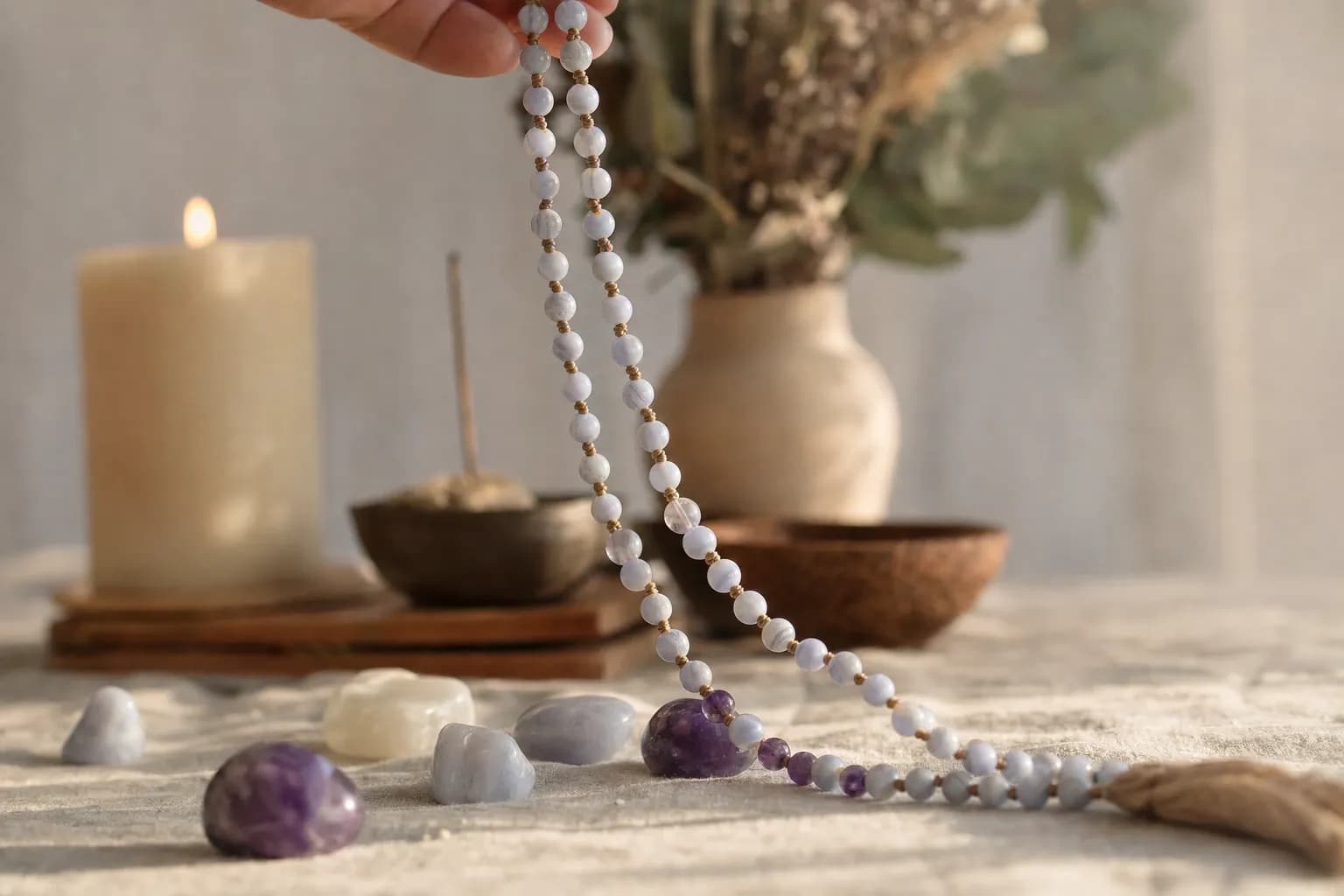
Moonlight cleansing is the most forgiving method. Leave your stones on a windowsill or outside from dusk to dawn on or around the full moon. No tools required. No risk of damage.
This practice appears in both Tibetan and Indian traditions, where the full moon is considered a time of heightened energetic clarity. It's also practical: moonlight won't fade amethyst, crack resin, or pit delicate surfaces the way sunlight and water can. For most people, a monthly full-moon cleanse is the backbone of their practice.
Sound (Singing Bowl or Bell)
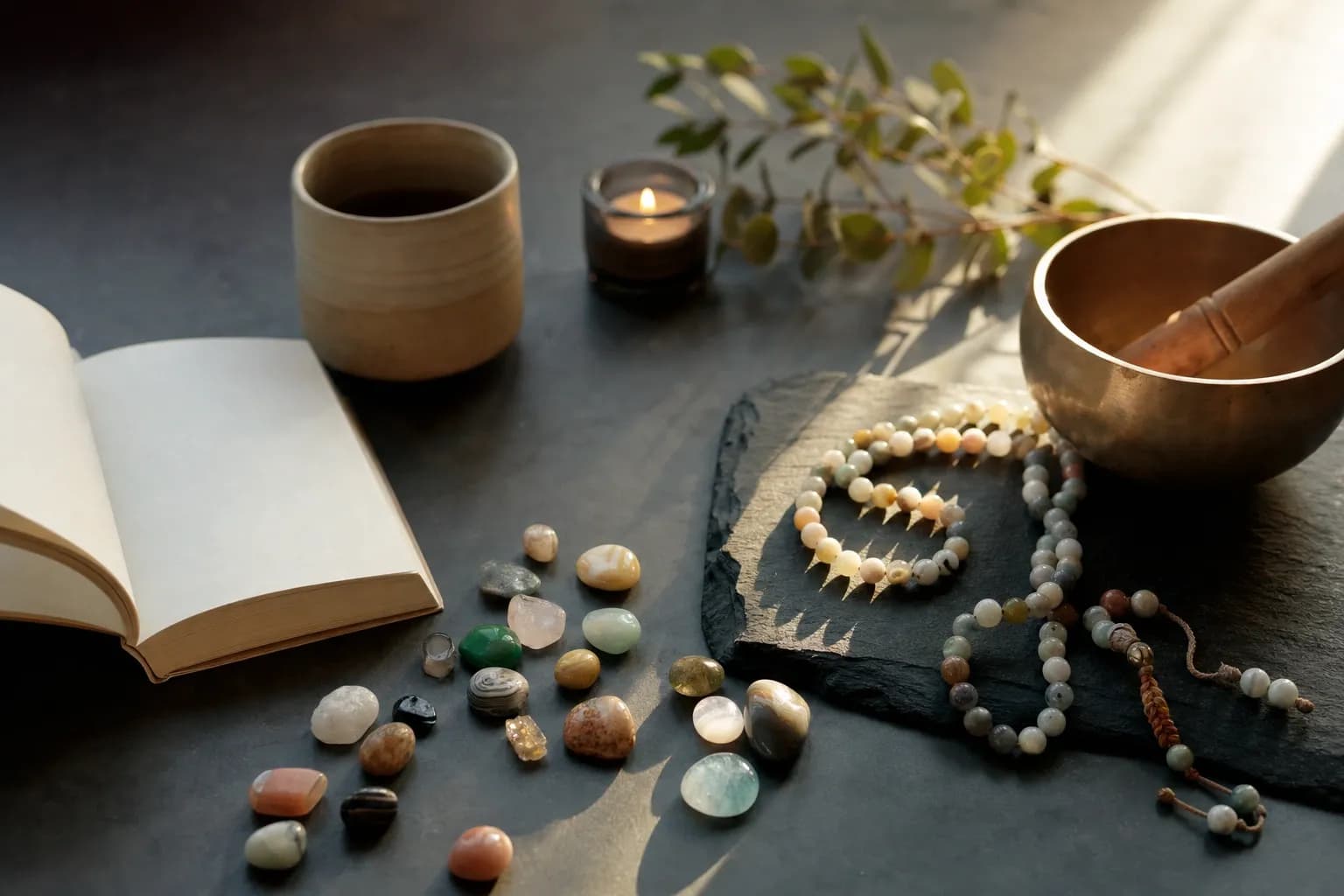
A Tibetan singing bowl struck gently near your stones sends vibration through their surface. That vibration is the point, not the volume. You don't need to be loud. Move the bowl slowly around each piece, or rest smaller stones inside it while you play.
Sound works well for stones you don't want to wet or expose overnight. It's also immediate. A two-minute sound cleanse is enough to reset a bracelet before you put it back on.
Breath and Intention
Hold the stone in one hand. Close your eyes, settle your attention, and exhale steadily across the surface while holding your intention clearly in mind. Repeat three times.
This is the most portable method. You can do it at your desk, on a train, anywhere you have a quiet moment. Many practitioners use a breath reset mid-day, especially for protective stones like black tourmaline or tiger eye that are worn in crowded or high-stress environments.
Smoke Cleansing
Pass your stone slowly through smoke from dried herbs. White sage is widely used, though it's worth acknowledging that white sage (Salvia apiana) is sacred to several Indigenous nations of the American Southwest and has been subject to significant overharvesting. If you don't have a personal cultural connection to it, dried lavender, rosemary, or cedar are equally effective alternatives and more freely available.
The method is the same regardless of herb: hold the stone in the smoke for ten to thirty seconds, turning it so all surfaces are touched. Don't rest the stone directly in flame.
Dry Salt or Earth
Rest stones in a shallow bowl of coarse sea salt or dry soil overnight. This is a traditional method with deep roots, but it's not safe for every stone.
Avoid dry salt with:
- Malachite (the surface can pit and dull)
- Selenite (extremely soft, salt accelerates surface erosion)
- Pyrite (salt draws moisture, which accelerates oxidation)
- Any stone with fine cracks or inclusions
For polished, hard stones. Carnelian, black tourmaline, tiger eye, clear quartz. Dry salt is safe and effective.
Quick reference: safe for all stones
- Moonlight
- Sound (singing bowl or bell)
- Breath cleansing
- Smoke (no direct flame)
Use with caution or avoid for softer/porous stones:
- Dry salt (avoid with malachite, selenite, pyrite)
- Water submersion (avoid with selenite, malachite, pyrite, raw turquoise)
- Prolonged direct sunlight (fades amethyst and rose quartz over time)
How Often, and When It's Urgent
For most worn pieces, a monthly moonlight cleanse is enough. If you wear a bracelet every day, a brief weekly breath or sound cleanse helps maintain clarity between full moons.
Some situations call for an immediate cleanse rather than a scheduled one:
- After illness in the household
- After a difficult conversation, argument, or emotionally charged event
- After someone else handles your stones without your invitation
- When a stone feels unusually heavy, dull, or simply off
- Before wearing any stone for the first time
That last point applies whether the stone comes from a shop, a friend, or an atelier. A stone that's been handled by many people before reaching you carries layers of contact. Cleansing before first wear is one of the more consistent practices across traditions.
Setting Intention After Cleansing
Cleansing is only half the practice. What follows matters just as much.
Hold your stone or mala in both palms. Close your eyes. Let your breath settle. Then state your intention. Aloud or silently. In plain, direct language. Not a wish, not a request. A statement of what you're carrying this for: protection, abundance, clarity, steadiness.
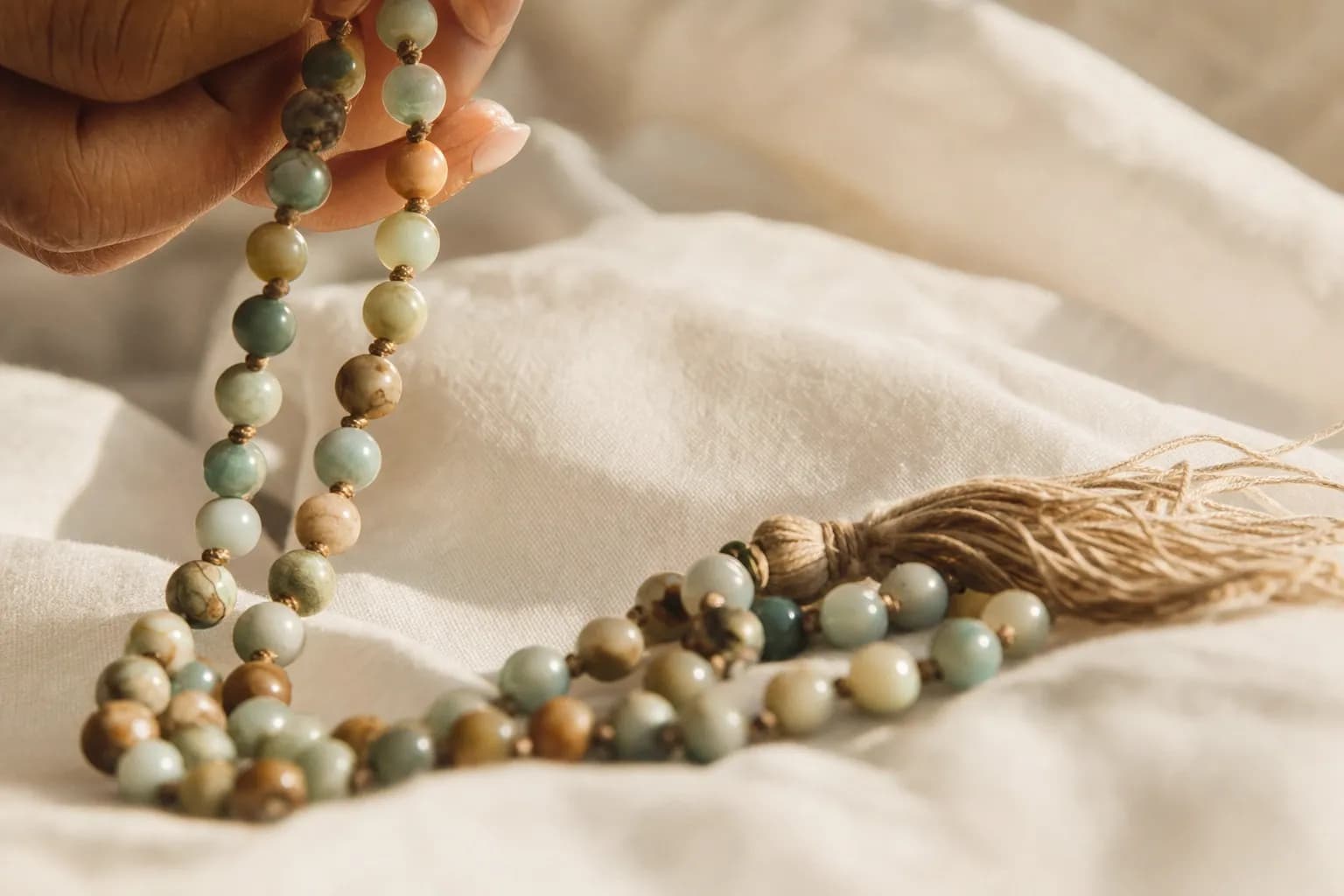
In japa meditation (the practice of repeating a mantra while moving through each bead of a mala), the intention is renewed with every 108-bead cycle. The mala, which traditionally holds 108 beads plus a larger guru bead at the center, marks each repetition of a mantra. After cleansing, sitting with one full cycle before wearing the mala again is a natural way to re-establish the relationship between practitioner and piece.
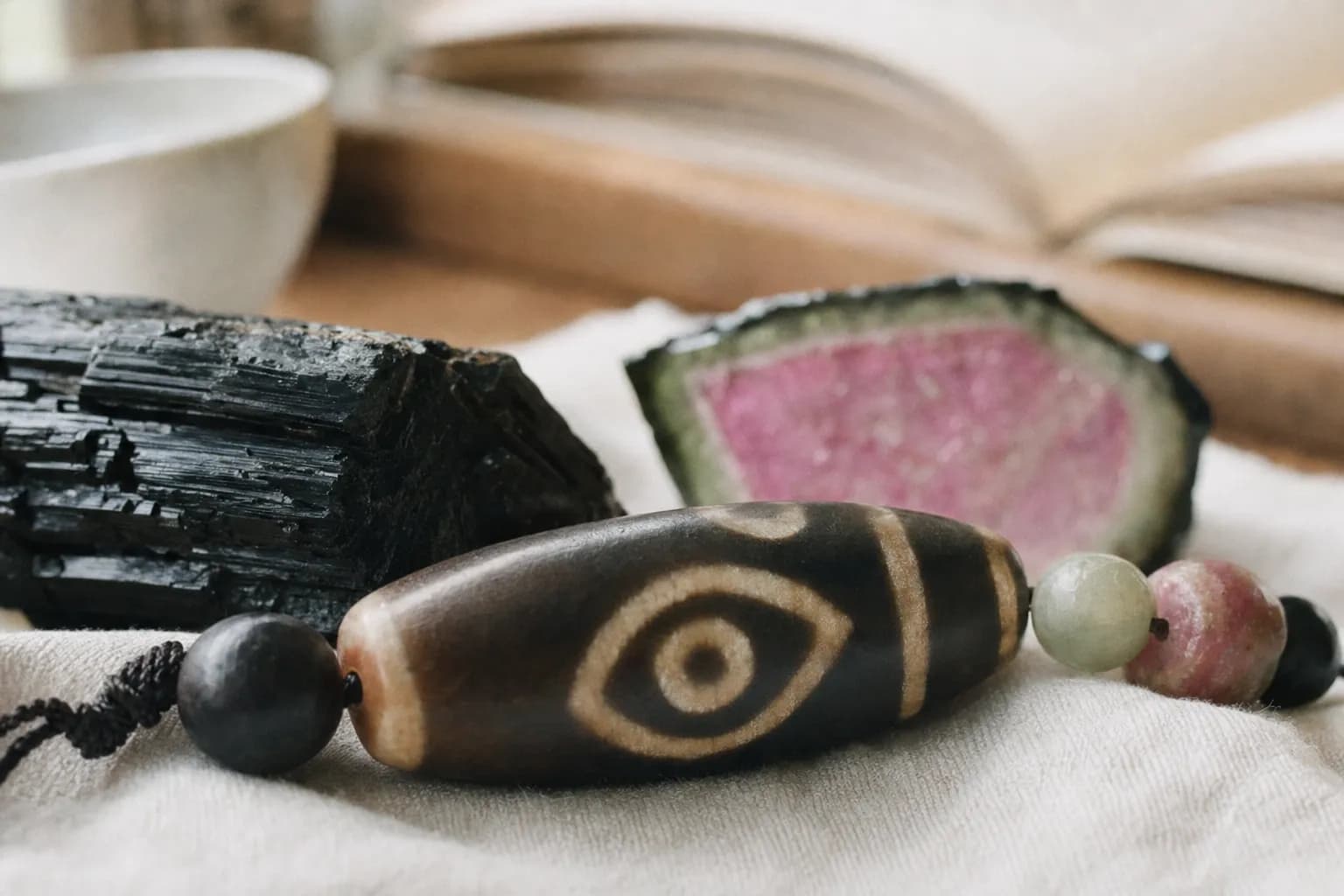
For Dzi beads specifically, the tradition goes a step further. Read more about the traditions behind Tibetan Dzi beads to understand their lineage. A nine-eyed Dzi, considered among the most auspicious in Tibetan belief, is often re-dedicated after cleansing with a short dedication prayer or mantra. This isn't programming in the technological sense. It's a renewal of relationship. A deliberate re-alignment between the bead's protective association and your current intention.
Avoid the language of programming when you can. Stones aren't software. The practice is closer to tending something living.
Living With a Cleansing Practice: What's Realistic
You don't need an altar. You don't need a singing bowl, a specific herb, or the full moon every time. What you need is consistency.
A breath cleanse practiced every few days will serve you better than an elaborate ritual performed once and forgotten. The practice compounds. The habit matters more than the method.
Storage is part of care. Keep your stones away from synthetic materials and electronics when not worn. A small cloth pouch or a wooden dish works well. Some practitioners keep a piece of selenite or black kyanite in their storage space, as both are considered self-cleansing in tradition and are thought to clear other stones resting nearby overnight.
A few everyday care realities:
- Salt water dulls a polished agate in weeks. Moonlight doesn't.
- Amethyst and rose quartz fade with prolonged direct sunlight. A windowsill in indirect light is fine; a south-facing ledge in summer is not.
- Selenite dissolves in water. Even damp air over time affects its surface. Keep it dry.
- Malachite is porous. It should never be submerged, and salt contact should be brief if used at all.
For a deeper look at individual stones and what practitioners reach for them for, our practitioner's guide to gemstones covers the stones people work with most, their traditional associations, and how they're used in combination.
The cleansing ritual isn't separate from wearing your stones. It's part of the same continuous practice: paying attention, renewing intention, staying in relationship with the things you carry.
Frequently Asked Questions
How do you do an energy cleansing ritual for crystals?
Place your stones in moonlight overnight, pass them through smoke from dried herbs, or hold each one and exhale steadily across its surface while holding your intention. Each method has roots in specific traditions. Choose the one you'll actually practice consistently. Simplicity repeated beats an elaborate ritual done once.
How often should you cleanse your gemstone bracelet?
Most practitioners cleanse worn gemstone pieces once a month, aligning with the full moon. If you wear a bracelet daily or through emotionally intense periods, a weekly breath or sound cleanse keeps it feeling clear. Always cleanse a new stone before wearing it for the first time.
Does moonlight actually cleanse crystals?
Moonlight cleansing is a practice rooted in Tibetan and Indian traditions, not a measurable physical event. Practitioners value it because it's consistent, gentle on all stone types, and ties the cleansing to a natural rhythm. No stone is damaged by moonlight, which is more than can be said for sunlight or water.
Which cleansing method is safe for all crystals?
Moonlight and sound (singing bowl or bell) are safe for virtually every stone, including water-sensitive ones like malachite, selenite, and pyrite. Dry salt works for most polished stones but can pit softer minerals over time. Smoke cleansing is also broadly safe, provided the stone doesn't sit directly in flame.
What do you say when setting an intention after cleansing?
There's no required phrase. Practitioners typically hold the stone in both palms, close their eyes, and state their intention clearly. Aloud or silently. Something direct works best: "I wear this for clarity" or "I carry this for steadiness." Specificity matters more than formal language.
Can you cleanse a Tibetan Dzi bead the same way as other stones?
Moonlight and sound are the most commonly used methods for authentic Dzi beads. Avoid submerging antique Dzi in water or salt, as the aged agate surface can be delicate. In Tibetan practice, re-dedicating a Dzi with a short prayer or mantra after cleansing is considered part of renewing its protective association.