The Full Moon Ritual: How to Use Stones, Breath, and Intention to Mark the Lunar Peak
The lunar peak is a natural pause point. Here's how practitioners use stones, breath, and a simple releasing practice to mark it with intention.
Every 29.5 days, the moon reaches full illumination. It's a rhythm as old as agriculture, navigation, and human calendar-keeping. And for practitioners across many traditions, it's the most natural pause point in the month.
Why the Full Moon Is a Natural Pause Point
The lunar cycle divides neatly into phases: new moon, waxing crescent, first quarter, waxing gibbous, full moon, waning gibbous, last quarter, and back to new. Most people feel something shift at the peak, even without a practice built around it. The light is at its brightest. The tides are at their strongest pull. Something in the moment invites reflection.
In Vedic tradition, the full moon (known as Purnima) is observed with fasting, prayer, and offering. In Tibetan Buddhism, it marks an auspicious day for practice and merit-making. In Japan, Tsukimi (moon-viewing) is a seasonal ritual of gratitude, not petition. These traditions aren't interchangeable, and it's worth knowing where a practice comes from before you adopt it. What they share is simpler: they all treat the lunar peak as a moment worth marking.
That's the real invitation here. Not magic in the theatrical sense. A structured pause in a month that otherwise just disappears.
The Ritual Structure: What Practitioners Actually Do
Before You Begin: Space and Stones
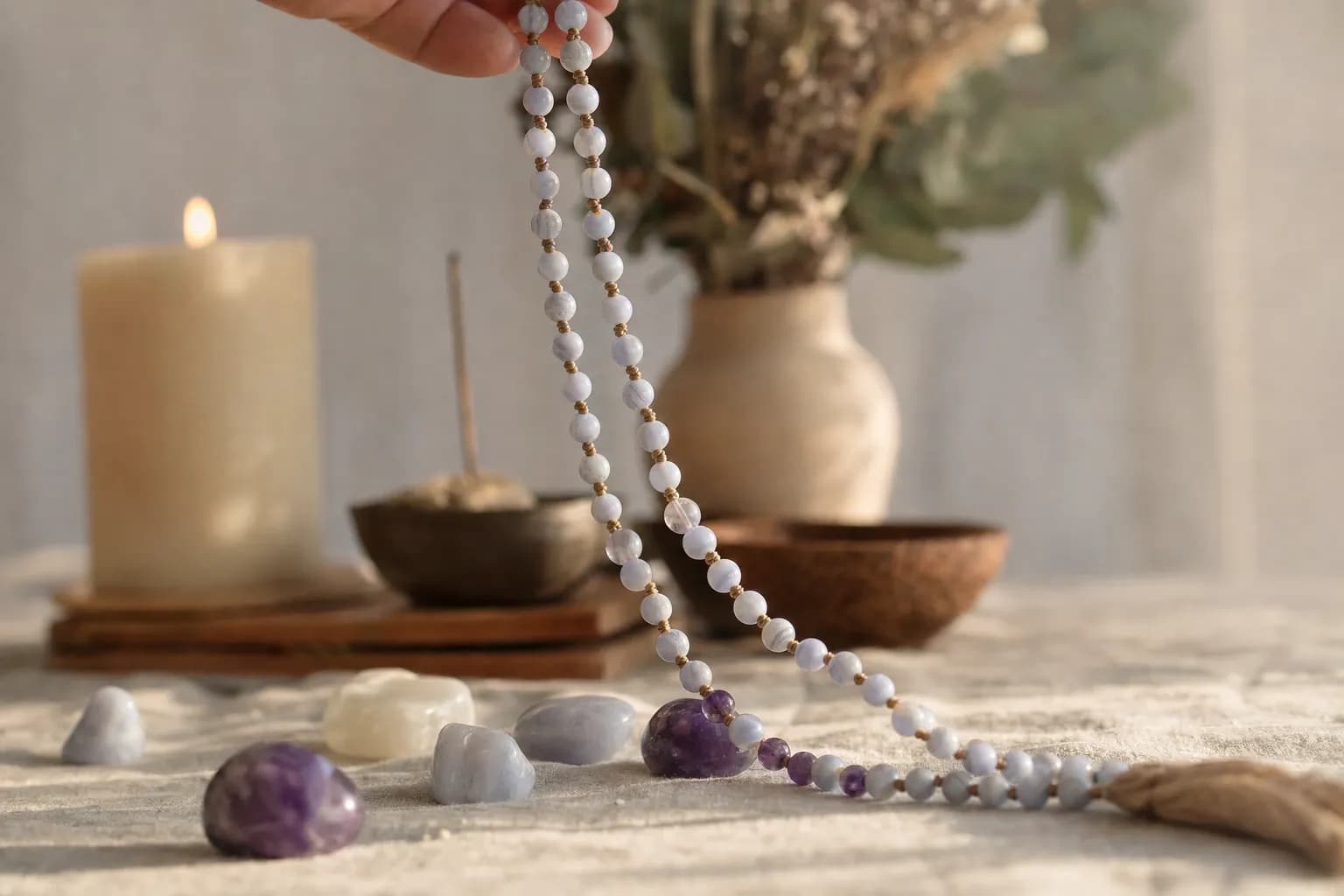
Gather your stones the evening before the peak, not the morning after. You want them in the moonlight before you sit with them. Choose one stone for what you're releasing and one for what you want to call forward. A piece of amethyst for the release, say, and carnelian for the renewal. Keep it to two stones. More isn't more.
Place them on a windowsill or outside on a cloth, somewhere the moon can reach them overnight. If clouds come in, leave them anyway. Intention doesn't require a clear sky.
Sit in a clean space. Dim the lights. You don't need candles, incense, or an altar, though any of those can help mark the transition between ordinary time and intentional time.
The Practice Itself: Breath, Beads, and Intention
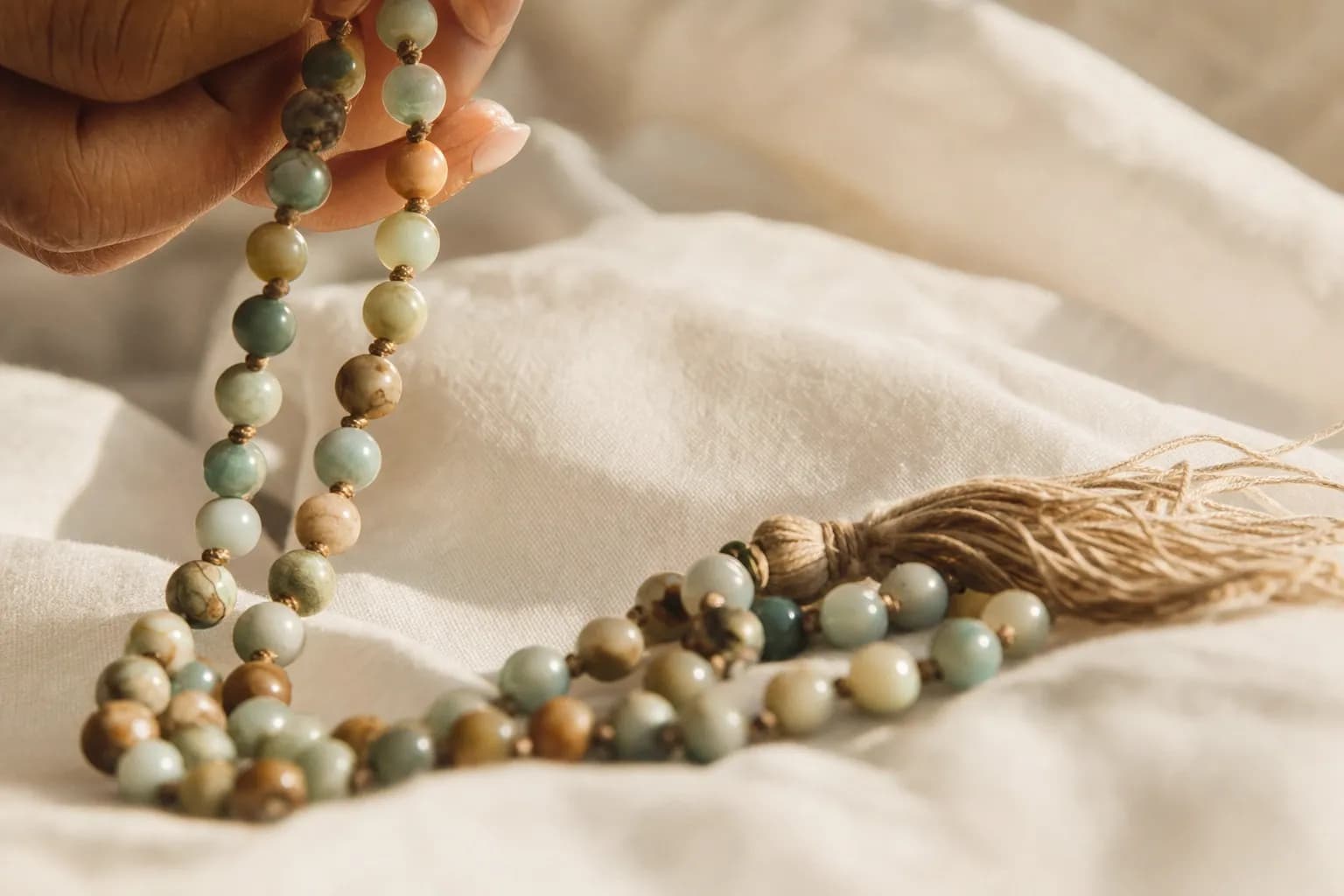
Bring your mala if you have one. A mala is a string of 108 beads used in japa meditation, a Sanskrit term meaning repetitive prayer or breath work using a counting tool. Hold the first bead between your thumb and middle finger. Breathe in. Breathe out. Move to the next bead. One breath per bead, 108 beads total: that's roughly 10 to 15 minutes of steady breath counting. No rushing.
If you don't have a mala, sit for 10 minutes of simple breath awareness. The beads help with focus, but they're not required.
After your breath practice, write your release. One sentence, maybe two. Be specific. Not "I want to release stress" but "I'm releasing the habit of saying yes when I mean no." Specificity is what gives the writing weight. Vague intentions stay vague.
Then sit with your stones for a few minutes of stillness. Hold the one you chose for releasing. Set it down. Pick up the one for calling forward. Let that be enough.
Which Stones Practitioners Reach For at the Full Moon
For which stones practitioners reach for in grounding and restorative work, context matters more than any single rule. That said, certain stones appear repeatedly in lunar practice, and there are reasons for it.
- Moonstone. In Vedic tradition, moonstone is associated with the moon's energy directly. It's the most traditional choice for this practice, worn and offered at Purnima for centuries across South and Southeast Asia. Its adularescence, that floating inner light, seems to mirror the stone's reputation for intuition and emotional attunement.
- Amethyst. A common choice for release work. Practitioners reach for it when they want a sense of stillness and mental clarity. It's also one of the stones that fades in prolonged sunlight, which is part of why moonlight cleansing suits it so well.
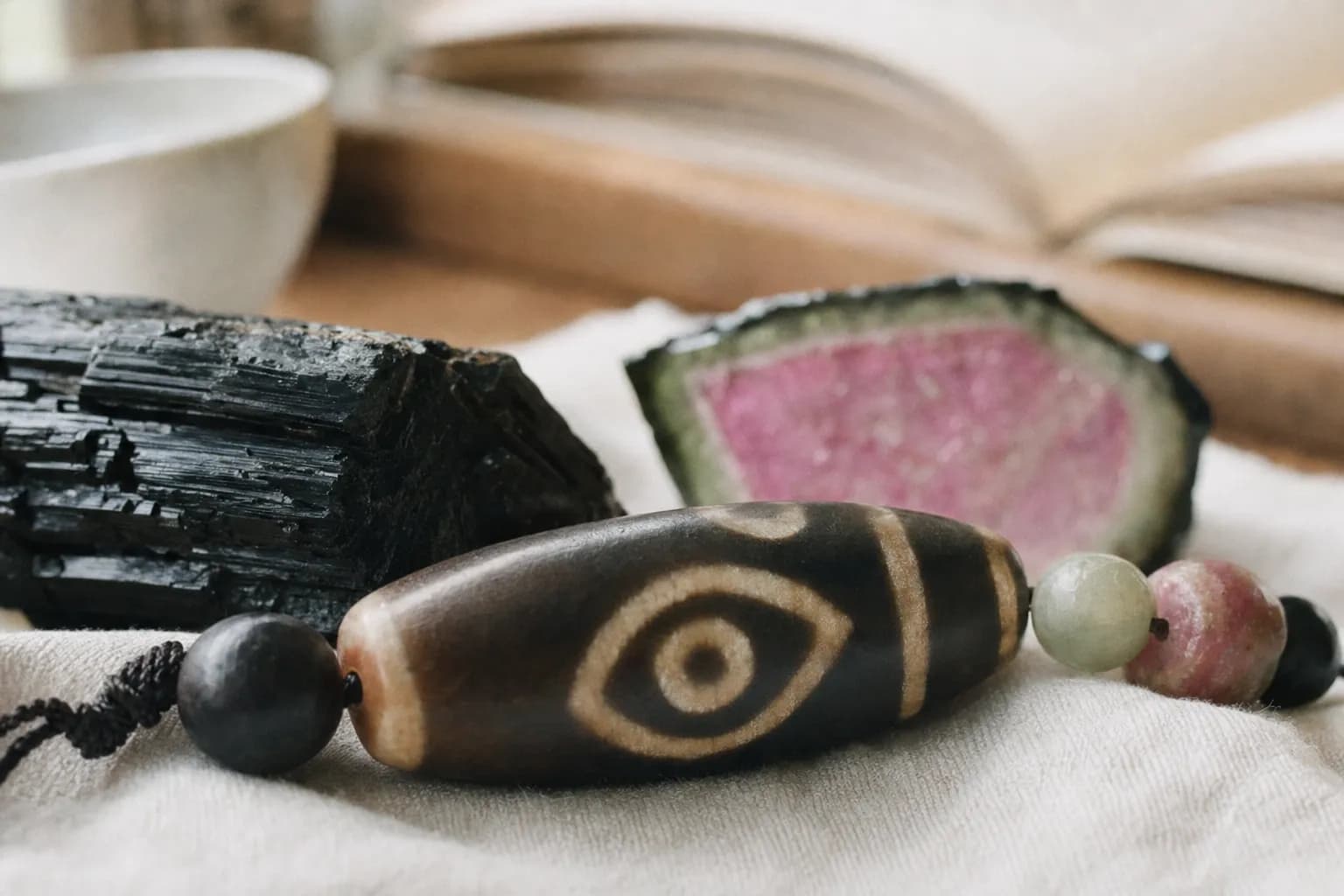
- Black tourmaline. Often brought in after an emotional releasing practice, used as a grounding stone. Pairing a lighter stone like moonstone with black tourmaline gives the ritual a kind of balance: open, then anchor.
- Carnelian. When the intention is renewal rather than release, carnelian is a frequent choice. Orange, warm, associated in many traditions with vitality and forward motion.
- Labradorite. Many modern crystal practitioners reach for labradorite at transitional moments, the spaces between one chapter and the next. Its shifting iridescence, called labradorescence, is part of why it's become associated with liminal states.
Choose by intention, not aesthetics. But if you're drawn to a stone's appearance, that's worth noticing too.
Moonlight Cleansing: The Realities of Stone Care
Moonlight cleansing doesn't alter a stone chemically. No peer-reviewed materials scientist would argue otherwise. What it does is give you a ritual reset point: a moment to consciously clear the energetic associations you've built with a stone and begin again with fresh intention. That's not nothing.
Salt water dulls a polished agate in weeks. Moonlight doesn't. This is a practical truth worth knowing before you start researching cleansing methods. Many popular methods, including salt water soaks and direct sun exposure, can damage softer or dyed stones over time. Amethyst fades with repeated sun exposure. So does rose quartz. Moonlight is the gentler option for almost everything.
Leave your stones out for the full night if you can. Overcast nights are fine. The moon is still there, behind the clouds. And the practice of placing them with intention, retrieving them in the morning with attention, is the thing that matters most.
Building a Monthly Practice That Sticks
One ritual won't tell you much. Twelve of them will begin to show you something.
Pair this practice with the new moon, roughly two weeks earlier in the lunar cycle. The new moon is the traditional time for setting intentions; the full moon is for releasing what no longer fits the life you're building. The two together create a rhythm that's self-correcting. You plant something, you watch it grow, you let go of what didn't take.
Keep a lunar journal. One page per moon, not more. Date it, note what you released, note what you called forward. In six months, you'll have a record of what actually shifted.
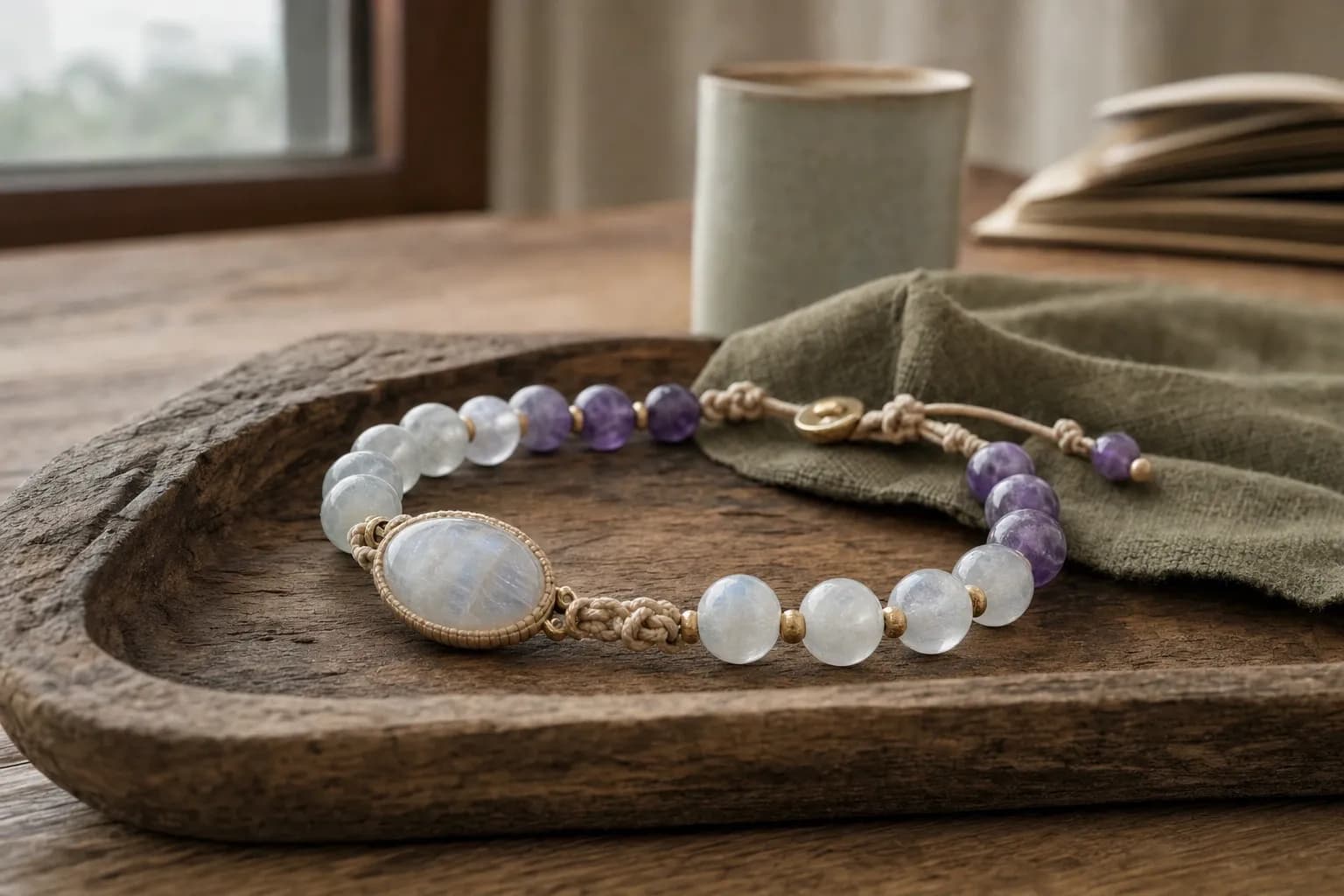
A personal talisman bracelet composed from your birth numerology and intention can anchor this rhythm in a physical way. Wearing the same piece through a month, setting it on the windowsill on the peak night, picking it up in the morning: that kind of continuity turns a single ritual into a practice.
Let the ritual evolve. The version you do on your first lunar peak may look nothing like the version you do at month twelve. That's fine. Consistency isn't about doing the exact same thing every time. It's about returning to the practice when you said you would.
For the tradition behind sacred beads and how they've been used across centuries, the Tibetan tradition of sacred beads offers a grounding history worth reading before you begin.
Frequently Asked Questions
Do I need to be outside for a full moon ritual?
No. A windowsill that catches moonlight works well. Place your stones on the glass or on a cloth nearby. The practice is about your intention and attention, not your postcode. Indoor rituals are just as complete as outdoor ones, and far more sustainable as a monthly habit.
How long should a full moon ritual take?
Most practitioners keep it between 20 and 45 minutes. A short grounding breath sequence, one pass of a mala (108 beads, one breath each, roughly 10 to 15 minutes), a written release statement, and a moment of stillness. Longer is not better. Consistency matters more than duration.
Can I do a full moon ritual during the day if I missed the night?
Yes. The moon is technically at peak illumination for one night but is considered full within a 24-hour window in most traditions. Many practitioners work with the lunar peak energy across two to three days. Missing the exact moment doesn't cancel the intention or the practice.
What do I do with my release list after the ritual?
Common practice is to burn it safely, bury it, or shred it. The physical act of destroying the paper reinforces the intention to let go. Some practitioners keep a sealed envelope until the next new moon, then destroy it. There's no single correct method; choose what feels complete to you.
Which stone is best for a first full moon ritual?
Moonstone is the most traditional starting point, associated with lunar cycles in Vedic and Southeast Asian practice. If you already own an amethyst or black tourmaline, use what you have. The stone you choose consciously matters far more than the stone someone tells you to buy.