How to Use Mala Beads: Counting, Breathing, and Building a Practice That Sticks
A practical guide to holding, counting, and breathing with mala beads. From the guru bead convention to choosing stones that match your intention.
Somewhere between a rosary and a fidget tool, a mala bead strand tends to confuse people the first time they hold one. 108 beads, one large bead at the end, a tassel or knot. No instructions attached.
This guide covers exactly what to do with it: how to hold it, how to count with it, and how to make the practice something you actually return to.
What Mala Beads Actually Are (and Where They Come From)
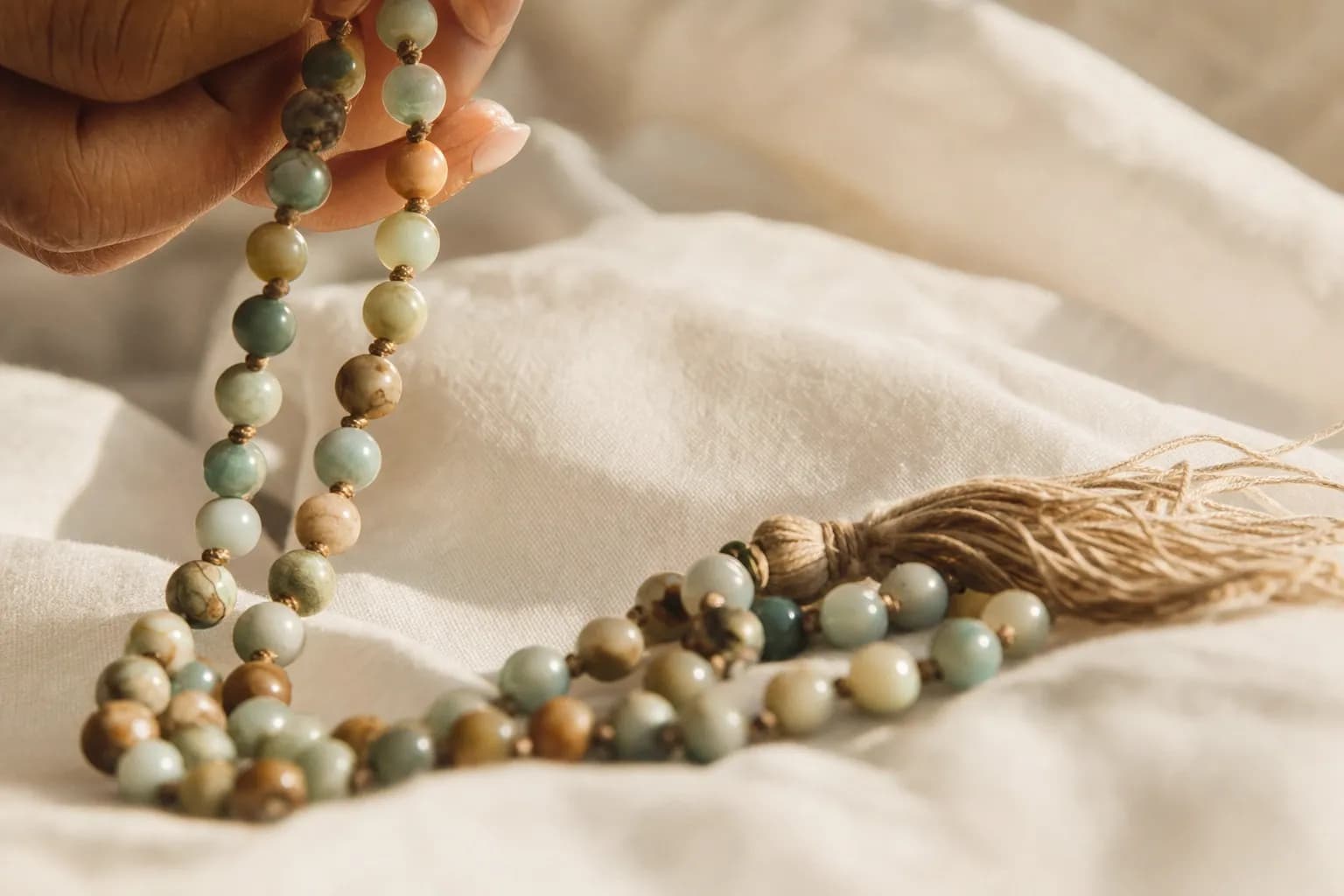
A mala is a string of beads used to count repetitions during meditation or prayer. The word comes from Sanskrit and refers to a garland. Japa meditation, the practice of repeating a mantra or phrase bead by bead, uses the mala as a tactile anchor for attention.
Traditional malas are strung with 108 counting beads plus one larger or distinct bead at the end. That final bead is called the guru bead. It marks the beginning and end of one full round. Think of it as a boundary post rather than just another counting bead.
The significance of 108
The number 108 appears across Hindu, Buddhist, and Jain traditions, each offering different explanations for its significance. Some texts point to 108 Upanishads (ancient Sanskrit philosophical texts). Others reference the 108 names of certain deities, or the calculation that the sun's diameter is roughly 108 times the earth's. No single explanation dominates.
What matters practically: 108 repetitions takes most people between 8 and 15 minutes at a calm pace. That's a workable unit of time.
From monastery to modern practice
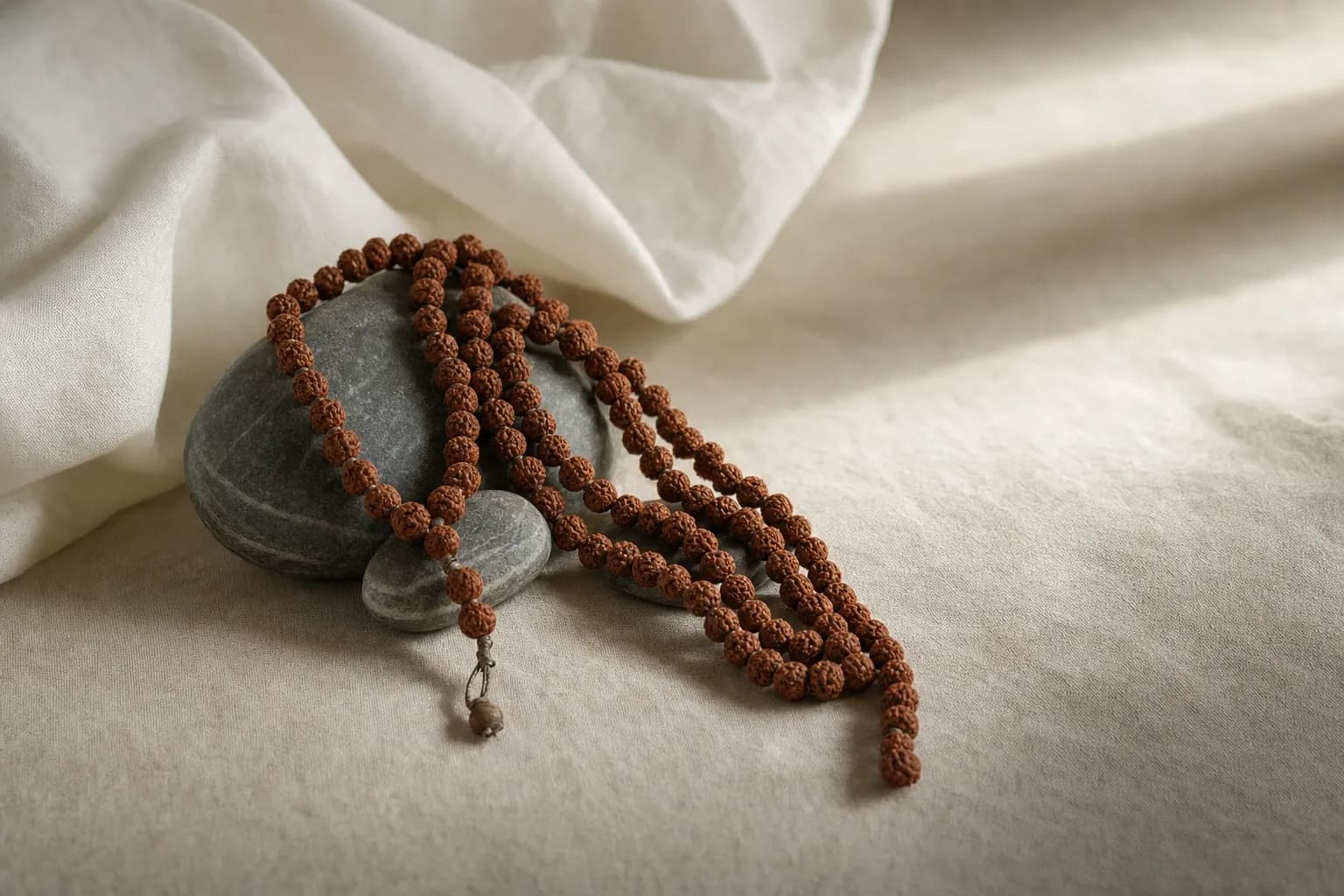
The oldest mala materials in Tibetan and Hindu traditions are rudraksha seeds (dried berries of the Elaeocarpus ganitrus tree, considered sacred in Hindu practice) and bodhi seeds (from the Ficus religiosa, the tree associated with the Buddha's enlightenment). Bone, coral, and agate malas appear throughout Tibetan monastery collections.
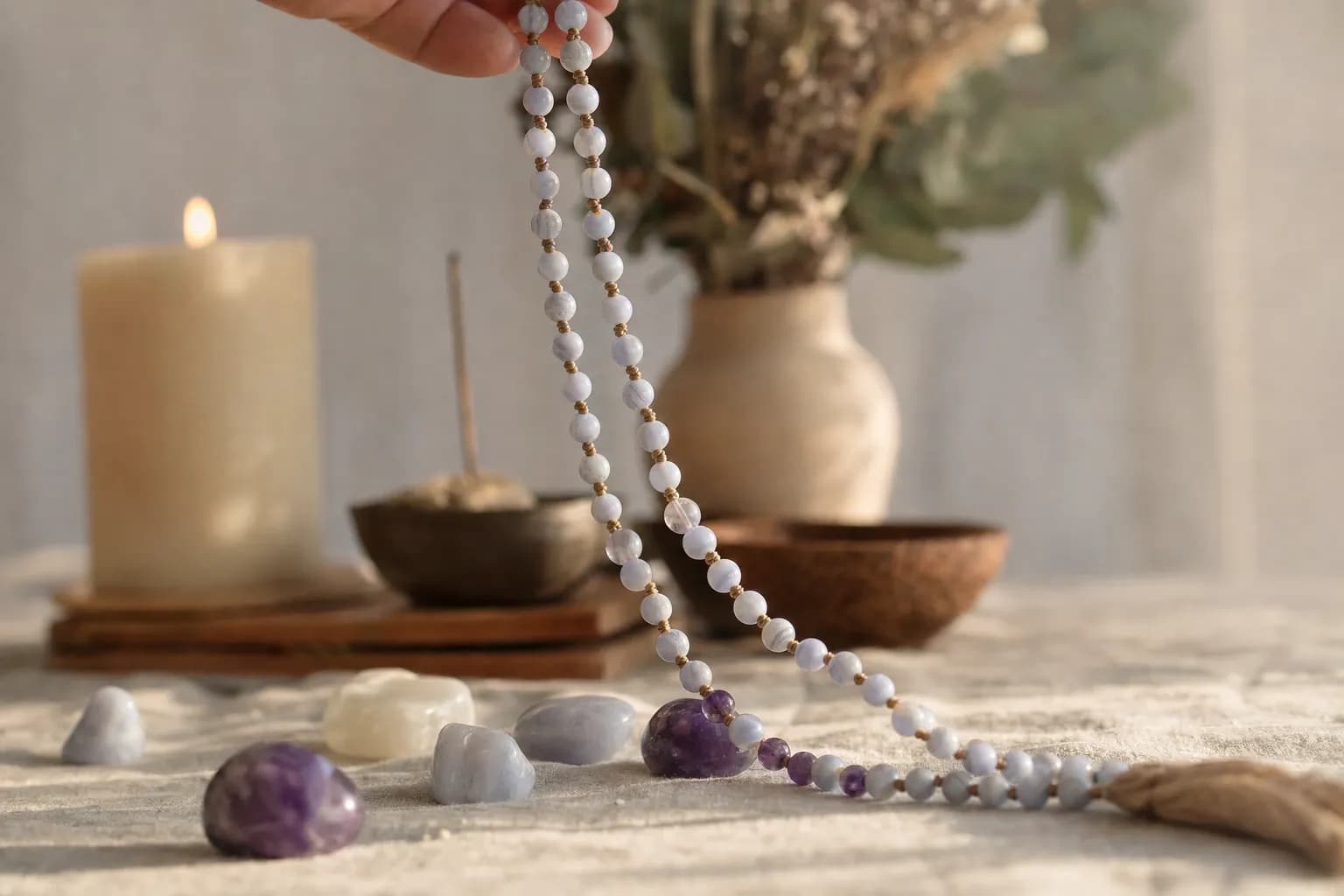
Gemstone malas came later. They bring the same counting structure but add the weight, texture, and traditional associations of specific stones. A 108 bead mala strung in amethyst feels and handles differently than one strung in carnelian. That difference matters once you're twenty rounds into a sitting practice.
Wrist mala bracelets, typically strung with 27 beads, are a shortened version. Twenty-seven divides evenly into 108, so four full rounds on a wrist mala equals one traditional cycle. They work the same way. They're just more portable.
How to Hold and Count Your Mala Beads
This is where most guides go vague. Let's be specific.
The traditional hand position
Rest the mala across your right hand, draped over the middle finger. Your thumb does the work, pulling one bead toward you on each repetition. The index finger stays out of contact with the beads entirely. In traditional japa practice, the index finger is associated with the ego and is kept separate from the practice.
Hold each bead for one full breath: one inhale, one exhale. Or for the duration of one mantra repetition. Then pull the next bead. The motion becomes automatic within a few sessions.
What to do when you reach the guru bead
When your thumb reaches that larger bead at the end, you don't cross it. You pause, then flip the entire mala in your hand and count back the way you came. The reversal is deliberate. Crossing the boundary bead is considered disrespectful to the lineage in both Hindu and Tibetan Buddhist practice.
One full round is complete when you return to where you started. If you want to continue, reverse again. Most beginners do one round. Experienced practitioners might sit with three, seven, or more.
Three Ways to Build a Daily Practice
The mala is a tool. How you use it depends on what you're working with.
Breath counting
This is the simplest entry point. No mantra, no words. Inhale, exhale, pull one bead. That's the entire instruction. Breath counting suits people who find verbal repetition distracting, or who are new to seated practice. The bead gives the mind a physical object to return to when attention drifts.
Start with one round. Fifteen minutes in the morning is plenty to establish the habit.
Mantra repetition
Japa meditation traditionally involves repeating a word or short phrase once per bead. The phrase might be a Sanskrit mantra from a teacher, a line from a prayer, or something as simple as a quality you want to cultivate. One bead, one repetition. The mouth may move silently or the phrase may be held internally.
Consistency of time and place matters more than the specific mantra you choose. The same chair, the same hour, day after day, trains the mind to arrive more quickly.
Intention practice with a gemstone mala
Here the ritual is slightly different. At the guru bead, you state a single intention clearly before you begin. Then you move through all 108 counting beads as a moving meditation, letting that intention anchor the round.
Gemstone malas add a sensory layer to this. The cool surface of moonstone against the thumb. The slight ridges of carnelian. The density of a well-polished amethyst bead. These textures become part of the ritual. Over time, picking up the mala itself starts to signal the mind to settle.
Choosing the Right Stones for Your Mala
Aesthetics matter, but stone choice works better when it starts with intention.
Here's how a few common stones are understood in their respective traditions:
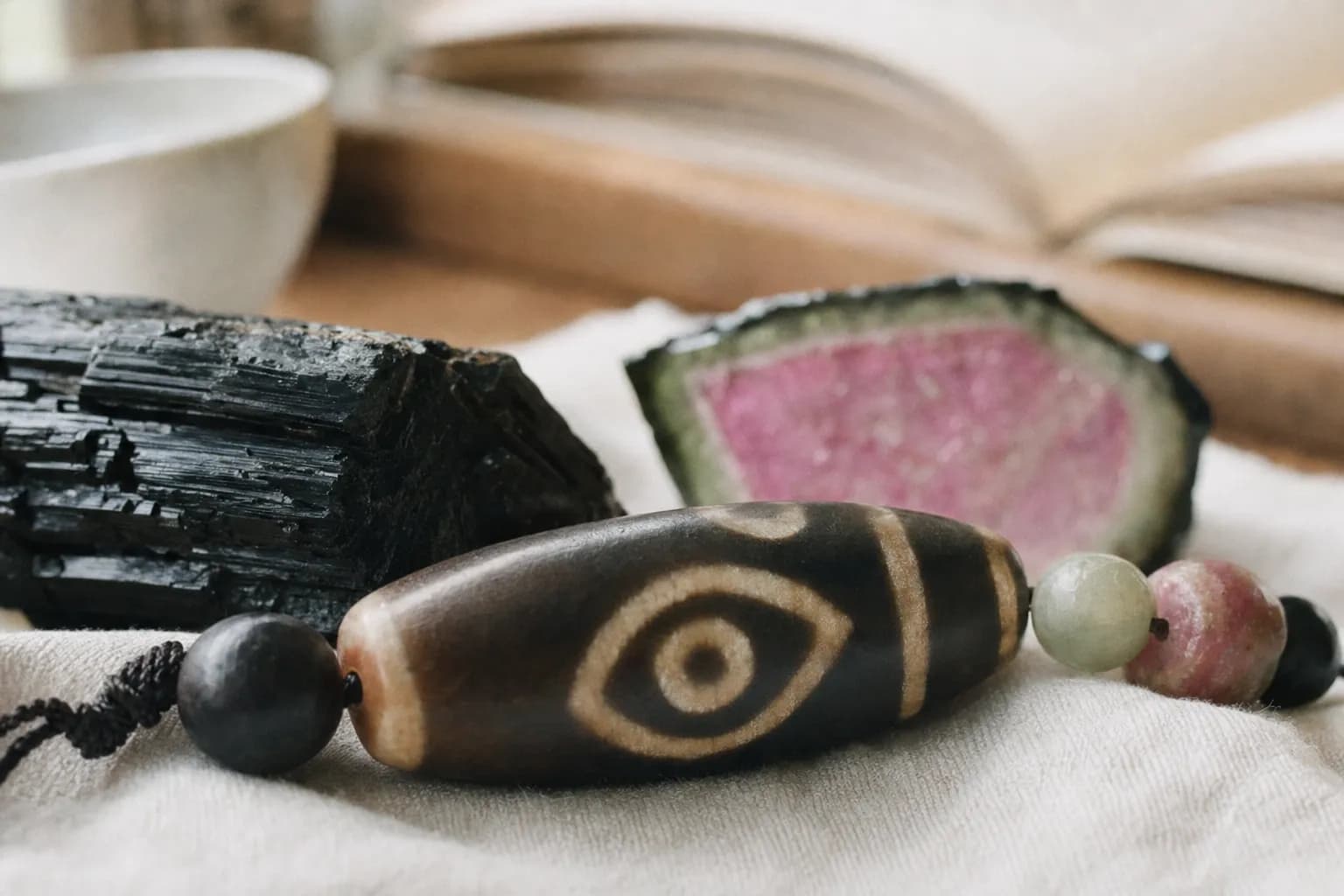
- Black tourmaline is reached for by practitioners who want a sense of grounding or protection. It's dense, dark, and serious in the hand.
- Amethyst has long been associated with clarity and mental quiet. Many people wear it during sleep practice or sitting meditation.
- Carnelian carries associations with motivation and creative energy. It's warm-toned, smooth, and energetically direct in traditional lore.
- Moonstone is linked to emotional attunement and intuition. Its soft luminescence makes it a natural companion for practices around feeling rather than thinking.
For a broader look at which stones practitioners reach for and why, the journal has a full practitioner's reference.
At Ardor Rituals, stone selection for a custom mala bracelet is guided by your date of birth, read through Pythagorean numerology, and your stated intention. The pairing isn't aesthetic guesswork. If you want to compose your own gemstone mala bracelet through that process, the atelier walks you through both.
Some malas include a Dzi bead as the centerpiece talisman rather than a standard guru bead. Dzi beads are ancient agate beads from Tibet, etched with symbolic eye patterns and worn as protective heirlooms for centuries. For the full history, the Dzi bead's origins and sacred patterns covers the lineage in detail.
Caring for Your Mala
Salt water dulls a polished agate in weeks. Moonlight doesn't. That's a practical starting point for mala care.
Leave the mala on a windowsill overnight during a full moon. This is the gentlest and most universally safe cleansing method across virtually all gemstone types. No dilution, no residue, no risk to the cord.
For storage, keep the mala loosely coiled or draped. Bunching it or tangling it with metal jewelry stresses both the cord and the stone surfaces.
Traditional malas are knotted between each bead. Those knots do two things: they protect stones from chipping against each other, and they hold a small space between each repetition. Re-knotted malas are worth checking periodically. The cord degrades with daily handling over months and years. A broken cord mid-practice scatters beads across the floor and disrupts the ritual more than you'd expect.
Finally, consider keeping your mala as a dedicated practice object rather than rotating it into everyday wear. The more consistently you handle it only during sitting or intention practice, the more strongly the mind associates the object with that state. Picking it up starts to do part of the work for you.
Frequently Asked Questions
How do you count mala beads during meditation?
Rest the mala over your middle finger and use your thumb to draw one bead toward you on each breath or mantra repetition. Begin at the bead beside the larger boundary bead at the strand's end and work your way around all 108. When you reach it again, flip the mala and count back rather than crossing it.
What is the guru bead on a mala?
The guru bead is the single larger or distinct bead at the end of a mala strand. In traditional japa practice, it marks the start and finish of one full round of 108 repetitions. Practitioners pause there to set or renew an intention, then reverse direction. Crossing this bead is considered a boundary violation in the practice.
Can you use a mala bracelet instead of a full 108-bead strand?
Yes. Wrist mala bracelets typically have 27 beads, which divides evenly into 108. Four full rounds equals one traditional cycle. They're a practical option for people who want to carry the practice through the day, and the counting method is identical: one bead per breath or repetition.
Do mala beads have to be blessed or activated before use?
In Tibetan and Hindu traditions, malas are often consecrated by a teacher or through a personal intention-setting ritual before first use. There's no single correct method. Many practitioners simply sit quietly with a new mala, hold it, state their intention clearly, and then begin. Consistent practice is what gives the object its association over time.
How do you cleanse and care for gemstone mala beads?
Moonlight cleansing is gentle and safe for nearly all gemstones: leave the mala on a windowsill overnight during a full moon. Avoid salt water, which can dull or pit polished stone surfaces. Store loosely, away from metal jewelry. Check the knotting periodically if you practice daily, as cord degrades with regular handling.
Which stones are traditionally used in mala beads?
Rudraksha seeds are the most traditional material in Hindu practice. Tibetan malas often use bodhi seeds, bone, or gemstones including agate and coral. Modern gemstone malas incorporate stones selected for their traditional associations: amethyst for clarity, black tourmaline for grounding, carnelian for energy, and moonstone for emotional attunement, among many others.