Stones by Zodiac Sign: How the Tradition Works and How to Use It
The zodiac-gemstone link is older than most people realise, and messier than any tidy chart suggests. Here's how the tradition actually formed, and how to use it with intention.
Most gemstone-zodiac charts look authoritative. Twelve signs, twelve stones, clean rows. What they rarely tell you is that the pairings shift depending on which tradition you're reading, and that at least one of the most widely circulated lists was assembled by a retail trade association in 1912. That doesn't make the tradition meaningless. It makes it worth understanding.
Where the Pairing Comes From
Hellenistic roots
The idea that stones carry planetary or celestial influence traces back to Hellenistic astrology, the system that emerged from the blending of Greek philosophy and Babylonian sky-watching around the second century BCE. Practitioners in that period believed that stones, like planets, carried specific qualities, and that wearing certain gems could strengthen a person's alignment with their ruling heavenly body.
Medieval European lapidaries (manuscript guides to stone properties) picked this framework up and expanded it. They linked each of the twelve signs to specific minerals based on color symbolism, planetary rulership, and older folk associations. Sapphire landed with Virgo partly because of its association with clarity and discernment. Carnelian fell to Aries because of its fire-red urgency.
How modern lists were shaped
The standardised birthstone list that most jewelers still use today was set by the American National Retail Jewelers Association in 1912. It assigned one stone per birth month, not per zodiac sign. Convenient for retail, but not ancient. Zodiac signs span two calendar months, so a sign-based assignment and a month-based one will often point to different stones for the same person.
Vedic astrology, known as Jyotish, works from a separate framework entirely. It uses the sidereal zodiac (anchored to fixed star positions rather than the solar year) and assigns gems through a system called Navaratna, linking nine specific stones to the nine planetary rulers. Ruby goes to the Sun, pearl to the Moon, red coral to Mars. The two systems sometimes overlap. Often they don't. Neither is wrong. They're different lenses built on different cosmological assumptions.
A Sign-by-Sign Stone Guide
Every sign below lists a primary stone and one secondary option. Associations are drawn from Western lapidary tradition unless noted. Keep in mind that our practitioner's guide to gemstones covers many of these stones in greater depth, including their mineral properties and care needs.
- Aries (Mar 21. Apr 19). Carnelian is the stone practitioners most often reach for with Aries. It carries associations with momentum and forward movement, echoing the fire element's drive. Red jasper is a grounding secondary choice when that energy tips toward restlessness.
- Taurus (Apr 20. May 20). Emerald has been linked to Taurus across several traditions, often associated with patience and sensory attunement. Rose quartz offers a softer variation, connected to steadiness and care, qualities that earth signs tend to cultivate.
- Gemini (May 21. Jun 20). Citrine is a common pairing for this air sign. Practitioners associate it with mental clarity and adaptability. Blue lace agate is a quieter secondary, often worn when communication feels scattered.
- Cancer (Jun 21. Jul 22). Moonstone belongs to Cancer in almost every tradition that lists it. Its shifting iridescence is thought to reflect the sign's emotional attunement and its rulership by the Moon. Pearl is a classical secondary for the same reasons.
- Leo (Jul 23. Aug 22). Sunstone echoes Leo's fire element directly. Practitioners associate it with confidence and vitality. Tiger eye is a widely used secondary, often worn as a reminder of discernment alongside ambition.
- Virgo (Aug 23. Sep 22). Sapphire has been paired with Virgo in Western lapidary tradition for centuries, connected with precision and clarity. Amazonite offers a grounding alternative, often chosen when the sign's tendency toward self-criticism needs a counterweight.
- Libra (Sep 23. Oct 22). Lapis lazuli is a traditional stone for Libra, associated with balance and honest communication. Opal is the secondary, linked to creative perspective within air energy.
- Scorpio (Oct 23. Nov 21). Obsidian is the stone most practitioners reach for with Scorpio. In Tibetan tradition and across many Western systems, obsidian carries associations with protection and truth-seeking. Black tourmaline is a closely related option, often worn specifically for energetic shielding.
- Sagittarius (Nov 22. Dec 21). Turquoise has been linked to Sagittarius across multiple cultures, associated with expansiveness and travel. Sodalite is a grounding secondary, useful when the fire-sign restlessness needs focus.
- Capricorn (Dec 22. Jan 19). Garnet is the traditional choice here, associated with discipline and long-game commitment within the earth element. Smoky quartz is the secondary, often worn as an anchor during periods of sustained effort.
- Aquarius (Jan 20. Feb 18). Amethyst is widely paired with Aquarius, connected with independent thinking and a kind of elevated perspective. Labradorite is the secondary, often chosen for its association with vision and the unexpected.
- Pisces (Feb 19. Mar 20). Aquamarine carries long associations with Pisces, linked to intuition and the water element's depth. Fluorite is a secondary option, often worn when clarity is needed alongside emotional sensitivity.
Sun sign is one layer. Pythagorean numerology, derived from your full date of birth, can refine the picture considerably. The atelier at Ardor Rituals uses both systems together when you compose your custom talisman by birth date and intention, which often surfaces a stone that the zodiac guide alone wouldn't have suggested.
How to Actually Wear and Work with Your Stone
Choosing between multiple tradition recommendations
Some signs have three or four stones across different systems. That's not a problem to solve. It's information. Start with the stone you're drawn to within your sign's range. Attraction is a valid starting point, not a superficial one. If two traditions point to different stones, let your current intention decide. Obsidian for Scorpio who wants protection. Rose quartz for Taurus who's working through a loss. The zodiac pairing frames the territory; your intention narrows the choice.
Vedic practitioners take a different approach and often consult a chart reading before wearing a planetary gem, since some stones are considered contraindicated for certain planetary positions. That's a more rigorous system and worth exploring if Jyotish resonates with you. For most people beginning with zodiac gemstones, the Western lapidary tradition is the more accessible entry point.
Setting intention before first wear
Hold the stone in both hands. Name your purpose aloud or in writing. Wear it consistently for one full lunar cycle before drawing any conclusions. This isn't magic thinking; it's attention training. The stone becomes a physical anchor for a commitment you've made.
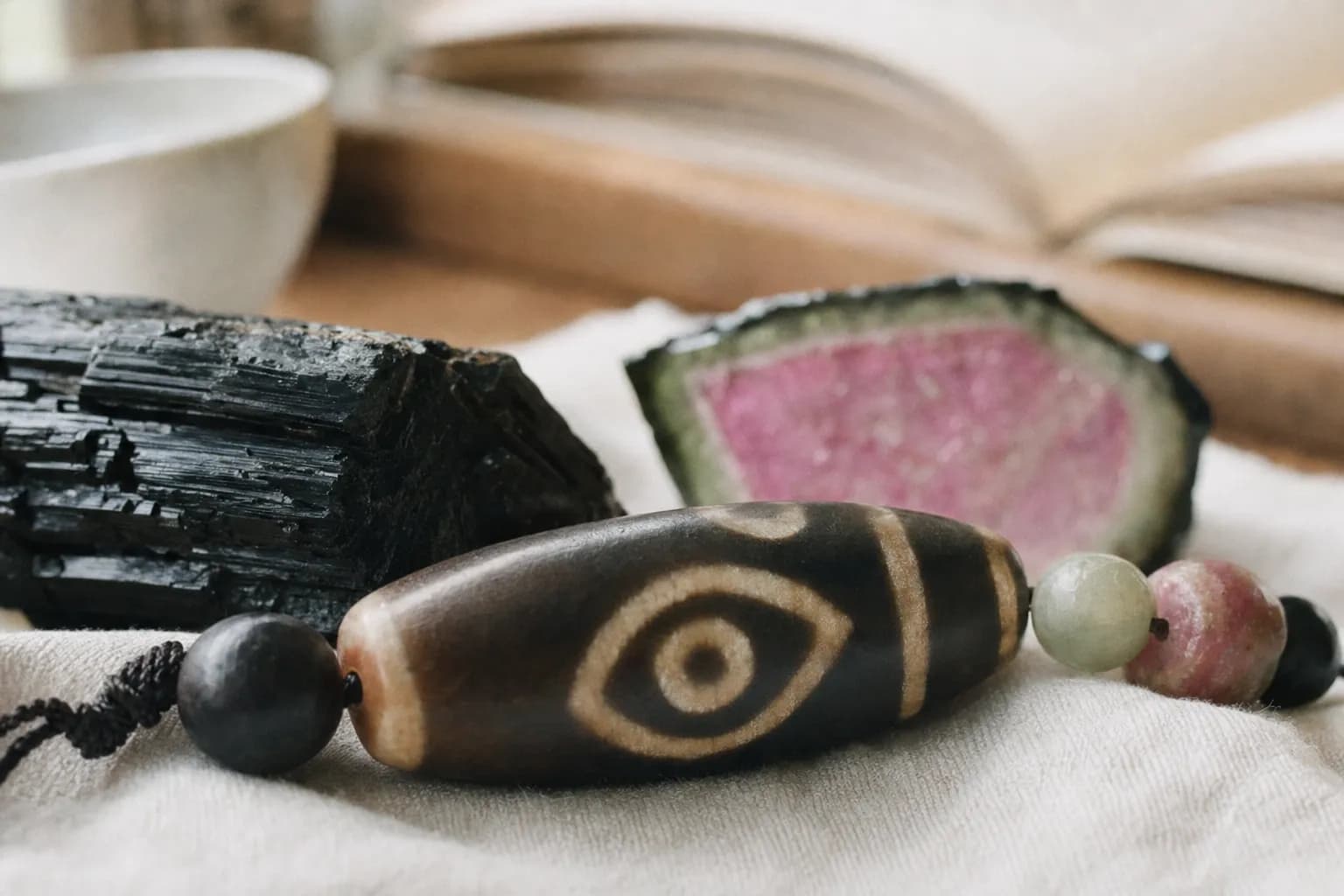
For those who use japa practice (a form of meditative repetition where a mantra or intention is repeated while moving through a string of beads), a mala bracelet or necklace with your zodiac stone as the guru bead offers a structured ritual. The guru bead is the central, often larger bead that marks the beginning and end of a cycle. Hold each bead for one full breath, move through all 108, and return to the guru bead without crossing it. That full cycle is one round of practice. You can read more about the history of protective talisman traditions, including how Tibetan stones have been used in practice, in our piece on the origins and symbolism of Tibetan Dzi beads.
Caring for Zodiac Stones: What the Tradition Actually Says
Moonlight cleansing is the safest universal method. Leave your stone on a windowsill on the night of a full moon. No heat, no water, no abrasion. Almost every stone tolerates this without any risk of damage.
Salt water is a different matter. Malachite, selenite, and pyrite are all soft or porous enough that prolonged contact with salt water will degrade their surface. Selenite in particular is water-soluble; even a brief soak can cloud it. If you've read advice about salt water baths for stones, apply it selectively.
Sunlight fades color in amethyst and rose quartz over time. The UV sensitivity is a real mineralogical property. A few hours won't ruin a piece, but weeks of direct sun on a windowsill will shift the color noticeably. Dry cleansing methods, moonlight or a quick pass through incense smoke, are safer for these two.
After any cleansing, reset your intention before wearing the stone again. Many practitioners do this instinctively; others skip it and wonder why the piece starts to feel inert. The stone doesn't change. Your conscious relationship to it does.
If you're wearing a bracelet that combines your zodiac stone with other elements, such as Dzi beads or additional gemstones chosen by numerology, the same care principles apply to each component. Check each stone's hardness and porosity individually. A bracelet that combines carnelian with selenite, for instance, will need two different approaches in the same cleaning session.
Frequently Asked Questions
Which stone is associated with each zodiac sign?
Each sign has multiple traditional stones depending on the system used. Common pairings include carnelian for Aries, emerald for Taurus, citrine for Gemini, moonstone for Cancer, sunstone for Leo, and sapphire for Virgo. Scorpio is often paired with obsidian; Pisces with aquamarine. Multiple traditions exist, so specific pairings vary across Western, Vedic, and Tibetan frameworks.
Is the birthstone the same as the zodiac stone?
Not always. Modern birthstones are assigned by birth month and were standardised in 1912 by a retail trade association. Zodiac stones follow sun signs, which span two calendar months. Vedic and Western astrological traditions also disagree on several pairings. A practitioner may use both systems as complementary lenses rather than competing rules.
How do I choose between multiple stones recommended for my zodiac sign?
Start with the stone you're drawn to within your sign's range. If two traditions suggest different stones, let your current intention guide you: obsidian for protection, rose quartz for emotional openness. Some practitioners also factor in numerology derived from their date of birth, which can narrow the field further without dismissing either tradition.
Can I wear stones from a different zodiac sign?
Yes. Zodiac pairings are a useful entry point, not a boundary. Many practitioners wear stones for their current intention regardless of sign alignment. A Capricorn working through grief may reach for moonstone, a Cancer stone, because it fits the moment. The tradition is a guide, not a restriction.
How do I cleanse and care for my zodiac stone?
Moonlight cleansing on a full moon windowsill works for almost every stone without risk of damage. Avoid prolonged sunlight for amethyst and rose quartz, which can fade. Skip salt water with soft or porous stones like malachite or selenite. After cleansing, reset your intention before wearing the stone again.
What is the difference between Western and Vedic zodiac stone traditions?
Western astrology uses the tropical zodiac and assigns stones largely through Hellenistic and Renaissance lapidary tradition. Vedic astrology, called Jyotish, uses the sidereal zodiac and a distinct stone system called Navaratna, linking nine gems to planetary rulers. The two systems sometimes overlap but frequently recommend different stones for the same person, and both have coherent internal logic.